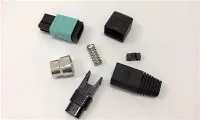
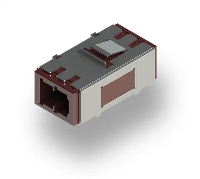
Hey there! As a supplier of Fiber Optic Patch Cords, I often get asked about the difference between short - haul and long - haul fiber optic patch cords. So, I thought I'd write this blog to break it down for you.
What Are Fiber Optic Patch Cords?
First things first, let's quickly talk about what fiber optic patch cords are. These are cables that are used to connect different devices in a fiber optic network. They have connectors on both ends, like LC, SC, MPO, etc., which allow for easy and reliable connections. For example, our Fiber Optic Lc Lc Patch Cable is a popular choice for many small - scale network setups.
Short - Haul Fiber Optic Patch Cords
Short - haul fiber optic patch cords are designed for relatively short distances. Usually, we're talking about distances up to a few kilometers. These cords are commonly used in data centers, local area networks (LANs), and office buildings.
Characteristics
- Lower Attenuation Requirements: Since the distance is short, the signal doesn't have to travel very far. So, the patch cords don't need to have extremely low attenuation. This means they can be made with more cost - effective materials.
- Higher Bandwidth for Short Distances: They can provide high - speed data transmission over short distances. For example, in a data center where servers are closely located, short - haul patch cords can support gigabit or even terabit - level data transfer rates.
- Smaller Core Sizes: Short - haul patch cords often use multimode fibers with smaller core sizes, like 50μm or 62.5μm. These fibers are better suited for short - distance, high - speed data transmission because they can support multiple light modes.
Applications
- Data Centers: In a data center, servers, switches, and storage devices need to be connected. Short - haul patch cords are used to link these components together, ensuring fast and reliable data transfer within the data center.
- Office LANs: In an office building, computers, printers, and other network devices are connected using short - haul patch cords. This allows employees to access shared resources and the internet quickly.
Long - Haul Fiber Optic Patch Cords
Long - haul fiber optic patch cords, on the other hand, are built for much longer distances, often spanning hundreds or even thousands of kilometers. They are used in telecommunications networks, long - distance internet connections, and submarine cable systems.


Characteristics
- Low Attenuation: The most critical requirement for long - haul patch cords is low attenuation. As the signal travels long distances, it can weaken. Low - attenuation fibers help to keep the signal strong over these long distances.
- Single - Mode Fibers: Long - haul patch cords typically use single - mode fibers with a very small core size, usually around 9μm. Single - mode fibers allow only one light mode to propagate, which reduces signal dispersion and enables long - distance transmission.
- Advanced Coating and Protection: Since they are used in harsh environments, long - haul patch cords need to have better coating and protection. They are often designed to withstand temperature variations, moisture, and mechanical stress.
Applications
- Telecommunications Networks: Long - haul patch cords are used to connect different cities, regions, or even countries. They form the backbone of the global telecommunications infrastructure, enabling voice, data, and video communication over long distances.
- Submarine Cable Systems: These cables are laid on the ocean floor to connect continents. Long - haul patch cords in submarine cable systems need to be extremely reliable and durable to withstand the harsh underwater environment.
Key Differences
- Distance: The most obvious difference is the distance they are designed for. Short - haul cords are for short distances (up to a few kilometers), while long - haul cords are for much longer distances (hundreds or thousands of kilometers).
- Fiber Type: Short - haul cords usually use multimode fibers, while long - haul cords use single - mode fibers.
- Cost: Short - haul patch cords are generally less expensive because they use more cost - effective materials and have less stringent manufacturing requirements. Long - haul patch cords, on the other hand, are more expensive due to their advanced design and high - quality materials.
- Attenuation and Dispersion: Long - haul patch cords need to have lower attenuation and dispersion to maintain signal quality over long distances. Short - haul cords have less strict requirements in these areas.
Our Product Range
We offer a wide range of both short - haul and long - haul fiber optic patch cords. For example, our Mpo/mpo - om3 - 12f - 3.0mm - lszh - 1m is a great short - haul option for data center applications. It has a 12 - fiber MPO connector and is suitable for high - density network setups.
If you need a long - haul solution, our Fiber Optic Patch Cord Mtp To Lc Upc 8core Om4 3.0mm can provide reliable long - distance data transmission. It uses high - quality Om4 fiber and has MTP to LC connectors, which are commonly used in long - distance network connections.
Conclusion
In conclusion, understanding the difference between short - haul and long - haul fiber optic patch cords is crucial when setting up a fiber optic network. Whether you're building a small office LAN or a large - scale telecommunications network, choosing the right patch cords can make a big difference in the performance and reliability of your network.
If you're in the market for fiber optic patch cords, I'd love to have a chat with you. Feel free to reach out to discuss your specific needs and find the best solutions for your network. We're here to help you make the right choice and ensure that your network runs smoothly.
References
- "Fiber Optic Communications Technology" by Gerd Keiser
- "Optical Fiber Telecommunications VI" edited by Ivan Kaminow and Tingye Li