Hey there! As a supplier of Fiber Optic MPO Adapters, I often get asked about the differences between LC and MPO Fiber Optic Adapters. So, I thought I'd write this blog to break it down for you in a simple and easy - to - understand way.
Let's start with the basics. Fiber optic adapters are crucial components in fiber optic networks. They are used to connect two fiber optic connectors together, allowing the transmission of light signals from one fiber to another.
LC Fiber Optic Adapters
The LC fiber optic adapter is one of the most commonly used adapters out there. It's known for its small form - factor, which makes it a great choice for high - density applications. The LC connector was developed to address the need for smaller connectors in data centers and other networking environments where space is at a premium.
One of the key features of the LC adapter is its push - pull latching mechanism. This makes it really easy to install and remove the LC connectors. You just push the connector into the adapter, and it latches in place. To remove it, you simply pull on the latch. This quick and easy installation process saves a lot of time, especially when you're working on large - scale projects.
In terms of performance, LC adapters offer low insertion loss and high return loss. Insertion loss refers to the amount of signal power that is lost when the light travels through the adapter. A low insertion loss means that more of the signal power is transmitted, which is essential for maintaining a strong and reliable signal. Return loss, on the other hand, is a measure of how much of the light is reflected back towards the source. A high return loss indicates that less light is being reflected, which helps to reduce signal interference.
LC adapters are typically used in applications where single - mode or multimode fibers are used for relatively short - distance transmissions. For example, they are commonly found in local area networks (LANs), data centers, and telecommunications networks.
You can check out more about different types of fiber optic adapters, like the Fiber Optic Mu Adapter on our website.
MPO Fiber Optic Adapters
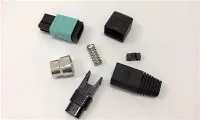
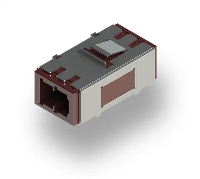
Now, let's talk about MPO fiber optic adapters. MPO stands for Multi - Fiber Push - On. As the name suggests, these adapters are designed to connect multiple fibers at once. An MPO connector can have anywhere from 4 to 72 fibers, which makes it ideal for high - speed, high - density applications.
The MPO adapter uses a push - on latching mechanism, similar to the LC adapter, but it's designed to handle multiple fibers simultaneously. When you insert an MPO connector into the adapter, all the fibers are aligned and connected at the same time. This is a huge advantage when you're dealing with large - scale networks that require a high volume of data transmission.
One of the main benefits of using MPO adapters is their ability to support high - speed data rates. With the increasing demand for faster and more reliable networks, MPO adapters are becoming more and more popular. They can support data rates of up to 400Gbps and beyond, making them suitable for next - generation data centers and high - performance computing applications.
MPO adapters are also very flexible. They can be used with both single - mode and multimode fibers, and they can be configured in different ways to meet the specific needs of your network. For example, you can choose between different numbers of fibers, different keying options, and different polishing types.
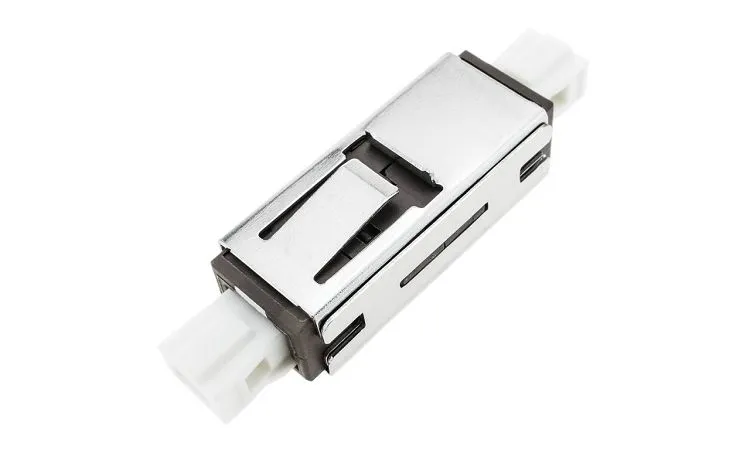
If you're interested in our MPO adapters, you can take a look at our Fiber Optic Mpo Adapter product page. And for a specific product like the Mtp®/mpo - 8/12/24 Black Fiber Optic Adapter/coupler with Flange, Key Up To Down, you can click on the link to learn more.
Key Differences between LC and MPO Adapters
Number of Fibers
The most obvious difference between LC and MPO adapters is the number of fibers they can handle. LC adapters are designed for single - fiber connections, while MPO adapters can connect multiple fibers at once. This means that if you need to connect a large number of fibers in a small space, MPO adapters are the way to go.
Application Scenarios
LC adapters are more commonly used in applications where you need to connect individual fibers for short - distance transmissions. They are great for LANs, desktop connections, and small - scale data centers. MPO adapters, on the other hand, are used in high - speed, high - density applications such as large - scale data centers, cloud computing facilities, and high - performance computing networks.

Installation Complexity
As mentioned earlier, both LC and MPO adapters have relatively easy installation processes. However, installing MPO adapters can be a bit more complex, especially when you're dealing with a large number of fibers. You need to make sure that the fibers are properly aligned and that the connectors are inserted correctly. LC adapters, on the other hand, are simpler to install since you're only dealing with a single fiber at a time.
Cost
In general, LC adapters are less expensive than MPO adapters. This is because they are simpler in design and use fewer materials. However, when you're considering the cost of a network, you need to take into account the overall cost of installation and maintenance. In some cases, using MPO adapters can actually save you money in the long run, especially if you're working on a large - scale project where the time saved during installation can offset the higher upfront cost.
Why Choose Our Fiber Optic MPO Adapters
As a supplier of Fiber Optic MPO Adapters, we take pride in offering high - quality products at competitive prices. Our MPO adapters are manufactured using the latest technology and the highest - quality materials, ensuring reliable performance and long - term durability.
We have a wide range of MPO adapter products to choose from, including different numbers of fibers, different keying options, and different polishing types. Whether you need a simple 8 - fiber MPO adapter or a more complex 72 - fiber adapter, we've got you covered.
Our team of experts is always available to provide you with technical support and advice. We can help you choose the right MPO adapter for your specific application, and we can also assist you with installation and troubleshooting.
If you're interested in purchasing our Fiber Optic MPO Adapters or have any questions about our products, don't hesitate to reach out. We're eager to have a chat with you about your needs and see how we can work together to build a high - performance fiber optic network.
References
- "Fiber Optic Communication Systems" by Govind P. Agrawal
- "Optical Fiber Technology: Fundamentals" by Gerd Keiser