Can fiber optic LC adapters be used in industrial environments?
In the ever - evolving landscape of industrial technology, reliable and high - performance communication is crucial. Fiber optic technology has emerged as a cornerstone for such communication needs, and LC adapters are a popular choice in many setups. But the question that often arises is whether fiber optic LC adapters can be used in industrial environments. As a leading supplier of Fiber Optic LC Adapters, I'll delve into this topic to provide a comprehensive answer.


Understanding Fiber Optic LC Adapters
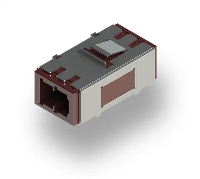
Fiber optic LC adapters are small - form - factor connectors that are widely used in data centers, telecommunications networks, and various other communication systems. Their compact size allows for high - density installations, making them an ideal choice when space is limited. The LC adapter uses a push - pull latching mechanism, which provides a quick and easy connection and disconnection process. This not only simplifies the installation and maintenance process but also reduces the risk of damage to the fibers during handling.
The LC adapter typically supports both single - mode and multi - mode fibers. Single - mode fibers are used for long - distance transmissions, while multi - mode fibers are more suitable for shorter distances, such as within a building or a campus network. The LC adapter's ability to support both types of fibers makes it a versatile solution for different communication requirements.
Challenges in Industrial Environments
Industrial environments present a unique set of challenges that can affect the performance and reliability of fiber optic components. These challenges include:
- Temperature and Humidity: Industrial settings can experience extreme temperature and humidity variations. High temperatures can cause the fiber optic materials to expand, which may lead to misalignments and increased signal loss. Low temperatures, on the other hand, can make the materials brittle, increasing the risk of breakage. Humidity can also cause corrosion of the connectors, leading to poor signal quality.
- Vibration and Shock: Industrial machinery often generates significant vibration and shock. These mechanical forces can cause the fiber optic connectors to loosen or the fibers to break, resulting in signal interruptions.
- Dust and Contamination: Industrial environments are often dusty and dirty. Dust particles can accumulate on the fiber optic connectors, blocking the light path and causing signal attenuation. Chemical contaminants can also corrode the connectors and damage the fibers.
- Electromagnetic Interference (EMI): Industrial equipment can generate strong electromagnetic fields. These fields can interfere with the optical signals in the fiber optic cables, causing signal degradation.
Can Fiber Optic LC Adapters Overcome These Challenges?
The good news is that with the right design and construction, fiber optic LC adapters can be used effectively in industrial environments.
- Temperature and Humidity Resistance: Many industrial - grade LC adapters are designed to operate within a wide temperature range, typically from - 40°C to 85°C. They are also made from materials that are resistant to humidity and moisture. For example, some adapters use special coatings or seals to prevent moisture from entering the connector, protecting the fibers from corrosion.
- Vibration and Shock Resistance: To withstand vibration and shock, industrial LC adapters are often designed with a more robust mechanical structure. They may have reinforced latching mechanisms and strain - relief features to ensure that the connectors remain securely in place even under harsh mechanical conditions. Additionally, some adapters are tested to meet industry standards for vibration and shock resistance, such as the IEC 60068 - 2 - 6 and IEC 60068 - 2 - 27 standards.
- Dust and Contamination Resistance: Industrial LC adapters can be equipped with dust caps to protect the connectors from dust and debris when not in use. Some adapters also have self - cleaning features or are made from materials that are less prone to dust accumulation. In addition, regular cleaning and maintenance can help to keep the connectors free from contamination.
- EMI Resistance: Since fiber optic cables transmit light signals rather than electrical signals, they are inherently immune to electromagnetic interference. However, the connectors and other components in the fiber optic system need to be properly shielded to prevent EMI from affecting the overall performance. Industrial LC adapters are often designed with shielding features to minimize the impact of EMI.
Comparison with Other Fiber Optic Adapters
While LC adapters have many advantages for industrial use, it's also important to consider other types of fiber optic adapters. For example, the Fiber Optic Sc Adapter is another popular choice. The SC adapter uses a push - pull bayonet - style locking mechanism, which provides a secure connection. It is larger than the LC adapter but is also known for its durability and ease of use.
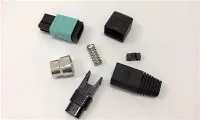
The Fiber Optic Mpo Adapter is designed for high - density applications. It can accommodate multiple fibers in a single connector, making it suitable for data centers and other large - scale communication systems. However, the MPO adapter is more complex and may require more specialized installation and maintenance.
The Fiber Optic Mtrj Adapter is a small - form - factor adapter that uses a push - pull latching mechanism similar to the LC adapter. It is often used in LAN applications. However, the MTRJ adapter has some limitations in terms of its performance and reliability compared to the LC adapter.
Case Studies
There are many real - world examples of fiber optic LC adapters being used successfully in industrial environments. For instance, in a manufacturing plant, LC adapters are used to connect the sensors and control systems to the central monitoring station. The high - speed and reliable communication provided by the LC adapters ensures that the plant can operate efficiently and safely.
In a power generation facility, LC adapters are used in the communication network between the different sections of the plant. The adapters' ability to withstand high temperatures and electromagnetic interference makes them a suitable choice for this harsh environment.
Conclusion and Call to Action
In conclusion, fiber optic LC adapters can indeed be used in industrial environments. With their compact size, high - performance capabilities, and the ability to overcome the challenges presented by industrial settings, they are a viable solution for industrial communication needs.
If you are looking for high - quality fiber optic LC adapters for your industrial applications, we are here to help. Our company offers a wide range of industrial - grade LC adapters that are designed to meet the most demanding requirements. Whether you need single - mode or multi - mode adapters, we have the right solution for you. Contact us today to discuss your specific needs and start a procurement negotiation.
References
- "Fiber Optic Communication Systems" by Govind P. Agrawal
- "Industrial Fiber Optics: Theory and Practice" by John Crisp