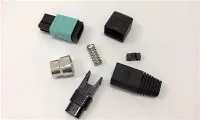
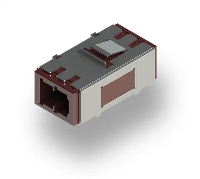
Hey there! As a supplier of Fiber Optic E2000 Pigtails, I often get asked about the difference between simplex and duplex Fiber Optic E2000 Pigtails. So, I thought I'd break it down for you in this blog post.
First off, let's talk about what a pigtail is. A fiber optic pigtail is a short, single - fiber cable that has a connector on one end and a bare fiber on the other. The E2000 connector is a high - performance connector known for its excellent dust protection and low insertion loss. It's widely used in data centers, telecommunications, and other fiber - optic networks.

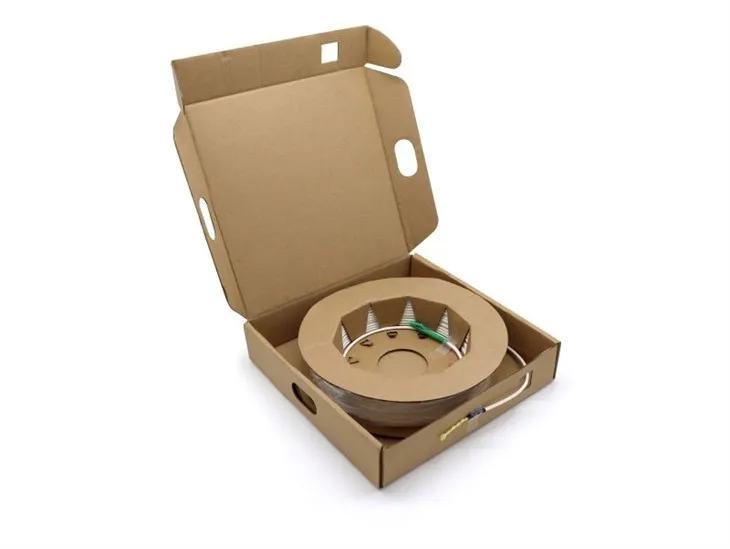
Simplex Fiber Optic E2000 Pigtail
A simplex Fiber Optic E2000 Pigtail has just one fiber. It's like a one - way street for data. This type of pigtail is mainly used in applications where data needs to travel in only one direction. For example, in some monitoring systems, you might only need to send data from a sensor to a monitoring station. The simplex pigtail is perfect for this kind of one - way data transmission.
One of the big advantages of a simplex pigtail is its simplicity. Since there's only one fiber, it's easier to install and manage. You don't have to worry about aligning multiple fibers or dealing with the extra complexity that comes with them. Also, simplex pigtails are usually more cost - effective compared to duplex ones. If your application doesn't require bidirectional data transfer, a simplex Fiber Optic E2000 Pigtail is a great choice.
Another aspect to consider is the physical size. Simplex pigtails are generally smaller and lighter because they have only one fiber. This can be a huge plus in installations where space is limited. For instance, in some compact network cabinets, the smaller size of a simplex pigtail can help you save a lot of space.
Duplex Fiber Optic E2000 Pigtail
On the other hand, a duplex Fiber Optic E2000 Pigtail has two fibers. It's like a two - way street, allowing data to travel in both directions simultaneously. This is crucial in applications where real - time communication is needed, such as in local area networks (LANs) or video conferencing systems.
In a LAN, for example, computers need to send and receive data all the time. A duplex pigtail enables this bidirectional communication without any delay. The two fibers in a duplex pigtail work independently of each other. One fiber is used for sending data, and the other is used for receiving it. This separation ensures that there's no interference between the sending and receiving signals, which results in a more stable and reliable connection.
However, with the added functionality comes increased complexity. Installing a duplex pigtail requires a bit more skill and attention. You need to make sure that the two fibers are properly aligned and connected. Also, duplex pigtails are usually more expensive than simplex ones because they have two fibers and the associated components.
The physical size of a duplex pigtail is also larger than that of a simplex pigtail. This is because it has to accommodate two fibers. So, if space is a constraint, you might need to think twice before choosing a duplex pigtail.
Comparison in Performance
When it comes to performance, both simplex and duplex pigtails have their own strengths. Simplex pigtails, as mentioned earlier, are great for one - way data transmission. They can provide a very efficient and reliable connection for applications that only require unidirectional data flow. The single - fiber design reduces the chances of signal interference, which can lead to better signal quality.
Duplex pigtails, on the other hand, are designed for bidirectional communication. They can handle high - volume data transfer in both directions at the same time. This makes them ideal for applications that demand real - time interaction. However, the performance of a duplex pigtail can be affected by factors such as crosstalk between the two fibers. Good quality duplex pigtails are designed to minimize this crosstalk, but it's still something to keep in mind.
Applications
Let's look at some specific applications for each type of pigtail.
Simplex Pigtail Applications
- Sensor Networks: In environmental monitoring systems, sensors need to send data to a central monitoring station. A simplex pigtail can be used to connect the sensors to the network. For example, a temperature sensor in a remote location can send temperature data to a control room using a simplex Fiber Optic E2000 Pigtail.
- Broadcasting: In some broadcasting setups, unidirectional data transfer is required. For instance, a camera might send video data to a production studio using a simplex pigtail.
Duplex Pigtail Applications
- Data Centers: In data centers, servers need to communicate with each other and with storage devices. Duplex pigtails are used to connect these components, allowing for high - speed bidirectional data transfer.
- Telecommunications: In telephone networks, duplex pigtails are used to enable two - way communication between subscribers and the central office.
Other Related Fiber Optic Pigtails
If you're interested in fiber optic pigtails, you might also want to check out some other types. For example, the Fiber Optic Sc Pigtail is another popular type of pigtail. It uses the SC connector, which is known for its push - pull design and easy installation.
The Lc Simplex Fiber Patch Cord is also worth considering. The LC connector is small and has a high density, making it suitable for applications where space is at a premium.
And then there's the Fiber Optic Fc Pigtail. The FC connector has a threaded coupling mechanism, which provides a very secure connection.
Conclusion
In conclusion, the main difference between a simplex and duplex Fiber Optic E2000 Pigtail lies in the number of fibers and the direction of data transmission. Simplex pigtails are simple, cost - effective, and suitable for one - way data transfer. Duplex pigtails, on the other hand, allow for bidirectional communication but are more complex and expensive.
If you're still not sure which type of pigtail is right for your application, don't hesitate to reach out. We're here to help you make the best choice. Whether you need a simplex or duplex Fiber Optic E2000 Pigtail, we can provide you with high - quality products at competitive prices. So, if you're in the market for fiber optic pigtails, let's start a conversation and see how we can meet your needs.
References
- "Fiber Optic Communication Technology" by some well - known author in the field.
- Industry whitepapers on fiber optic connectors and pigtails.