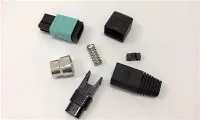
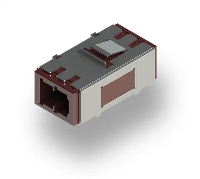
When it comes to the world of high - speed data transmission and networking, fiber optic technology stands at the forefront. As a supplier of Fiber Optic FC Connectors, I am often asked about the connection requirements between these connectors and fiber optic switches. In this blog, I will delve into the details of these requirements to provide a comprehensive understanding.
Physical Compatibility
The first and most fundamental requirement is physical compatibility. Fiber Optic FC Connectors have a specific design with a threaded coupling mechanism. This design allows for a secure and stable connection. When connecting to a fiber optic switch, the switch must have a corresponding receptacle that can accommodate the FC connector's threaded interface.
The size and shape of the connector are also crucial. FC connectors typically have a diameter of around 2.5mm for the ferrule, which holds the fiber. The switch's receptacle must be precisely engineered to fit this ferrule size. Any mismatch in size can lead to improper alignment of the fiber cores, resulting in signal loss and reduced performance.
Optical Compatibility
Optical compatibility is another vital aspect. The fiber optic switch and the FC connector must be compatible in terms of the type of fiber they support. There are mainly two types of fibers: single - mode and multi - mode.
Single - mode fibers are designed for long - distance transmission and have a small core diameter (usually around 9μm). Multi - mode fibers, on the other hand, are used for shorter distances and have a larger core diameter (commonly 50μm or 62.5μm). The FC connector and the switch must both be specified for the same type of fiber. Using a single - mode FC connector with a multi - mode switch or vice versa will cause significant signal attenuation and may even prevent the system from working properly.
In addition to the fiber type, the optical properties such as the numerical aperture (NA) and the mode field diameter (MFD) also need to match. The NA determines the range of angles at which light can enter or exit the fiber, while the MFD describes the distribution of light within the fiber core. If these properties are not compatible between the connector and the switch, it can lead to modal dispersion and other optical impairments.
Polishing and End - Face Quality
The quality of the polishing and the end - face of the FC connector is of utmost importance. A well - polished end - face ensures that light can pass through the connector with minimal loss. When connecting to a fiber optic switch, the end - face of the FC connector should be free from scratches, dust, and other contaminants.
There are different types of end - face polishings, such as physical contact (PC), ultra - physical contact (UPC), and angled physical contact (APC). Each type has its own characteristics and is suitable for different applications. For example, APC connectors are often used in applications where back - reflection needs to be minimized, such as in long - haul telecommunications networks. The switch must be able to work with the specific end - face polishing type of the FC connector.
Insertion Loss and Return Loss
Insertion loss and return loss are key performance indicators when connecting a Fiber Optic FC Connector to a fiber optic switch. Insertion loss refers to the amount of light power that is lost when the light passes through the connector. It is typically measured in decibels (dB). The lower the insertion loss, the better the performance of the connection.
Return loss, on the other hand, measures the amount of light that is reflected back towards the source. High return loss values are desirable as they indicate that less light is being reflected, which can cause interference and signal degradation. The FC connector and the switch should be designed to meet specific insertion and return loss requirements. For example, in a high - performance data center environment, insertion loss should be kept below 0.3dB, and return loss should be above 50dB.
Environmental Considerations
The environment in which the connection is made also plays a role. Fiber optic connections can be affected by factors such as temperature, humidity, and vibration. The FC connector and the switch should be able to withstand the environmental conditions of the installation site.
For example, in outdoor installations, the connectors and the switch need to be weather - resistant. They should be able to operate within a wide temperature range, from extremely cold to very hot conditions. Additionally, they should be protected against moisture and dust ingress to prevent damage to the optical components.
Compatibility with Other Connectors and Components
In many networking setups, the Fiber Optic FC Connector may need to be used in conjunction with other connectors and components. For example, it may be necessary to connect an FC connector to a Fiber Optic E2000 Connector or a Upc Fast Optical Sm Fiber Connector Sx Core Sc/upc through a patch panel.
The switch should be able to support these inter - connections without any significant loss of performance. It is also important to ensure that the mating of different connectors is done correctly to avoid any damage to the fiber or the connectors themselves.
Ease of Installation and Maintenance
The connection requirements should also take into account the ease of installation and maintenance. FC connectors are relatively easy to install due to their threaded coupling mechanism. However, the switch should be designed in such a way that it allows for easy access and connection of the FC connectors.
In terms of maintenance, the switch should be able to provide diagnostic information about the connection status. This can help in quickly identifying and troubleshooting any issues that may arise. For example, some switches can detect insertion loss and return loss values in real - time and provide alerts if these values exceed the acceptable limits.
Cost - Effectiveness
Finally, cost - effectiveness is an important consideration. While it is essential to ensure that the FC connector and the switch meet all the technical requirements, the overall cost of the solution should also be reasonable. As a supplier, I understand the importance of providing high - quality products at competitive prices.
When choosing a fiber optic switch to be used with FC connectors, it is important to evaluate the total cost of ownership, which includes the purchase price, installation costs, and maintenance costs over the lifespan of the equipment.


In conclusion, the connection requirements between a Fiber Optic FC Connector and a fiber optic switch are complex and involve multiple aspects. Physical compatibility, optical compatibility, end - face quality, performance indicators, environmental considerations, compatibility with other components, ease of installation and maintenance, and cost - effectiveness all need to be carefully considered.
As a leading supplier of Fiber Optic FC Connectors, we offer a wide range of high - quality products that meet the most stringent industry standards. Our connectors are designed to provide excellent performance and reliable connections. If you are in the market for fiber optic connectors and switches and need more information or want to discuss your specific requirements, please feel free to contact us. We are ready to assist you in finding the best solutions for your networking needs.
References
- "Fiber Optic Communication Technology" by John Senior
- Industry standards documents from organizations such as the Telecommunications Industry Association (TIA) and the International Electrotechnical Commission (IEC)