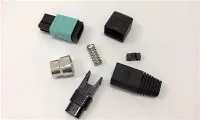
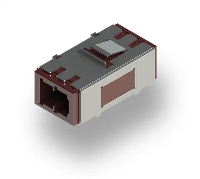
As a supplier of fiber optic connectors, I understand the critical importance of ensuring the quality and performance of these components. Testing fiber optic connectors is a meticulous process that directly impacts the efficiency and reliability of optical communication networks. In this blog, I'll share a comprehensive guide on how to test a fiber optic connector, drawing on my experience in the industry.
Understanding the Basics of Fiber Optic Connectors
Before delving into the testing procedures, it's essential to have a basic understanding of fiber optic connectors. These connectors are used to join optical fibers where a connect - disconnect capability is required. They are designed to align the cores of two fibers precisely, allowing light to pass through with minimal loss. There are various types of fiber optic connectors, such as SC, FC, and LC, each with its own unique design and application scenarios.
Pre - testing Preparations
Visual Inspection
The first step in testing a fiber optic connector is a visual inspection. This can be done using a fiber optic microscope or a visual fault locator (VFL). A fiber optic microscope magnifies the end - face of the connector, allowing you to check for physical damage, dirt, or scratches. Dirt and debris on the connector end - face can cause significant signal loss. You can use a fiber optic cleaning kit to remove any contaminants before further testing.
A VFL, on the other hand, is a simple yet effective tool. It emits a visible red light into the fiber. If there is a break or a significant fault in the fiber or connector, the light will escape, and you can easily spot the problem.
Cleaning the Connector
Cleaning the connector is a crucial step. Contaminants like dust, oil, or fingerprints can severely degrade the performance of the connector. Use a lint - free cleaning wipe or a cleaning pen specifically designed for fiber optic connectors. For more stubborn dirt, you may need to use a cleaning solution recommended by the connector manufacturer.
Testing Methods
Insertion Loss Testing
Insertion loss is one of the most important parameters to measure when testing a fiber optic connector. It refers to the amount of optical power lost when light passes through the connector. To measure insertion loss, you'll need an optical light source and an optical power meter.
- Calibration: First, calibrate the optical power meter using a reference fiber. This ensures accurate measurements.
- Connection: Connect the optical light source to one end of the fiber with the connector under test and the optical power meter to the other end.
- Measurement: Measure the optical power at the output end. Compare this value with the power at the input end. The difference between the two values is the insertion loss. A low insertion loss indicates a high - quality connector. Industry standards typically require an insertion loss of less than 0.3 dB for single - mode connectors and less than 0.5 dB for multi - mode connectors.
Return Loss Testing
Return loss, also known as reflection loss, measures the amount of light that is reflected back from the connector. High reflection can cause signal distortion and interference. To measure return loss, an optical time - domain reflectometer (OTDR) or a reflectometer can be used.
- OTDR Testing: An OTDR sends a series of optical pulses into the fiber and measures the light that is reflected back. It provides a graphical representation of the fiber's characteristics, including the location and magnitude of reflections. By analyzing the OTDR trace, you can determine the return loss of the connector.
- Reflectometer Testing: A reflectometer directly measures the reflected light power. It is a more straightforward method for measuring return loss compared to OTDR.
Testing for Polarity
Polarity is crucial in fiber optic systems, especially in multi - fiber applications. Incorrect polarity can lead to communication failures. There are different methods to test for polarity, depending on the type of connector and the system configuration.
- Visual Inspection: For some connectors, you can visually check the keying mechanism to ensure proper alignment.
- Polarity Testers: There are specialized polarity testers available in the market. These testers use light signals to determine the polarity of the connector.
Advanced Testing Techniques
Chromatic Dispersion Testing
Chromatic dispersion is the spreading of light pulses as they travel through the fiber due to the different propagation speeds of different wavelengths. In high - speed data transmission systems, chromatic dispersion can cause signal degradation. Specialized test equipment is required to measure chromatic dispersion accurately.
Polarization Mode Dispersion (PMD) Testing
PMD is another factor that can affect the performance of fiber optic systems, especially in long - haul and high - bit - rate applications. PMD occurs because different polarization modes of light travel at different speeds through the fiber. PMD testing equipment is used to measure this parameter.
Using Our Products for Testing
At our company, we offer a wide range of high - quality fiber optic connectors that are designed to meet the most demanding industry standards. For example, our Conector Ftth Fiber Optic Sc Fast Connector is a fast - installation connector that provides excellent optical performance. It is easy to install and test, making it a popular choice for many applications.
Our Fiber Optic Fast Connector Ftth Pre - embedded Sc is another innovative product. It comes with a pre - embedded fiber, which simplifies the installation process and reduces the chances of errors during testing.
If you are looking for a fiber optic pigtail, our Fiber Optic Pigtail Fc Apc 12 Colors offers flexibility and reliability. The 12 - color coding makes it easy to identify different fibers in a multi - fiber setup.
Conclusion
Testing fiber optic connectors is a multi - step process that requires careful attention to detail. By following the proper testing procedures, you can ensure that your fiber optic connectors meet the required quality standards and provide reliable performance.
If you are in the market for high - quality fiber optic connectors or need more information about testing procedures, we invite you to contact us for procurement and further discussions. Our team of experts is always ready to assist you in finding the best solutions for your specific needs.


References
- "Fiber Optic Test and Measurement Handbook" by John Crisp
- "Optical Fiber Communication Systems" by Gerd Keiser