Hey there! As a supplier of Fiber Optic FC Connectors, I often get asked about the differences between FC connectors and other types of fiber optic connectors. So, I thought I'd write this blog to break it down for you in a simple and easy - to - understand way.
Let's start with a bit of background. Fiber optic connectors are crucial in the world of telecommunications and data transmission. They're used to join fiber optic cables together or connect them to other devices like transmitters, receivers, or switches. There are several types of these connectors, each with its own unique features and applications.
Fiber Optic FC Connector Basics
The FC connector, short for Ferrule Connector, was one of the first connectors used in fiber optic networks. It has a threaded coupling mechanism, which means you screw it into place. This provides a very secure connection, reducing the chances of it coming loose due to vibrations or accidental bumps. The ferrule, which holds the fiber, is typically made of ceramic, ensuring high precision alignment of the fibers. This precision is key for minimizing signal loss during data transmission.
Comparing with Other Common Fiber Optic Connectors
SC Connector
The Fiber Optic Fast Connector Sc is another popular choice. Unlike the FC connector, it uses a push - and - click mechanism. This makes it quicker and easier to install. You just push the connector into the adapter, and it clicks into place. It's often used in data centers and local area networks (LANs) where quick installations and reconfigurations are needed. However, because it's a push - type connector, it may not be as secure as the FC connector in environments with high vibrations.


LC Connector
The Fiber Optic Lc Connectors are known for their small form factor. They're about half the size of an SC connector, which makes them ideal for high - density applications. In modern data centers where space is at a premium, LC connectors are a go - to option. They also use a push - and - click mechanism, similar to the SC connector. But, like the SC, they may not offer the same level of security as the threaded FC connector in rough conditions.
MTRJ Connector
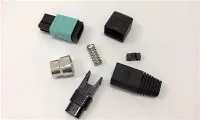
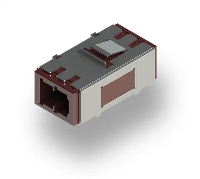
The Fiber Optic Mtrj Connector is a duplex connector, meaning it can carry two fibers in a single housing. It's a small and compact connector, suitable for multi - fiber applications. It uses a push - and - pull mechanism for mating. However, it's more sensitive to dirt and dust compared to the FC connector. The FC connector's design is more robust in terms of protecting the fiber ends from contaminants, which is important for maintaining good signal quality.
Performance and Applications
Signal Loss
When it comes to signal loss, the FC connector generally performs well. Thanks to its ceramic ferrule and precise alignment, it can achieve low insertion loss, which is crucial for long - distance and high - speed data transmission. The SC and LC connectors also have low insertion loss, but in some cases, the FC's threaded design can provide a more consistent connection over time, reducing the risk of increased signal loss due to movement.
Environmental Resistance
The FC connector's threaded coupling gives it an edge in harsh environments. It can withstand vibrations, shocks, and temperature variations better than some of the other connectors. For example, in industrial settings or outdoor installations, the FC connector is more likely to maintain a stable connection. The SC and LC connectors, while suitable for many indoor applications, may need additional protection in rough conditions.
Installation and Maintenance
The installation of an FC connector can be a bit more time - consuming compared to the push - type connectors like SC and LC. You need to carefully screw it in to ensure a proper connection. However, once installed, it requires less maintenance in terms of checking for loose connections. The MTRJ connector, on the other hand, may need more frequent cleaning due to its sensitivity to contaminants.
Cost Considerations
Cost is always a factor when choosing a fiber optic connector. The FC connector is generally more expensive than the SC and LC connectors. This is partly due to its more complex design and the precision - made ceramic ferrule. However, in applications where reliability and long - term performance are critical, the extra cost may be worth it. The MTRJ connector is usually more affordable, but again, you need to balance the cost with its limitations in terms of environmental resistance and maintenance.
Why Choose Our Fiber Optic FC Connectors
As a supplier, we take pride in offering high - quality Fiber Optic FC Connectors. Our connectors are manufactured with strict quality control measures. We use the best - grade ceramic ferrules to ensure precise alignment and low signal loss. Our production process also focuses on environmental resistance, so our connectors can perform well in a variety of conditions.
Whether you're working on a large - scale telecommunications project, an industrial automation system, or a high - security data center, our FC connectors can meet your needs. We understand that every project is unique, and we're here to provide you with the right solutions.
Let's Connect
If you're interested in learning more about our Fiber Optic FC Connectors or are looking to make a purchase, don't hesitate to reach out. We're always happy to have a chat about your specific requirements and how our connectors can fit into your project. Whether you need a small quantity for a trial or a large order for a major installation, we're ready to assist.
References
- Fiber Optic Association Handbook
- Telecommunications Industry Association (TIA) Standards
- Various research papers on fiber optic connectors and their applications