As a seasoned supplier of Fiber Optic SC Pigtails, I've encountered numerous inquiries regarding the cut - off wavelength of these essential components in the fiber optic industry. In this blog, I aim to demystify the concept of cut - off wavelength, explain its significance in Fiber Optic SC Pigtails, and share some insights from my experience in the field.
Understanding the Basics of Fiber Optic SC Pigtails
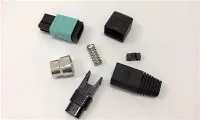
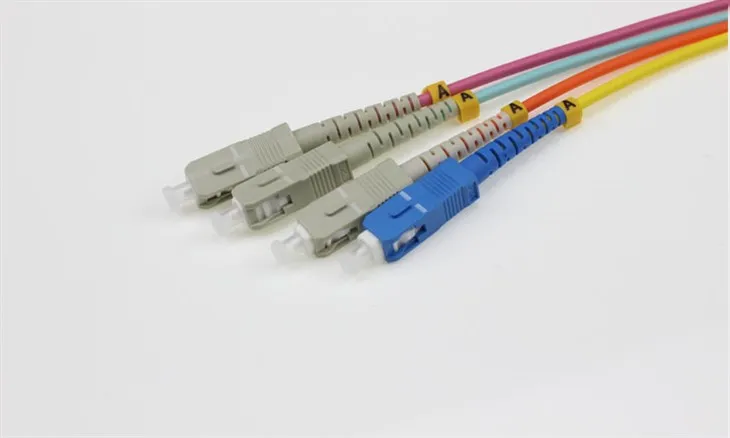
Before delving into the cut - off wavelength, let's briefly understand what a Fiber Optic SC Pigtail is. A Fiber Optic SC Pigtail Fiber Optic Sc Pigtail is a short, single - fiber cable terminated with an SC connector at one end and a bare fiber at the other. It is widely used in fiber optic networks for splicing or connecting to other fiber optic components. The SC connector is known for its push - pull latching mechanism, which provides a secure and easy - to - use connection.
What is Cut - off Wavelength?
The cut - off wavelength is a critical parameter in single - mode fiber optics. In a single - mode fiber, light propagates in only one mode, which is the fundamental mode. The cut - off wavelength is defined as the wavelength above which the fiber can support only the fundamental mode of propagation.
Mathematically, the cut - off wavelength ($\lambda_{c}$) is determined by the fiber's physical properties, such as the core diameter, refractive index profile, and the difference in refractive indices between the core and the cladding. When the operating wavelength of the light source is greater than the cut - off wavelength, the fiber behaves as a single - mode fiber, allowing the light to travel with minimal dispersion and attenuation.
Importance of Cut - off Wavelength in Fiber Optic SC Pigtails
Signal Quality
In a Fiber Optic SC Pigtail, the cut - off wavelength plays a crucial role in maintaining signal quality. If the operating wavelength is below the cut - off wavelength, the fiber may support multiple modes of propagation. This multimode operation can lead to modal dispersion, where different modes of light travel at different speeds, causing the signal to spread out over time. As a result, the signal becomes distorted, and the data transmission rate and distance are limited.
Compatibility
Another important aspect is compatibility with light sources. Most fiber optic systems use lasers or light - emitting diodes (LEDs) as light sources. These light sources emit light at specific wavelengths. To ensure optimal performance, the cut - off wavelength of the Fiber Optic SC Pigtail must be carefully selected to match the wavelength of the light source. For example, in a telecommunications network operating at 1310 nm or 1550 nm, the Fiber Optic SC Pigtail should have a cut - off wavelength below these values to ensure single - mode operation.
Measuring the Cut - off Wavelength
There are several methods to measure the cut - off wavelength of a Fiber Optic SC Pigtail. One common method is the bend - insensitive method. In this method, the fiber is bent at a specific radius, and the power of the light transmitted through the fiber is measured as a function of wavelength. The cut - off wavelength is determined by the point at which the power transmission curve shows a significant change.

Another method is the far - field pattern method. In this method, the far - field pattern of the light emerging from the fiber is measured. The cut - off wavelength is determined by analyzing the shape and characteristics of the far - field pattern.
Factors Affecting the Cut - off Wavelength
Fiber Geometry
The core diameter and the refractive index profile of the fiber have a significant impact on the cut - off wavelength. A larger core diameter generally results in a higher cut - off wavelength. Similarly, a more step - like refractive index profile can also increase the cut - off wavelength.
Temperature
Temperature can also affect the cut - off wavelength. As the temperature changes, the refractive index of the fiber material changes, which in turn affects the cut - off wavelength. In most cases, the cut - off wavelength increases with an increase in temperature.
Comparing with Other Types of Pigtails
When comparing Fiber Optic SC Pigtails with other types of pigtails, such as Fiber Optic Lc Pigtails and Fiber Optic E2000 Pigtail, the cut - off wavelength remains a critical parameter for all of them. However, the specific cut - off wavelength requirements may vary depending on the application and the connector type.
For example, Fiber Optic LC Pigtails are often used in high - density applications, where space is limited. The cut - off wavelength of LC pigtails needs to be carefully controlled to ensure compatibility with the light sources and the overall system requirements. Similarly, Fiber Optic E2000 Pigtails are known for their high - performance and dust - protection features. The cut - off wavelength of E2000 pigtails also needs to be optimized for the specific application.
Selecting the Right Fiber Optic SC Pigtail Based on Cut - off Wavelength
When selecting a Fiber Optic SC Pigtail, it is essential to consider the cut - off wavelength. Here are some guidelines:
- Know Your Application: Determine the operating wavelength of your fiber optic system. This could be based on the type of data transmission (e.g., telecommunications, data centers) and the light source used.
- Check the Specifications: Look for the cut - off wavelength specification provided by the manufacturer. Make sure the cut - off wavelength is below the operating wavelength of your system to ensure single - mode operation.
- Consider Future Upgrades: If you plan to upgrade your system in the future, it is advisable to choose a Fiber Optic SC Pigtail with a lower cut - off wavelength to allow for compatibility with higher - wavelength light sources.
Conclusion
The cut - off wavelength is a crucial parameter in Fiber Optic SC Pigtails. It affects the signal quality, compatibility with light sources, and overall performance of the fiber optic system. As a supplier, I understand the importance of providing high - quality Fiber Optic SC Pigtails with accurately specified cut - off wavelengths.
If you are in the market for Fiber Optic SC Pigtails or have any questions regarding cut - off wavelength or other fiber optic components, I encourage you to reach out for a detailed discussion. We can provide you with the right solutions tailored to your specific needs and ensure a seamless and efficient fiber optic network.
References
- Ghatak, A. K., & Thyagarajan, K. (1998). Introduction to Fiber Optics. Cambridge University Press.
- Senior, J. M. (1992). Optical Fiber Communications: Principles and Practice. Prentice Hall.
- ITU - T Recommendations G.650.1 and G.650.2 for definitions and measurement methods of fiber optic parameters.