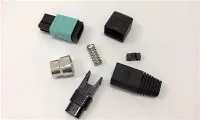
Hey there! I'm a supplier of fiber optic pigtails, and today I want to have an open and honest chat about the disadvantages of fiber optic pigtails. Yeah, I know it might seem a bit counterintuitive for a supplier to talk about the downsides, but I believe in giving you the full picture so you can make the best decisions for your needs.
High Initial Cost
One of the most obvious drawbacks of fiber optic pigtails is the high initial cost. Compared to traditional copper cables, fiber optic pigtails are more expensive to manufacture. The materials used, like high - quality glass or plastic fibers, and the precision manufacturing processes required to ensure low signal loss all contribute to the higher price tag. For small - scale projects or those on a tight budget, this can be a real deal - breaker. You might be thinking, "Why should I pay so much more when copper cables seem to do the job just fine?" Well, copper cables have their own limitations, but the upfront cost of fiber optic pigtails can be a significant hurdle. If you're looking at large - scale installations, the cost difference can add up quickly, making it a tough sell for some customers.
Fragility
Fiber optic pigtails are quite fragile. The fiber strands inside are extremely thin, and they can be easily damaged if not handled properly. Bending the pigtail too sharply can cause micro - cracks in the fiber, which will lead to signal loss. Even a small kink or a crush can disrupt the transmission of light signals. This means that during installation, extra care needs to be taken. Workers have to be trained to handle these delicate components, which adds to the overall installation cost. Also, in environments where there is a high risk of physical damage, such as construction sites or areas with heavy machinery, fiber optic pigtails may not be the best choice. Unlike copper cables, which are more robust and can withstand a bit of rough treatment, fiber optic pigtails need a more controlled and gentle environment.


Difficult Installation
Installing fiber optic pigtails is not a walk in the park. It requires specialized skills and tools. You can't just plug them in like you would with a regular cable. First, the ends of the pigtails need to be terminated properly. This involves stripping the outer layers, cleaning the fiber, and then attaching connectors. Any mistakes during this process can result in poor signal quality. Moreover, aligning the fibers precisely is crucial for efficient signal transmission. Specialized fusion splicers or mechanical splices are needed to connect the fibers, and these tools are expensive and require trained technicians to operate. If you're a DIY enthusiast, you're likely to run into a lot of problems when trying to install fiber optic pigtails on your own. Even for professional installers, it can be a time - consuming and challenging task.
Compatibility Issues
Another disadvantage is compatibility. There are different types of fiber optic pigtails, such as Fiber Optic Lc Pigtails, Fiber Optic E2000 Pigtail, and Fiber Optic Sc Pigtail. Each type has its own connector and characteristics. This means that you need to make sure that the pigtail you choose is compatible with your existing network equipment. If you mix and match incompatible components, you'll end up with signal loss or even complete failure of the connection. It can be confusing for customers to figure out which type of pigtail is right for their specific setup, and getting it wrong can be costly.
Limited Repair Options
When a fiber optic pigtail gets damaged, repairing it is not as straightforward as with copper cables. As mentioned earlier, the installation process is complex, and the same goes for repairs. You need to have the right tools and skills to fix a broken fiber. In some cases, it might be more cost - effective to replace the entire pigtail rather than trying to repair it. This can be a problem, especially if you're in a remote location where getting a replacement quickly is difficult. Also, if the damage occurs in a hard - to - reach area, the repair process becomes even more challenging.
Sensitivity to Environmental Conditions
Fiber optic pigtails are sensitive to environmental conditions. Extreme temperatures, humidity, and exposure to chemicals can all affect their performance. High temperatures can cause the fiber to expand, which may lead to signal loss. Humidity can corrode the connectors and cause oxidation, reducing the efficiency of the connection. Chemicals, such as solvents or cleaning agents, can damage the outer coating of the pigtail and the fiber itself. This means that in harsh environments, additional protective measures need to be taken, such as using special enclosures or coatings. These extra precautions add to the cost and complexity of the installation.
Signal Degradation Over Distance
Although fiber optic pigtails are known for their long - distance transmission capabilities, there is still some signal degradation over very long distances. Even with high - quality fibers, the signal strength will gradually decrease as it travels through the pigtail. To compensate for this, repeaters or amplifiers may be required at regular intervals. These additional components not only increase the cost but also add complexity to the network. In some cases, the need for repeaters can limit the practical distance of the fiber optic pigtail installation.
Despite all these disadvantages, fiber optic pigtails still have many advantages, such as high - speed data transmission, low signal interference, and large bandwidth. If you're considering using fiber optic pigtails for your project, it's important to weigh these pros and cons carefully.
If you have any questions or are interested in discussing your specific needs, feel free to reach out. We're here to help you make the right decision and find the best fiber optic pigtail solution for your situation. Whether you're a small business looking to upgrade your network or a large enterprise planning a new installation, we can provide you with the expertise and products you need.
References
- "Fiber Optic Communication Systems" by Govind P. Agrawal
- "Optical Fiber Technology: Fundamentals" by John M. Senior