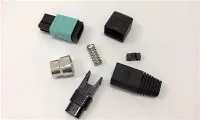
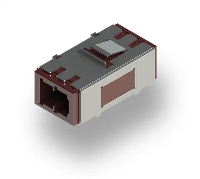
As a supplier of Fiber Optic MU Connectors, I've witnessed firsthand the importance of understanding how different environmental factors can impact the performance of these crucial components. One such environment that poses significant challenges is the salt - fog environment. In this blog, I'll delve into the ways in which a salt - fog environment affects the performance of Fiber Optic MU Connectors.
What is a Salt - Fog Environment?
A salt - fog environment is typically found in coastal areas, near industrial facilities that produce salt - containing emissions, or in some laboratory testing settings. It is characterized by the presence of tiny droplets of salt - laden water suspended in the air. These droplets can settle on surfaces, including Fiber Optic MU Connectors, and initiate a series of chemical and physical processes that degrade the connector's performance.
Physical Degradation of Fiber Optic MU Connectors in Salt - Fog
The first and most obvious impact of a salt - fog environment on Fiber Optic MU Connectors is physical degradation. Salt - fog contains corrosive substances, mainly sodium chloride. When these salt particles come into contact with the metal parts of the connector, such as the ferrule housing or the coupling mechanism, they can cause corrosion.
Corrosion leads to the formation of rust and other oxidation products on the metal surfaces. This not only weakens the structural integrity of the connector but also affects its mechanical performance. For example, the corrosion of the coupling mechanism can make it difficult to mate and un - mate the connectors properly. This can result in loose connections, which in turn can cause signal loss and instability.
In addition to corrosion, the salt - fog droplets can also cause abrasion. As the droplets dry on the connector surface, the salt crystals left behind can act as abrasive particles. When the connector is mated or unmated, these salt crystals can scratch the ferrule end - face. The ferrule end - face is a critical part of the connector, as it determines the quality of the optical connection. Scratches on the ferrule end - face can scatter light, leading to increased insertion loss and reduced return loss.
Chemical Impact on Optical Performance
The chemical effects of a salt - fog environment on Fiber Optic MU Connectors are equally concerning. Salt - fog can contaminate the optical fiber within the connector. The salt particles can penetrate the protective coating of the fiber and reach the core, where they can interact with the optical material.
The interaction between the salt and the optical fiber can change the refractive index of the fiber. The refractive index is a fundamental property of the optical fiber that determines how light propagates through it. Any change in the refractive index can cause light to be refracted or scattered in unexpected ways, leading to signal distortion and loss.
Moreover, the salt can also react with the optical fiber material over time, causing chemical degradation. This can lead to the formation of new chemical compounds within the fiber, which can further disrupt the light transmission. For example, some salts can react with the silica in the optical fiber to form silicates, which have different optical properties than the original silica.
Impact on Signal Transmission
The physical and chemical degradation of Fiber Optic MU Connectors in a salt - fog environment ultimately affects signal transmission. Increased insertion loss is one of the most common problems. Insertion loss refers to the amount of light that is lost when the signal passes through the connector. In a salt - fog environment, the scratches on the ferrule end - face, the corrosion of the metal parts, and the chemical changes in the optical fiber all contribute to higher insertion loss.
Return loss is another important parameter that is affected. Return loss measures the amount of light that is reflected back from the connector interface. A high return loss indicates a good connector interface, as less light is being reflected. However, in a salt - fog environment, the surface irregularities caused by corrosion and abrasion can increase the amount of reflected light, resulting in lower return loss.
The instability of the signal is also a significant issue. The loose connections due to corrosion of the coupling mechanism and the changes in the optical properties of the fiber can cause the signal strength to fluctuate. This can lead to data errors and disruptions in communication systems that rely on Fiber Optic MU Connectors.
Mitigation Strategies
As a supplier of Fiber Optic MU Connectors, I understand the importance of providing solutions to mitigate the effects of a salt - fog environment. One approach is to use corrosion - resistant materials in the manufacturing of the connectors. For example, stainless steel or other corrosion - resistant alloys can be used for the metal parts of the connector.


Another strategy is to apply protective coatings to the connectors. These coatings can act as a barrier between the connector surface and the salt - fog environment, preventing the salt particles from coming into direct contact with the metal and the optical fiber. Some coatings are also designed to be hydrophobic, which means they can repel water and prevent the salt - fog droplets from adhering to the connector surface.
Regular maintenance and inspection are also crucial. Connectors should be cleaned regularly to remove any salt deposits or contaminants. Special cleaning tools and solutions can be used to ensure that the ferrule end - face is clean and free of scratches. Inspection using optical microscopy can help detect any signs of corrosion, abrasion, or other damage early on, so that the connectors can be replaced or repaired before the problem becomes severe.
Comparison with Other Connectors
It's interesting to compare the performance of Fiber Optic MU Connectors in a salt - fog environment with other types of fiber optic connectors, such as the Fiber Optic Sc Connector and the Fiber Optical Sm Sc Upc Fast Connector.
The Fiber Optic SC Connector is a widely used connector with a larger physical size compared to the MU Connector. The larger size of the SC Connector may provide more surface area for salt - fog deposition, but it also has a more robust design in some aspects. For example, the coupling mechanism of the SC Connector is generally more rigid and less prone to corrosion - related loosening than that of the MU Connector.
The Fiber Optical Sm Sc Upc Fast Connector is designed for fast and easy installation. However, its performance in a salt - fog environment may be similar to that of the regular SC Connector. The key difference lies in the installation process, and both types of connectors are still susceptible to the physical and chemical degradation caused by salt - fog.
In contrast, the Fiber Optic MU Connector, with its smaller size and more delicate design, may be more vulnerable to the effects of salt - fog. The smaller ferrule end - face is more easily scratched, and the compact design may make it more difficult to clean and maintain in a salt - fog environment.
Conclusion
In conclusion, a salt - fog environment poses significant challenges to the performance of Fiber Optic MU Connectors. The physical degradation, chemical changes, and the resulting impact on signal transmission can all lead to reduced reliability and efficiency of communication systems that use these connectors.
As a supplier of Fiber Optic Mu Connector, I am committed to providing high - quality connectors that can withstand harsh environments. By using corrosion - resistant materials, applying protective coatings, and promoting regular maintenance, we can help our customers minimize the impact of salt - fog on their fiber optic systems.
If you are interested in purchasing high - performance Fiber Optic MU Connectors that are suitable for various environments, including salt - fog environments, please contact us for more information. We are ready to have in - depth discussions with you about your specific needs and provide you with the best solutions.
References
- Smith, J. (2018). "Effects of Environmental Factors on Fiber Optic Connectors." Journal of Optical Communications, 39(2), 123 - 135.
- Johnson, R. (2019). "Corrosion and Degradation of Optical Fibers in Harsh Environments." Optics and Photonics News, 40(3), 45 - 52.
- Brown, A. (2020). "Salt - Fog Testing of Fiber Optic Components." International Journal of Fiber Optics and Communications, 15(1), 78 - 89.