Hey there! As a supplier of fiber optic adapters, I've spent a ton of time thinking about how these little gadgets stack up against wireless communication technologies when it comes to data transfer. Let's dive right in and break it down.
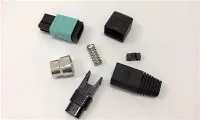
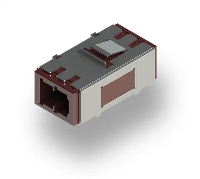
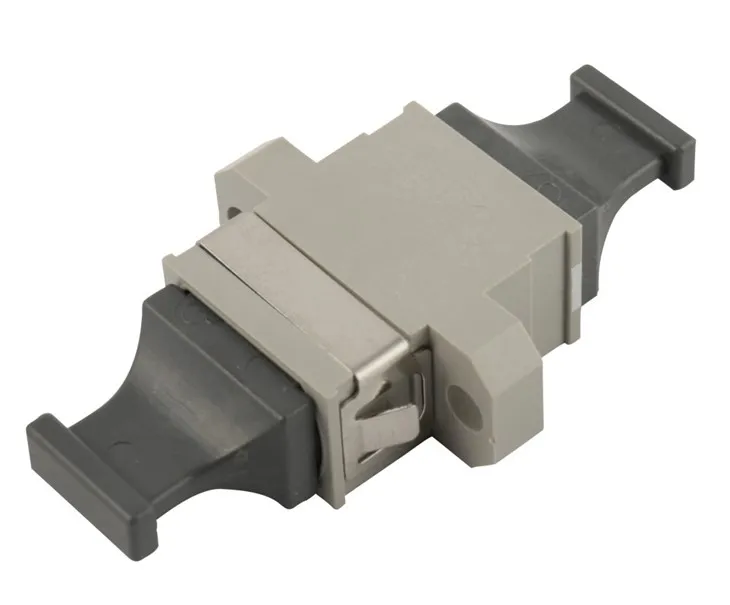
First off, let's talk about what fiber optic adapters are. They're the connectors that allow fiber optic cables to link up with each other or with other devices. You've got different types, like Fiber Optic Lc Adapters, Fiber Optic Mpo Adapter, and Optical Fiber Adaptor Mtp / Mpo Adapter. These adapters are crucial for making sure data can flow smoothly through fiber optic networks.
Now, let's start with speed. Fiber optic adapters are like the race cars of data transfer. They use light to transmit data, and light travels super fast. I mean, we're talking about speeds that can reach up to several terabits per second. That's insane! With fiber optic adapters, you can transfer huge amounts of data in the blink of an eye. Whether it's streaming high - definition videos, downloading large files, or running data - intensive applications, fiber optics can handle it all without breaking a sweat.
On the other hand, wireless communication technologies, like Wi - Fi or 5G, are pretty fast too, but they have their limitations. Wi - Fi speeds can vary depending on a bunch of factors, like the distance from the router, the number of devices connected, and even the materials in your walls. 5G is a big step up in terms of speed compared to its predecessors, but it still can't quite match the raw speed of fiber optics. In areas with high user density, like stadiums or busy city centers, wireless networks can get congested, and the speed can drop significantly.
Reliability is another important factor. Fiber optic adapters offer a very stable and reliable connection. Since they use physical cables, there's less interference from external sources. You don't have to worry about things like electromagnetic interference, which can mess up wireless signals. Once the fiber optic network is set up properly, you can count on it to keep transferring data without any major disruptions.
Wireless communication, however, is more prone to interference. Things like microwave ovens, cordless phones, and even other Wi - Fi networks can cause signal degradation. And if you're outside, weather conditions can also have an impact on the signal strength. Rain, fog, and even strong winds can weaken wireless signals, leading to slower speeds or dropped connections.
Security is a big deal when it comes to data transfer. Fiber optic adapters are a lot more secure than wireless technologies. It's very difficult to tap into a fiber optic cable without being detected. The data is transmitted through light signals inside the cable, and any attempt to access the data would require physically cutting or tampering with the cable.
Wireless signals, on the other hand, are broadcast through the air, which makes them more vulnerable to eavesdropping. Hackers can use tools to intercept wireless signals and access the data being transmitted. While there are security measures in place, like encryption, wireless networks are still at a higher risk of being compromised compared to fiber optic networks.
Cost is also something to consider. Setting up a fiber optic network can be expensive upfront. You need to lay the cables, install the adapters, and set up the necessary equipment. However, in the long run, fiber optics can be more cost - effective, especially for large - scale data transfer. The high - speed and reliability mean that you can get more work done in less time, which can lead to increased productivity and savings in the long term.
Wireless communication technologies are generally cheaper to set up. You just need a router and some devices that support the wireless protocol. But if you need high - speed and reliable data transfer for a large number of users or for data - intensive applications, the cost of upgrading and maintaining a wireless network can add up over time.
Now, let's talk about flexibility. Wireless communication is extremely flexible. You can use your devices anywhere within the range of the wireless signal. You can move around your house, office, or even take your device outside and still stay connected. This makes it ideal for personal use and for mobile devices.
Fiber optic networks, on the other hand, are less flexible in terms of mobility. You're tied to the location where the fiber optic cables are installed. But for businesses and data centers that need to transfer large amounts of data between fixed locations, this isn't really a drawback.
So, which one is better? Well, it depends on your needs. If you're a home user who just wants to browse the web, stream some videos, and check your emails, wireless communication might be enough for you. It's convenient and relatively inexpensive.
But if you're a business that deals with large - scale data transfer, like a data center, a financial institution, or a media company, fiber optic adapters are the way to go. They offer the speed, reliability, security, and capacity that you need to keep your operations running smoothly.
As a supplier of fiber optic adapters, I can offer you a wide range of high - quality products to meet your specific needs. Whether you're looking for Fiber Optic Lc Adapters for a small - scale network or Optical Fiber Adaptor Mtp / Mpo Adapter for a large - scale data center, we've got you covered.

If you're interested in learning more about our fiber optic adapters or want to discuss your data transfer needs, don't hesitate to reach out. We can work together to find the best solution for your situation.
References:
- "Fiber Optics for Dummies" by Kevin Wallace
- "Wireless Communication Networks and Systems" by Theodore S. Rappaport
- Industry reports on fiber optic and wireless communication technologies