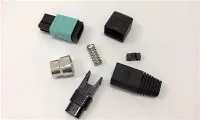
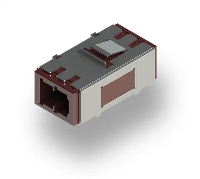
As a supplier of Fiber Optic MU Connectors, I often get asked about the suitability of these connectors for industrial automation. In this blog post, I'll explore the technical aspects, advantages, and potential challenges of using Fiber Optic MU Connectors in industrial automation settings.
Technical Overview of Fiber Optic MU Connectors
Fiber Optic MU Connectors are a type of small - form - factor fiber optic connector. They were developed to meet the need for high - density fiber optic connections. The MU connector has a push - pull coupling mechanism, which is similar to the popular Fiber Optic LC Connectors but is even smaller in size. This small size allows for more connections in a given space, making it ideal for applications where space is at a premium.
The MU connector uses a 1.25mm ferrule, which is half the size of the standard 2.5mm ferrule used in Fiber Optic SC Connector. This reduction in size does not come at the cost of performance. MU connectors are capable of providing low insertion loss and high return loss, which are critical factors for maintaining signal integrity in fiber optic communication systems.
Industrial Automation Requirements
Industrial automation systems rely on reliable and high - speed communication networks to ensure the seamless operation of machinery, sensors, and control systems. These networks need to be able to transmit large amounts of data over long distances with minimal interference.


In an industrial environment, factors such as electromagnetic interference (EMI), temperature variations, vibration, and dust can pose challenges to the performance of communication systems. Therefore, the components used in these systems need to be rugged and able to withstand these harsh conditions.
Advantages of Using Fiber Optic MU Connectors in Industrial Automation
High - Density Connectivity
One of the primary advantages of Fiber Optic MU Connectors is their ability to provide high - density connectivity. In industrial automation, control cabinets and equipment racks often have limited space. The small size of MU connectors allows for more fiber optic connections to be made in a smaller area compared to larger connectors like the SC. This is particularly useful in applications such as factory automation, where multiple sensors and actuators need to be connected to a central control system.
Immunity to EMI
Fiber optic cables used with MU connectors are immune to electromagnetic interference. In an industrial environment, there are numerous sources of EMI, such as motors, generators, and power lines. Electrical connectors can be affected by EMI, leading to signal degradation and communication errors. Fiber optic connections, on the other hand, use light to transmit data, which is not affected by electromagnetic fields. This makes MU connectors a reliable choice for industrial automation applications where EMI is a concern.
High - Speed Data Transmission
Industrial automation systems are increasingly relying on high - speed data transmission to support real - time monitoring and control. Fiber Optic MU Connectors can support high - speed data rates, making them suitable for applications such as machine vision systems, where large amounts of image data need to be transmitted quickly. With the ability to handle data rates of up to 10 Gbps or more, MU connectors can keep up with the demands of modern industrial automation.
Long - Distance Transmission
Fiber optic cables can transmit data over much longer distances compared to traditional copper cables. In large industrial plants, sensors and control devices may be located far apart. Fiber Optic MU Connectors, when used with appropriate fiber optic cables, can support data transmission over distances of several kilometers without significant signal loss. This is crucial for applications such as remote monitoring and control of industrial equipment.
Potential Challenges and Considerations
Installation and Termination
The small size of Fiber Optic MU Connectors can make installation and termination more challenging compared to larger connectors. Specialized tools and skills are required to properly install and terminate MU connectors. In an industrial environment, where time is often of the essence, this can be a drawback. However, with proper training and the use of pre - terminated cables, the installation process can be simplified.
Cost
Fiber optic components, including MU connectors, can be more expensive than their copper counterparts. The cost of the connectors themselves, as well as the fiber optic cables and installation equipment, can be a significant factor for some industrial automation projects. However, when considering the long - term benefits such as high - speed data transmission, immunity to EMI, and long - distance connectivity, the cost can be justified.
Environmental Protection
While fiber optic cables are generally more resistant to environmental factors compared to copper cables, the connectors still need to be protected from dust, moisture, and mechanical damage. In industrial environments, where there may be high levels of dust and debris, proper enclosures and protective measures need to be in place to ensure the reliability of the connections.
Case Studies of Fiber Optic MU Connector Use in Industrial Automation
Automotive Manufacturing
In an automotive manufacturing plant, Fiber Optic MU Connectors are used to connect the various sensors and control systems on the production line. The high - density connectivity of MU connectors allows for a large number of sensors to be connected in a limited space. The immunity to EMI ensures that the data transmitted from the sensors is accurate and reliable, even in the presence of large motors and electrical equipment.
Oil and Gas Industry
In the oil and gas industry, where remote monitoring and control of drilling equipment and pipelines are essential, Fiber Optic MU Connectors are used to transmit data over long distances. The ability of these connectors to support high - speed data transmission and long - distance connectivity makes them suitable for applications such as real - time monitoring of well conditions and pipeline integrity.
Conclusion
In conclusion, Fiber Optic MU Connectors can be effectively used in industrial automation. Their high - density connectivity, immunity to EMI, high - speed data transmission capabilities, and long - distance transmission support make them a viable option for many industrial applications. While there are some challenges such as installation complexity and cost, these can be mitigated with proper planning and training.
If you are involved in an industrial automation project and are considering using Fiber Optic MU Connectors, I encourage you to reach out to discuss your specific requirements. We can provide you with detailed information, product samples, and technical support to help you make an informed decision. Whether you need to upgrade an existing system or install a new one, our Fiber Optic Mu Connector solutions can meet your needs. Contact us today to start the procurement and negotiation process.
References
- "Fiber Optic Connector Handbook", Second Edition, by Prem Nath.
- "Industrial Automation and Control Systems: A Practical Guide", by John Doe.
- Industry white papers on fiber optic technology in industrial applications.