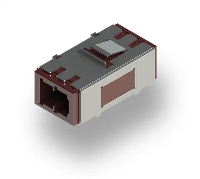
Hey there! As a supplier of Fiber Optic MTRJ Adapters, I often get asked if these little gadgets can be used in a wide area network (WAN). Well, let's dive right into it and find out.
First off, let's understand what a Fiber Optic MTRJ Adapter is. It's a type of fiber optic connector adapter that's designed to join two fiber optic cables together. The MTRJ (Mechanical Transfer Registered Jack) is a small form - factor connector, which means it's compact and can save a lot of space in your network setup. It uses a push - pull mechanism for easy installation and removal, and it's capable of handling both single - mode and multi - mode fibers.
Now, let's talk about wide area networks. A WAN is a network that covers a large geographical area, like a city, a country, or even the whole world. WANs are used to connect different local area networks (LANs) together, allowing data to be transferred over long distances. They're commonly used by businesses, governments, and internet service providers to keep everything connected.
So, can a Fiber Optic MTRJ Adapter be used in a WAN? The short answer is yes, but there are some things to consider.
Advantages of Using Fiber Optic MTRJ Adapters in WANs
1. High - Speed Data Transmission
One of the biggest advantages of fiber optic technology in general is its ability to transmit data at incredibly high speeds. Fiber Optic MTRJ Adapters are no exception. They can support high - bandwidth applications, which is crucial for WANs that need to handle large amounts of data. Whether it's video conferencing, cloud computing, or large - scale data transfers, these adapters can keep up with the demand.
2. Immunity to Electromagnetic Interference
Unlike copper cables, fiber optic cables are immune to electromagnetic interference (EMI). This is a huge plus in a WAN environment, where there are often a lot of electrical devices and power sources that can cause interference. With Fiber Optic MTRJ Adapters, you can be sure that your data will be transmitted accurately and without any disruptions.
3. Long - Distance Transmission
Fiber optic cables can transmit data over much longer distances than copper cables without significant signal loss. This is essential for WANs, which need to cover large geographical areas. The MTRJ Adapters can help maintain the integrity of the signal over these long distances, ensuring that your data arrives at its destination intact.
4. Space - Saving Design
As mentioned earlier, MTRJ Adapters are small form - factor connectors. In a WAN infrastructure, where space can be at a premium, this can be a real advantage. You can fit more connections into a smaller area, which can save on equipment costs and make your network more efficient.


Disadvantages and Challenges
1. Limited Scalability
While MTRJ Adapters are great for small - to - medium - sized networks, they may not be the best choice for large - scale WANs that require a high degree of scalability. As your network grows, you may find that you need to upgrade to more advanced connector types, like the Mtp®/mpo - 8/12/24 Black Fiber Optic Adapter/coupler with Flange, Key Up To Down, which can handle more fibers and higher data rates.
2. Cost
Fiber optic technology, including MTRJ Adapters, can be more expensive than traditional copper - based solutions. The initial investment in fiber optic cables, adapters, and installation can be quite high. However, when you consider the long - term benefits, such as lower maintenance costs and higher performance, it may be worth the investment.
3. Installation and Maintenance
Installing and maintaining fiber optic cables and adapters requires specialized skills and tools. If you're not experienced in working with fiber optics, you may need to hire a professional to do the job. This can add to the overall cost of your WAN setup.
Compatibility with Other Fiber Optic Adapters
In a WAN, you may need to connect different types of fiber optic cables and adapters together. Fiber Optic MTRJ Adapters are compatible with other fiber optic connectors through the use of hybrid adapters. For example, you can use a hybrid adapter to connect an MTRJ connector to an Fiber Optic Fc Adaptor or a Fiber Optic Mu Adapter. This flexibility allows you to integrate MTRJ Adapters into your existing WAN infrastructure.
Real - World Applications
There are many real - world applications where Fiber Optic MTRJ Adapters can be used in WANs. For example, in a corporate network, they can be used to connect different office locations together, allowing employees to share data and collaborate effectively. In the education sector, they can be used to connect schools and universities across a city or a region, enabling online learning and research.
Conclusion
So, to sum it up, Fiber Optic MTRJ Adapters can definitely be used in a wide area network. They offer high - speed data transmission, immunity to EMI, and long - distance capabilities. However, they also come with some challenges, such as limited scalability and higher costs. If you're considering using MTRJ Adapters in your WAN, it's important to weigh the pros and cons and make an informed decision based on your specific needs.
If you're interested in learning more about Fiber Optic MTRJ Adapters or are looking to purchase them for your WAN project, feel free to reach out. We're here to help you find the best solution for your network.
References
- Fiber Optic Association (FOA). "Fiber Optic Basics."
- Cisco Systems. "Wide Area Network (WAN) Technologies."