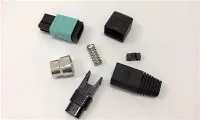
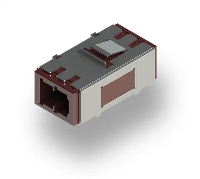
In the world of fiber optic communication, understanding the nuances between different components is crucial for achieving optimal performance. One such area of interest is the difference between single - mode and multi - mode Fiber Optic MU Connectors. As a leading supplier of Fiber Optic MU Connectors, I am well - versed in these differences and their implications for various applications.
Basics of Fiber Optic MU Connectors
Fiber Optic MU Connectors are small - form - factor connectors that have gained popularity due to their compact size and high - density capabilities. They are designed to provide a reliable connection for fiber optic cables, ensuring efficient transmission of data signals. These connectors are widely used in telecommunications, data centers, and other high - speed networking environments.
Single - Mode Fiber Optic MU Connectors
Single - mode fiber optic cables are designed to carry light signals along a single path, or mode. This is achieved by using a very thin core, typically around 9 microns in diameter. The small core size allows for a more direct and focused transmission of light, which results in several key advantages.
Transmission Distance
One of the most significant advantages of single - mode MU connectors is their ability to support long - distance transmissions. Since the light travels in a single path, there is less dispersion and attenuation over long distances. This makes single - mode connectors ideal for applications such as telecommunications networks that require data to be transmitted over hundreds or even thousands of kilometers. For example, in a long - haul fiber optic network connecting different cities, single - mode MU connectors can ensure reliable and high - speed data transfer without significant signal loss.
Bandwidth
Single - mode fibers also offer extremely high bandwidth capabilities. They can support very high data rates, making them suitable for applications that demand large amounts of data to be transferred quickly. In modern data centers, where there is a constant need to transfer massive amounts of data between servers and storage systems, single - mode MU connectors can provide the necessary bandwidth to keep up with the demand.
Cost Considerations
However, single - mode fiber optic cables and connectors are generally more expensive than their multi - mode counterparts. The manufacturing process for single - mode fibers is more complex, and the components require more precise alignment during installation. This, combined with the higher cost of the lasers used to transmit light in single - mode systems, can make the initial investment in a single - mode network relatively high.
Multi - Mode Fiber Optic MU Connectors
Multi - mode fiber optic cables, on the other hand, have a larger core diameter, typically around 50 or 62.5 microns. This larger core allows multiple paths, or modes, for light to travel through the fiber.


Transmission Distance
Multi - mode MU connectors are better suited for short - distance applications. Due to the multiple modes of light transmission, there is more dispersion and attenuation over longer distances. As a result, multi - mode fibers are commonly used in local area networks (LANs), data centers for intra - building connections, and other short - range communication systems. For instance, in an office building where computers and servers are located relatively close to each other, multi - mode MU connectors can provide a cost - effective solution for data transmission.
Bandwidth
While multi - mode fibers have lower bandwidth capabilities compared to single - mode fibers, they are still sufficient for many common applications. The bandwidth of multi - mode fibers has been continuously improving over the years, and modern multi - mode MU connectors can support high - speed data rates such as 10 Gigabit Ethernet and even 40 Gigabit Ethernet for short distances.
Cost Considerations
Multi - mode fiber optic cables and connectors are generally more affordable than single - mode ones. The manufacturing process is less complex, and the components are easier to install. Additionally, the light sources used in multi - mode systems, such as light - emitting diodes (LEDs), are less expensive than the lasers used in single - mode systems. This makes multi - mode networks a more cost - effective option for small - to - medium - sized businesses and organizations with limited budgets.
Applications and Use Cases
The choice between single - mode and multi - mode Fiber Optic MU Connectors depends largely on the specific application requirements.
Telecommunications
In the telecommunications industry, single - mode MU connectors are the norm for long - distance backbone networks. They are used to connect different cities, countries, and even continents, ensuring reliable and high - speed data transmission. For example, undersea fiber optic cables that span thousands of kilometers rely on single - mode technology to carry voice, video, and data traffic across the globe.
Data Centers
Data centers use both single - mode and multi - mode MU connectors. Single - mode connectors are used for long - distance connections between different data centers or for connections to the wider network. Multi - mode connectors, on the other hand, are used for intra - data center connections, such as between servers, storage systems, and switches. For example, in a large data center with multiple racks of servers, multi - mode MU connectors can be used to connect the servers within a rack or between adjacent racks.
Local Area Networks (LANs)
In LANs, multi - mode MU connectors are the preferred choice due to their cost - effectiveness and suitability for short - distance transmissions. They are commonly used in office buildings, schools, and other commercial establishments to connect computers, printers, and other network devices.
Our Product Offerings
As a supplier of Fiber Optic MU Connectors, we offer a wide range of single - mode and multi - mode connectors to meet the diverse needs of our customers. Our connectors are manufactured using high - quality materials and advanced manufacturing processes to ensure reliable performance and long - term durability.
We also provide other related products such as Ferrule Field Assembly Connector Fast/quick Connector, Fiber Optic E2000 Connector, and Fiber Optic St Connecters. These products are designed to work seamlessly with our Fiber Optic MU Connectors, providing our customers with a comprehensive solution for their fiber optic networking needs.
Contact Us for Procurement
If you are in the market for Fiber Optic MU Connectors or any of our related products, we encourage you to reach out to us for a detailed discussion. Our team of experts is ready to assist you in choosing the right products for your specific application and budget. Whether you need single - mode or multi - mode connectors, we have the expertise and the products to meet your requirements. Contact us today to start the procurement process and take your fiber optic network to the next level.
References
- "Fiber Optic Communication Systems" by Govind P. Agrawal
- "Optical Fiber Technology: Research and Applications" by various authors
- Industry whitepapers on fiber optic connectors and their applications