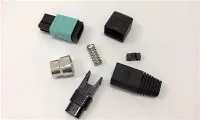
In the ever - evolving landscape of data storage area networks (SANs), the choice of components plays a crucial role in determining the efficiency, reliability, and performance of the entire system. One such component that often comes under consideration is the Fiber Optic FC Pigtail. As a supplier of Fiber Optic FC Pigtails, I am well - versed in the technicalities and applications of these products, and I am here to explore whether they can be effectively used in data storage area networks.
Understanding Fiber Optic FC Pigtails
Fiber Optic FC Pigtails are single - fiber cables with a pre - terminated FC (Ferrule Connector) at one end. The FC connector is a screw - type connector known for its excellent mechanical stability and low insertion loss. These pigtails are typically used for splicing into fiber optic cables or for connecting to fiber optic transceivers. They come in different fiber types, such as single - mode and multi - mode, each with its own characteristics and applications.
Single - mode fiber optic FC pigtails are designed for long - distance transmission, typically used in applications where data needs to travel over several kilometers. They have a smaller core diameter, which allows for a single mode of light to propagate, resulting in less dispersion and higher bandwidth. On the other hand, multi - mode fiber optic FC pigtails are suitable for shorter distances, usually within a building or a campus environment. They have a larger core diameter, which can support multiple modes of light propagation, making them more cost - effective for shorter runs.
Requirements of Data Storage Area Networks
Data storage area networks are specialized high - speed networks that connect storage devices, such as disk arrays and tape libraries, to servers. The main requirements of a SAN include high bandwidth, low latency, high reliability, and scalability. High bandwidth is necessary to transfer large amounts of data quickly between storage devices and servers. Low latency ensures that data can be accessed in a timely manner, which is critical for applications such as online transaction processing and real - time analytics. High reliability is essential to prevent data loss and ensure continuous operation, while scalability allows the SAN to grow as the data storage needs of the organization increase.
Can Fiber Optic FC Pigtails Meet the Requirements of SANs?
Bandwidth
Fiber Optic FC Pigtails are capable of providing high bandwidth. Single - mode fiber optic FC pigtails can support data rates of up to 100 Gbps or even higher, depending on the specific fiber type and the associated transceiver technology. This high bandwidth makes them suitable for use in high - performance SANs where large amounts of data need to be transferred quickly. Multi - mode fiber optic FC pigtails, although having a lower maximum bandwidth compared to single - mode, can still support data rates of several Gbps, which is sufficient for many medium - sized SANs.
Latency
In terms of latency, fiber optic transmission generally has lower latency compared to copper - based transmission. The light signals in fiber optic cables travel at a very high speed, and the FC connectors used in the pigtails have low insertion loss, which helps to minimize signal degradation and latency. This low latency is beneficial for SANs, as it allows for faster data access and reduces the response time of applications.
Reliability
Fiber Optic FC Pigtails are known for their high reliability. Fiber optic cables are immune to electromagnetic interference (EMI) and radio - frequency interference (RFI), which can cause data errors in copper cables. The FC connectors used in the pigtails are designed to provide a secure and stable connection, with a screw - type mechanism that prevents accidental disconnection. Additionally, fiber optic cables are more durable than copper cables, as they are less prone to damage from bending, stretching, and environmental factors.
Scalability
Fiber Optic FC Pigtails offer good scalability. They can be easily integrated into existing SANs, either by splicing them into existing fiber optic cables or by connecting them to new fiber optic transceivers. As the data storage needs of the organization grow, additional pigtails can be added to the network to increase the capacity.
Applications of Fiber Optic FC Pigtails in SANs
Fiber Optic FC Pigtails can be used in various applications within a SAN. For example, they can be used to connect storage devices, such as disk arrays, to fiber optic switches. The high - bandwidth and low - latency characteristics of the pigtails ensure that data can be transferred quickly and efficiently between the storage devices and the switches. They can also be used to connect servers to the SAN, allowing the servers to access the stored data in a timely manner.
In addition, Fiber Optic FC Pigtails can be used in SAN fabric expansion. When a SAN needs to be expanded to accommodate more storage devices or servers, fiber optic FC pigtails can be used to connect new switches or storage devices to the existing fabric. This allows for a seamless expansion of the SAN without significant disruption to the existing network.


Comparison with Other Fiber Optic Cables
While Fiber Optic FC Pigtails have many advantages in SAN applications, it is also important to compare them with other types of fiber optic cables. For example, Fiber Optic SC Pigtail is another popular type of fiber optic cable. The SC connector is a push - pull type connector, which is easier to install and remove compared to the screw - type FC connector. However, the FC connector provides a more secure connection, which may be more suitable for applications where vibration or movement is a concern.
LC Simplex Fiber Patch Cord is also widely used in SANs. The LC connector is a small - form - factor connector, which allows for higher density connections. However, Fiber Optic FC Pigtails may still be preferred in applications where high mechanical stability is required.
Fiber Optic ST Pigtails use a bayonet - style connector. They are known for their ease of installation and are commonly used in older network installations. However, compared to Fiber Optic FC Pigtails, they may have higher insertion loss and lower mechanical stability.
Conclusion
In conclusion, Fiber Optic FC Pigtails can be effectively used in data storage area networks. They meet the high - bandwidth, low - latency, high - reliability, and scalability requirements of SANs. Their unique features, such as the secure FC connector and the high - performance fiber optic cable, make them a suitable choice for a variety of SAN applications, including storage device connection, server connection, and SAN fabric expansion.
If you are considering using Fiber Optic FC Pigtails in your data storage area network or have any questions about our products, I encourage you to reach out to us for a detailed discussion. We can provide you with the technical specifications, pricing, and support you need to make an informed decision. Our team of experts is ready to assist you in finding the best solution for your specific SAN requirements.
References
- "Fiber Optic Communication Systems" by Govind P. Agrawal.
- "Data Center Network Design and Implementation" by various authors.
- Industry white papers on fiber optic components in data storage area networks.