Hey there! As a supplier of Fiber Optic LC Pigtails, I often get asked if these little wonders are resistant to electromagnetic interference (EMI). Well, let's dive right into it and find out.
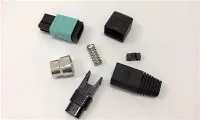
First off, what are Fiber Optic LC Pigtails? They're basically single - strand fiber optic cables with an LC connector on one end and a bare fiber on the other. You can check out more about them here: Fiber Optic LC Pigtails. These pigtails are widely used in various applications, from data centers to telecommunications networks.
Now, let's talk about electromagnetic interference. EMI is all around us. It can come from power lines, electrical appliances, radio waves, and even lightning. In a nutshell, EMI is the disturbance that affects an electrical circuit due to electromagnetic radiation or electromagnetic induction. And it can cause a whole lot of problems, like signal degradation, data loss, and even equipment failure.
So, are Fiber Optic LC Pigtails resistant to EMI? The short answer is yes! And here's why.
Fiber optic cables, including LC pigtails, use light to transmit data instead of electrical signals. Unlike copper cables, which are made of conductive materials that can easily pick up electromagnetic fields, fiber optic cables are made of glass or plastic. These materials are non - conductive, which means they don't interact with electromagnetic fields in the same way.
Let's break it down a bit further. When an electromagnetic wave hits a copper cable, it can induce an electrical current in the cable. This induced current can then interfere with the original electrical signal that the cable is trying to carry. On the other hand, when an electromagnetic wave hits a fiber optic cable, it just passes through without affecting the light signal inside the cable. The light signal is safely contained within the core of the fiber, and it's not bothered by external electromagnetic fields.
This resistance to EMI gives Fiber Optic LC Pigtails a huge advantage in environments where EMI is a concern. For example, in a data center, there are a lot of electrical devices like servers, power supplies, and cooling systems. All these devices generate electromagnetic fields that can interfere with copper cables. But with fiber optic LC pigtails, you don't have to worry about that. You can be sure that your data is being transmitted reliably and without any interference.
Another great thing about Fiber Optic LC Pigtails is that they offer high bandwidth and long - distance transmission. Since they're not affected by EMI, you can send large amounts of data over long distances without experiencing signal degradation. This makes them perfect for applications like high - speed internet connections, video streaming, and telecommunications networks.
Now, let's compare Fiber Optic LC Pigtails with some other types of cables. Take the LC Simplex Fiber Patch Cord, for example. You can learn more about it here: LC Simplex Fiber Patch Cord. Just like the LC pigtail, the LC simplex fiber patch cord is also resistant to EMI because it's a fiber optic cable. However, the main difference is that the patch cord has connectors on both ends, while the pigtail has a connector on one end and a bare fiber on the other.
Then there's the Fiber Optic E2000 Pigtail, which you can find out more about here: Fiber Optic E2000 Pigtail. The E2000 pigtail is another type of fiber optic cable with a different connector type. But just like the LC pigtail, it's also resistant to EMI for the same reasons.
In addition to being resistant to EMI, Fiber Optic LC Pigtails are also immune to other types of interference, like radio frequency interference (RFI) and crosstalk. RFI is similar to EMI, but it specifically refers to interference from radio waves. Crosstalk is the interference that occurs between two or more adjacent cables. Since fiber optic cables don't radiate electromagnetic fields and are not affected by external fields, they don't experience crosstalk either.
However, it's important to note that while the fiber optic cable itself is resistant to EMI, the connectors and other components of the LC pigtail need to be properly installed and maintained. If the connectors are not installed correctly, it can lead to signal loss and other problems. Also, the cable should be protected from physical damage, like bending or crushing, which can also affect the performance of the cable.
So, if you're in an environment where EMI is a problem, or if you need a reliable and high - performance solution for data transmission, Fiber Optic LC Pigtails are definitely a great choice.
If you're interested in purchasing Fiber Optic LC Pigtails or have any questions about them, feel free to reach out. We're here to help you find the right solution for your needs. Whether you're setting up a small home network or a large - scale data center, we've got the expertise and the products to make it happen.


References
- “Fiber Optic Communication Systems,” by Govind P. Agrawal.
- Various industry whitepapers on fiber optic technology and electromagnetic interference.