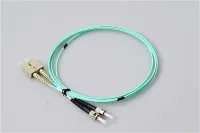
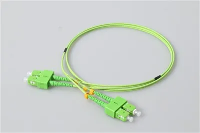
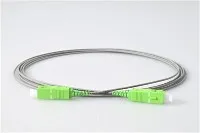
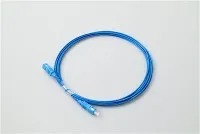
The two main disadvantages of fiber optic cables are high installation costs and physical fragility. Fiber optic cable requires more expensive materials, specialized tools, and certified labor than copper - and the glass fibers inside are brittle enough that a sharp bend or accidental impact can knock out an entire link.
Fiber has transformed the way data moves across the globe. From massive data centers to undersea telecommunications links, it delivers bandwidth and speed that copper simply cannot match.
But no cabling technology is perfect.
If you are planning a fiber deployment, these two drawbacks deserve serious attention before any budget gets approved. Both carry real consequences for project timelines, maintenance budgets, and long-term network reliability. Let's break each one down, explain why it matters, and look at practical ways to keep these issues under control.
A Quick Look at Fiber Optic Basics
A fiber optic cable transmits data as pulses of light through a thin glass or plastic core. A cladding layer with a lower refractive index keeps that light bouncing forward through total internal reflection - and the result is a medium that can carry enormous amounts of data over long distances with minimal signal loss.
There are two primary types. Single-mode fiber uses a 9-micrometer core and carries a single light path, making it the go-to choice for long-haul telecommunications. Multimode fiber has a larger core - typically 50 or 62.5 micrometers - and supports multiple light paths, which works well for shorter runs inside buildings and campuses.
Here is the catch: the very properties that make fiber so capable - ultra-thin glass strands, precision-polished connectors, tight alignment tolerances - are exactly what create its two biggest drawbacks.

Fiber Optic Cable vs Copper Cable: Key Differences at a Glance
| Factor | Fiber Optic Cable | Copper Cable |
|---|---|---|
| Installation Cost | Higher - specialized tools and certified labor required | Lower - basic crimping tools and general technicians |
| Bandwidth | Extremely high (10 Gbps to 100 Gbps+) | Limited (up to 10 Gbps over short distances) |
| Maximum Distance | Up to 40 km (single-mode) | ~100 meters |
| Physical Durability | Sensitive to bending, lateral pressure, and point impacts | More tolerant of rough handling |
| Repair Speed | 30 min to 1 hr+ per strand (fusion splicing + OTDR testing) | Minutes (strip, crimp, done) |
| EMI Immunity | Fully immune | Susceptible without shielding |
Disadvantage 1: High Installation and Material Costs
Cost is the first barrier most organizations hit when evaluating a fiber optic upgrade. And it is not just the cable itself. The expense shows up in several places at once, and the total can surprise budget planners who only accounted for materials.
Cable and Component Pricing
Fiber optic cable typically costs more per meter than equivalent copper. A standard 1,000-foot box of Cat6A copper cable might run a few hundred dollars. A comparable length of single-mode fiber? Two to three times that, depending on jacket type and fiber count. Add in fiber optic connectors, adapters, splice trays, and patch panels, and the component bill stacks up fast.
Connector quality matters more than many people realize. A poorly manufactured connector can push insertion loss above the 0.2 dB threshold most network standards require, leading to retransmissions and degraded throughput. Precision ceramic ferrule connectors are not optional - they are the baseline. That precision, however, costs significantly more than the simple RJ-45 crimp connectors used in copper networks.
Specialized Equipment and Labor
Terminating copper cable requires a crimping tool that costs under a hundred dollars. Fiber is a completely different story.
Fusion splicers - the machines that permanently join two fiber ends by melting them together with an electric arc - range from around $3,000 for a basic unit to over $15,000 for a core-alignment model capable of splice losses below 0.02 dB. Even mechanical splicing, a simpler alternative, requires alignment fixtures and index-matching gel that add per-splice costs.
Then there is labor. Fiber technicians need specialized training to cleave fiber ends cleanly, operate splicers, and run OTDR (Optical Time Domain Reflectometer) tests to verify link integrity. Certified installers command higher hourly rates than general cabling techs, and the work simply moves slower - every single connection demands inspection and cleaning.
What Do the Numbers Actually Look Like?
A 2024 industry survey by the Fiber Broadband Association found that fiber-to-the-premises deployment in the U.S. averaged $800 to $1,500 per home passed, with labor representing roughly 60 to 70 percent of the total project cost. In enterprise campus environments, per-drop costs for fiber can run 30 to 50 percent higher than copper-only deployments.
That is exactly why so many organizations go with a hybrid approach: fiber backbone links between buildings and telecom rooms, copper for the final runs to desktops and access points. You capture fiber's bandwidth and distance advantages where they matter most, and keep costs manageable at the edge.
Disadvantage 2: Physical Fragility and Susceptibility to Damage
Glass fibers are surprisingly strong under tension - pound for pound, they have a higher tensile strength than steel. But they are brittle under lateral pressure, sharp bends, and point impacts. That brittleness creates real challenges from the moment installation begins through daily operations and into emergency repairs.
Bend Radius Sensitivity
Every fiber optic cable has a minimum bend radius. Violate it, and you get macro-bending losses that attenuate the signal - or, in severe cases, crack the fiber entirely.
Standard single-mode fiber requires a minimum bend radius of roughly 30 millimeters under no-load conditions. Bend-insensitive fibers (ITU-T G.657.A2) bring that down to about 7.5 millimeters, but even these improved fibers cannot tolerate the sharp kinks that copper cable routinely survives. Cable routing through tight conduits, around structural obstacles, and through crowded patch panels demands careful planning every time. Fiber cable management accessories - trays, guides, spools - exist for exactly this reason. Skip them to save a few dollars now, and you will almost certainly pay for it later with performance problems.
Vulnerability During Construction
Fiber cables are thin and lightweight. That is normally an advantage - until a construction crew, HVAC installer, or electrician working in the same cable pathway accidentally severs one. A single cut to a fiber trunk cable can disrupt service for hundreds or even thousands of users, because fiber's high bandwidth means fewer cables serve a much larger population than copper ever did.
Armored fiber cables with corrugated steel or aluminum sheaths provide extra mechanical protection, but they also increase cost, weight, and minimum bend radius - which circles right back to Disadvantage 1.
Repair Complexity and Downtime
When copper breaks, a technician strips the ends, crimps new connectors, and restores service in minutes. Fiber repair is more involved. A damaged fiber typically requires fusion or mechanical splicing to rejoin the broken ends, followed by OTDR testing to verify acceptable loss. That process can take 30 minutes to over an hour per fiber strand, and each splice point introduces a small amount of permanent insertion loss.
If a qualified splice technician is not on-site? Restoration time stretches even further. Stocking pre-terminated fiber optic patch cords and emergency splice kits can help shorten response windows, but the fundamental constraint remains: fiber repair is slower and more skill-dependent than copper repair. Period.
Environmental Sensitivity
Glass fiber is immune to electromagnetic interference - one of its greatest advantages. But it is not immune to everything. Moisture can degrade the cable jacket over time and allow hydrogen ions to infiltrate the glass core, increasing attenuation at specific wavelengths (a phenomenon called hydrogen darkening). Chemical exposure from solvents, fuels, or cleaning agents can damage jackets and buffer coatings, leaving the underlying glass exposed to mechanical stress. Outdoor and industrial installations typically require specially rated cables to handle these conditions.
How These Two Drawbacks Feed into Each Other
Cost and fragility are not independent problems. Fragile cables need more protective infrastructure - innerduct, cable trays, splice enclosures - all of which add to the installation bill. When damage does occur, specialized repair labor costs more than copper restoration. And because a single fiber cut can take down a high-capacity link, the business cost of downtime multiplies the financial hit well beyond the repair invoice itself.
Organizations that plan for both from day one tend to fare much better. That means budgeting for armored cable in high-risk pathways, keeping spare fiber inventory on hand, training staff on basic splice procedures, and deploying redundant routes for critical links.
Are the Drawbacks Worth It?
For the vast majority of modern network deployments? Yes - with proper planning.
The global fiber optic cable market was valued at approximately $8.1 billion in 2023, with projected growth at a compound annual rate of around 9.5 percent through 2030 (Grand View Research). That trajectory reflects a clear industry consensus: fiber's advantages in bandwidth, distance, security, and electromagnetic immunity outweigh the higher upfront cost and physical handling challenges.
The cost gap has narrowed significantly over the past decade. Bend-insensitive designs have reduced installation complexity. Pre-terminated trunk cables and plug-and-play cassette systems have cut deployment time. And as data rates push beyond 10 Gbps toward 25, 40, and 100 Gbps, copper's distance limitations become increasingly restrictive.
The critical point is awareness. Knowing that fiber costs more and breaks differently than copper lets you plan appropriately - allocating budget for protective infrastructure, stocking spare components, and making sure your team has the skills for both installation and emergency repairs. Treating these two disadvantages as manageable engineering challenges rather than deal-breakers is what separates successful fiber deployments from troubled ones.
Final Thoughts
Every cabling technology involves trade-offs. Fiber optic cables deliver unmatched speed, bandwidth, and signal integrity - but they demand higher upfront investment and more careful physical handling than copper alternatives. The two primary disadvantages are well-understood, widely documented, and increasingly addressable through better cable designs, installation practices, and component engineering.
If your next project involves fiber optic infrastructure, start by mapping the physical environment, identifying high-risk zones for cable damage, and building a realistic budget that covers the full range of components, tools, and labor. The upfront effort pays for itself in network performance and long-term reliability.