In the dynamic realm of fiber - optic communication, Fiber Optic MU Patchcords have emerged as a pivotal component, serving a multitude of applications. As a leading supplier of Fiber Optic MU Patchcords, I am frequently asked about the typical length of these patchcords. In this blog, I will delve into the various factors that influence the length of Fiber Optic MU Patchcords, explore common lengths, and provide insights into custom - length options.
Understanding Fiber Optic MU Patchcords
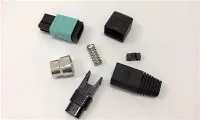
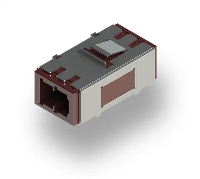
Before we discuss the length, let's briefly understand what Fiber Optic MU Patchcords are. Fiber Optic Mu Patchcord are used to connect different fiber - optic devices, such as switches, routers, and servers. The MU connector, which is smaller than the traditional SC or ST connectors, offers high - density connections, making it ideal for applications where space is limited, like data centers and telecommunications rooms.
Factors Influencing the Length of Fiber Optic MU Patchcords
Application Requirements
The intended application is one of the primary factors determining the length of a Fiber Optic MU Patchcord. In a small - scale local area network (LAN) within an office, shorter patchcords may be sufficient. For example, when connecting a desktop computer to a nearby network switch, a patchcord of 1 - 3 meters might be adequate.
On the other hand, in large data centers, where servers are located in racks that are spread over a considerable distance, longer patchcords may be required. These can range from 5 meters to 20 meters or even more, depending on the layout of the data center and the distance between the equipment.
Installation Environment
The physical environment where the patchcord will be installed also plays a crucial role. In a well - organized data center with cable management systems, longer patchcords can be neatly routed. However, in a congested environment with limited space for cable routing, shorter patchcords are often preferred to avoid cable clutter and potential signal interference.
Cost Considerations
Longer patchcords generally cost more than shorter ones due to the increased amount of fiber - optic cable and connector materials used. Therefore, cost is an important factor when deciding on the length. In some cases, where budget is a constraint, users may opt for shorter patchcords and use additional fiber - optic extension components if necessary.
Common Lengths of Fiber Optic MU Patchcords
Short - Length Patchcords (1 - 3 meters)
Short - length Fiber Optic MU Patchcords are commonly used in desktop connections, patch panels, and small - scale network setups. For instance, in a home or small office network, a 1 - meter patchcord can be used to connect a fiber - optic modem to a router. These short patchcords are also useful for connecting devices within a rack, such as connecting a network interface card (NIC) in a server to a patch panel.
Medium - Length Patchcords (5 - 10 meters)
Medium - length patchcords are often employed in data centers and larger LANs. They are suitable for connecting servers to switches that are located in adjacent racks or in different sections of a data center. A 5 - meter patchcord can bridge the gap between a server rack and a nearby distribution switch, while a 10 - meter patchcord may be used for more distant connections within the same data center floor.
Long - Length Patchcords (15 - 20 meters or more)
Long - length Fiber Optic MU Patchcords are used in large - scale data centers, campus - wide networks, and telecommunications facilities. In a multi - building campus network, for example, patchcords of 20 meters or more may be required to connect network equipment between different buildings. These long patchcords need to be carefully installed and managed to ensure optimal signal performance.


Custom - Length Fiber Optic MU Patchcords
In addition to the standard lengths, many users may have specific requirements for non - standard lengths of Fiber Optic MU Patchcords. As a supplier, we understand that every network installation is unique, and we offer custom - length options to meet these diverse needs.
Custom - length patchcords are particularly useful in situations where the standard lengths do not fit the specific layout of the network. For example, in a retrofit project where existing cable routes need to be followed, a custom - length patchcord can be precisely tailored to the required distance.
When ordering custom - length patchcords, it is important to provide accurate length measurements. This can be done by carefully measuring the distance between the two connection points, taking into account any bends, turns, and additional slack required for cable management.
Comparing Fiber Optic MU Patchcords with Other Types of Patchcords
Comparison with Ftth Drop Cable Patch Cord Sc Sc Upc Lszh
The Ftth Drop Cable Patch Cord Sc Sc Upc Lszh is designed for fiber - to - the - home (FTTH) applications. While both types of patchcords are used for fiber - optic connections, the main difference lies in the connectors. The MU connector in Fiber Optic MU Patchcords is smaller and more suitable for high - density applications, while the SC connectors in the Ftth Drop Cable Patch Cord Sc Sc Upc Lszh are larger and more commonly used in FTTH installations. In terms of length, the typical lengths for Ftth Drop Cable Patch Cord Sc Sc Upc Lszh are often shorter, usually in the range of 1 - 5 meters, as they are mainly used for indoor connections in residential settings.
Comparison with Fiber Optic Mtrj Patchcord
Fiber Optic Mtrj Patchcords use MTRJ connectors, which are also small - form - factor connectors. However, the MTRJ connector has a different design compared to the MU connector. The MTRJ is a push - pull connector, while the MU is a snap - in connector. In terms of length, both Fiber Optic MU Patchcords and Fiber Optic Mtrj Patchcords are available in a similar range of lengths, from short to long, depending on the application requirements.
Quality Assurance for Different Lengths of Fiber Optic MU Patchcords
Regardless of the length, quality assurance is crucial for Fiber Optic MU Patchcords. At our company, we follow strict quality control procedures during the manufacturing process. For short - length patchcords, we ensure that the connectors are properly terminated and that the fiber - optic cable has low attenuation.
For long - length patchcords, in addition to connector termination and cable attenuation checks, we also perform tests to ensure that the signal integrity is maintained over the entire length. This includes optical time - domain reflectometer (OTDR) tests to detect any potential faults or losses in the fiber - optic cable.
Conclusion
The typical length of a Fiber Optic MU Patchcord varies depending on application requirements, installation environment, and cost considerations. Common lengths range from short (1 - 3 meters) for desktop and small - scale connections to long (15 - 20 meters or more) for large - scale data centers and campus - wide networks. Custom - length options are also available to meet specific user needs.
As a professional Fiber Optic MU Patchcord supplier, we are committed to providing high - quality patchcords in a variety of lengths. Whether you need a standard - length patchcord or a custom - made one, we have the expertise and resources to meet your requirements. If you are interested in purchasing Fiber Optic MU Patchcords or have any questions about their lengths and applications, please feel free to contact us for further discussion and procurement negotiation.
References
- "Fiber Optic Communication Systems" by Govind P. Agrawal
- "Data Center Cabling Best Practices" by the TIA (Telecommunications Industry Association)
- Industry whitepapers on fiber - optic patchcord technologies and applications.