What is the splitting uniformity of a Fiber Optic PLC Splitter?
As a supplier of Fiber Optic PLC Splitters, I often encounter questions from customers regarding the technical aspects of our products. One of the most frequently asked questions is about the splitting uniformity of a Fiber Optic PLC Splitter. In this blog, I will delve into the concept of splitting uniformity, its importance, and how it affects the performance of our PLC splitters.
Understanding Fiber Optic PLC Splitters
Before we dive into splitting uniformity, let's briefly understand what a Fiber Optic PLC Splitter is. A Planar Lightwave Circuit (PLC) splitter is a passive optical device that divides an incoming optical signal into multiple output signals. It is widely used in Fiber-to-the-Home (FTTH) networks, local area networks (LANs), and other optical communication systems. PLC splitters are known for their high reliability, low insertion loss, and excellent splitting ratio accuracy.
Our company offers a wide range of PLC splitters, including 1x2 Plc Fiber Optic Splitter and 1x64 Plc Fiber Splitter, Steel Tube, Bare Fiber 250µm, Sc Apc, Singlemode. These splitters are designed to meet the diverse needs of our customers, whether they are building a small-scale network or a large-scale FTTH project.
What is Splitting Uniformity?
Splitting uniformity refers to the consistency of the optical power distribution among the output ports of a PLC splitter. In an ideal scenario, when an optical signal enters a PLC splitter, it should be divided equally among all the output ports. However, in reality, there may be slight variations in the power levels at each output port due to manufacturing tolerances and other factors.
The splitting uniformity is usually expressed in decibels (dB). A lower value of splitting uniformity indicates a more consistent power distribution among the output ports. For example, if a PLC splitter has a splitting uniformity of 0.3 dB, it means that the difference in optical power between the highest and lowest output ports is 0.3 dB.
Importance of Splitting Uniformity
The splitting uniformity of a PLC splitter is crucial for the performance of an optical communication system. Here are some reasons why:
- Signal Quality: In a multi-user network, such as an FTTH network, each user's optical signal needs to have a similar power level to ensure reliable communication. If the splitting uniformity is poor, some users may receive a weaker signal, which can lead to higher bit error rates, slower data transfer speeds, and even communication failures.
- Network Efficiency: A PLC splitter with good splitting uniformity allows for more efficient use of optical power. When the power is evenly distributed among the output ports, the overall power consumption of the network can be optimized, and the need for additional optical amplifiers can be reduced.
- System Stability: A consistent power distribution among the output ports helps to maintain the stability of the optical network. It reduces the likelihood of signal fluctuations and interference, which can improve the overall reliability of the system.
Factors Affecting Splitting Uniformity
Several factors can affect the splitting uniformity of a PLC splitter. These include:
- Manufacturing Process: The manufacturing process of a PLC splitter plays a significant role in determining its splitting uniformity. Any imperfections in the fabrication of the optical waveguides, such as variations in the refractive index or the width of the waveguides, can lead to differences in the power levels at the output ports.
- Temperature and Environmental Conditions: Temperature changes and other environmental factors can also affect the splitting uniformity of a PLC splitter. As the temperature changes, the refractive index of the optical waveguides may vary, which can cause fluctuations in the power distribution among the output ports.
- Wavelength of the Optical Signal: The splitting uniformity of a PLC splitter may also vary depending on the wavelength of the optical signal. Different wavelengths may experience different levels of attenuation and dispersion in the optical waveguides, which can affect the power distribution at the output ports.
Measuring Splitting Uniformity
To ensure the quality of our PLC splitters, we use advanced testing equipment to measure the splitting uniformity. The most common method for measuring splitting uniformity is to use an optical power meter. The optical power at each output port of the PLC splitter is measured, and the difference between the highest and lowest power levels is calculated.
At our company, we have a strict quality control process in place to ensure that all our PLC splitters meet the required standards for splitting uniformity. We test each splitter at multiple wavelengths and under different environmental conditions to ensure its performance is consistent and reliable.


Our Commitment to High Splitting Uniformity
As a leading supplier of Fiber Optic PLC Splitters, we are committed to providing our customers with products that have excellent splitting uniformity. We invest heavily in research and development to improve our manufacturing processes and reduce the variations in the power distribution among the output ports.
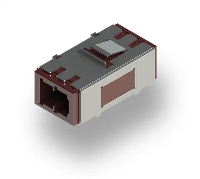
Our 1×2 Plc Fiber Splitter, Mini Module, Sc/apc is an example of our high-quality products. It is designed with precision to ensure a low splitting uniformity, which means that the optical power is evenly distributed between the two output ports.
In addition to our standard products, we also offer customized solutions to meet the specific requirements of our customers. If you have a unique application that requires a PLC splitter with a specific splitting ratio or splitting uniformity, our team of experts can work with you to develop a customized solution.
Contact Us for Your PLC Splitter Needs
If you are in the market for high-quality Fiber Optic PLC Splitters, we invite you to contact us. Our team of experienced sales representatives can provide you with detailed information about our products, including the splitting uniformity, insertion loss, and other technical specifications.
We understand that every customer's needs are different, and we are committed to providing you with the best solution for your application. Whether you are a small business looking to upgrade your network or a large telecommunications company building a new FTTH project, we have the expertise and products to meet your needs.
Contact us today to discuss your requirements and to learn more about how our Fiber Optic PLC Splitters can help you build a reliable and efficient optical network.
References
- ITU-T G.664: Optical fibre cables and patches - Characteristics and test methods for optical fibre cables.
- IEC 61753-1: Fibre optic interconnecting devices and passive components - Performance standard - Part 1: General and guidance.