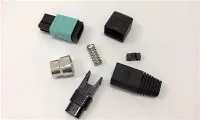
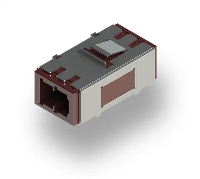
Signal attenuation is a critical factor in the performance of fiber optic systems, and understanding it is particularly important when dealing with Fiber Optic MU Connectors. As a supplier of these connectors, I've witnessed firsthand the impact that signal attenuation can have on the overall efficiency and reliability of fiber optic networks. In this blog, I'll delve into what signal attenuation is, how it affects Fiber Optic MU Connectors, and what we, as a supplier, do to mitigate its effects.
What is Signal Attenuation?
Signal attenuation refers to the reduction in the strength of a signal as it travels through a medium. In the context of fiber optics, it's the decrease in the power of an optical signal as it propagates along an optical fiber. This reduction can occur due to various factors, including absorption, scattering, and bending losses.


Absorption is the process by which the optical fiber material absorbs some of the light energy, converting it into heat. Different materials have different absorption characteristics, and even small impurities in the fiber can cause significant absorption losses. Scattering, on the other hand, occurs when the light encounters microscopic irregularities in the fiber, causing it to be redirected in different directions. This results in a loss of signal power as some of the light is scattered away from the intended path.
Bending losses are another common cause of signal attenuation. When a fiber is bent, the light traveling through it can escape from the core, leading to a loss of signal strength. There are two types of bending losses: macro - bending and micro - bending. Macro - bending occurs when the fiber is bent with a large radius, such as when it's routed around corners. Micro - bending, on the other hand, is caused by small, random bends in the fiber, often due to external pressure or improper installation.
Signal Attenuation in Fiber Optic MU Connectors
Fiber Optic MU Connectors are small - form - factor connectors that are widely used in high - density fiber optic applications. They offer several advantages, such as high packing density and low insertion loss. However, they are not immune to signal attenuation.
One of the main factors contributing to signal attenuation in MU connectors is the quality of the connection. A poor connection can result in misalignment of the fiber cores, which causes a significant loss of signal power. Even a small misalignment can lead to a substantial increase in attenuation. Additionally, contamination on the connector end - face can also cause attenuation. Dust, dirt, or oil on the end - face can scatter or absorb the light, reducing the signal strength.
The design of the MU connector itself can also affect signal attenuation. For example, the coupling mechanism used to join the two connectors together can introduce losses if it's not properly designed. A loose or unstable coupling can cause the fibers to move slightly, leading to changes in the alignment and increased attenuation.
Measuring Signal Attenuation in Fiber Optic MU Connectors
To ensure the quality of our Fiber Optic MU Connectors, we use various methods to measure signal attenuation. One of the most common methods is the cut - back method. In this method, a long length of fiber with a MU connector at one end is used. The optical power is measured at the output end of the fiber. Then, a short length of the fiber is cut off, and the power is measured again. The difference in power between the two measurements is used to calculate the attenuation per unit length of the fiber.
Another method is the insertion loss measurement. This involves measuring the power of the optical signal before and after it passes through the connector. The difference in power is the insertion loss, which is a measure of the signal attenuation caused by the connector. We use precision optical power meters to perform these measurements, ensuring accurate and reliable results.
Mitigating Signal Attenuation in Fiber Optic MU Connectors
As a supplier of Fiber Optic MU Connectors, we take several steps to mitigate signal attenuation. First, we ensure that our connectors are manufactured to the highest quality standards. We use advanced manufacturing processes and high - quality materials to minimize the risk of misalignment and contamination. Our connectors are carefully inspected and tested to ensure that they meet strict performance criteria.
We also provide detailed installation instructions to our customers. Proper installation is crucial for minimizing signal attenuation. We recommend using clean and dry tools during installation and ensuring that the connectors are properly aligned and tightened. Additionally, we offer cleaning kits for our connectors to help customers maintain the cleanliness of the end - faces, which can significantly reduce attenuation.
In addition to these measures, we are constantly researching and developing new technologies to further reduce signal attenuation in our Fiber Optic MU Connectors. For example, we are exploring the use of new materials and coatings that can improve the optical properties of the connectors and reduce absorption and scattering losses.
Our Product Range and Related Links
We offer a wide range of fiber optic products in addition to our Fiber Optic MU Connectors. For those interested in other types of fiber optic components, we have Fiber Optic Pigtail Fc Apc 12 Colors, which are available in 12 different colors, providing flexibility in fiber management. Our Conector Ftth Fiber Optic Sc Fast Connector is designed for fast and easy installation in FTTH applications. And our Fiber Optic Fast Connector offers a quick and reliable solution for connecting fiber optic cables.
Conclusion and Call to Action
Signal attenuation is a significant concern in fiber optic systems, and it's essential to understand its impact on Fiber Optic MU Connectors. As a supplier, we are committed to providing high - quality connectors that minimize signal attenuation and ensure reliable performance. Our products are designed to meet the demanding requirements of modern fiber optic networks, and we offer comprehensive support to our customers.
If you're interested in our Fiber Optic MU Connectors or any of our other fiber optic products, we invite you to contact us for more information and to discuss your specific needs. Whether you're building a new fiber optic network or upgrading an existing one, we can provide the solutions you need.
References
- Ghatak, A. K., & Thyagarajan, K. (1998). Introduction to Fiber Optics. Cambridge University Press.
- Senior, J. M. (2009). Optoelectronics: An Introduction. Pearson Education.
- ITU - T Recommendations on fiber optic connectors and transmission characteristics.