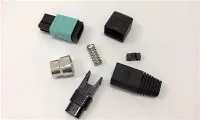
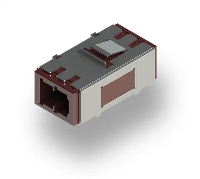
Hey there! As a supplier of Fiber Optic LC Adapters, I often get asked about the shock resistance of these little but crucial components. So, I thought I'd sit down and write this blog to give you the lowdown on what shock resistance means for fiber optic LC adapters.


First off, let's understand what a fiber optic LC adapter is. It's a key part in fiber optic networks. LC stands for Lucent Connector, and these adapters are used to connect two fiber optic cables together. They're super popular because they're small in size and offer high - performance connections. You can check out our Fiber Optic Lc Adapters to get a better idea of what I'm talking about.
Now, shock resistance. In simple terms, it's the ability of an LC adapter to withstand sudden impacts or jolts without getting damaged or losing its performance. Why is this important? Well, in real - world scenarios, fiber optic networks are installed in all sorts of places. They could be in industrial settings where there's a lot of machinery vibration, or in data centers where equipment might be moved around. Even in a home network, there could be accidental bumps or drops.
When an LC adapter has good shock resistance, it ensures that the connection between the fiber optic cables remains stable. A sudden shock can potentially misalign the fibers inside the adapter. If the fibers aren't perfectly aligned, it can lead to signal loss. And in a fiber optic network, even a small amount of signal loss can cause big problems, like slower data transfer speeds or complete network outages.
So, how do we measure the shock resistance of fiber optic LC adapters? There are standard testing methods for this. One common test involves subjecting the adapter to a series of impacts. The adapter is placed on a testing device, and it's hit with a specific force at different angles. After each impact, the optical performance of the adapter is measured. This includes checking the insertion loss (how much light is lost as it passes through the adapter) and return loss (how much light is reflected back).
Our company takes shock resistance seriously. We've invested a lot in research and development to make sure our LC adapters can handle real - world shocks. We use high - quality materials in the construction of our adapters. The housing of the adapter is made from a durable plastic or metal that can absorb and dissipate the energy from a shock. Inside, the ceramic ferrules that hold the fibers are precisely engineered to stay in place even when the adapter is jolted.
Let's talk about some of the factors that can affect the shock resistance of LC adapters. The first one is the design. A well - designed adapter will have features that help it resist shocks. For example, some adapters have a locking mechanism that keeps the connectors firmly in place. This reduces the chance of the fibers getting misaligned during a shock.
The quality of the materials also plays a huge role. Cheaper adapters might use low - grade plastics or poorly - made ferrules. These materials are more likely to crack or break under shock, leading to a loss of connection. On the other hand, our adapters are made from top - notch materials that are built to last.
Another factor is the manufacturing process. We have strict quality control measures in place during the manufacturing of our LC adapters. Every adapter goes through a series of inspections to make sure it meets our high standards for shock resistance.
Now, let's compare our LC adapters with some other types of fiber optic adapters. Take the Fiber Optic Mu Adapter for example. While the Mu adapter also has its own advantages, our LC adapters generally have better shock resistance. The LC adapter's design and the materials we use give it an edge when it comes to withstanding sudden impacts.
We also offer a China Lc Lc Duplex Fiber Optic Adapter. This duplex adapter is great for applications where you need to connect two pairs of fibers. And just like our single - fiber LC adapters, it has excellent shock resistance. It's designed to be robust and reliable, even in challenging environments.
If you're in the market for fiber optic LC adapters, you want to make sure you're getting a product that can handle shocks. A cheap, low - quality adapter might save you a few bucks upfront, but it could end up costing you a lot more in the long run if it fails due to a shock.
Our adapters are not only shock - resistant but also offer excellent optical performance. They have low insertion and return losses, which means you'll get a strong and stable signal. And we offer them at competitive prices.
If you're interested in learning more about our fiber optic LC adapters or if you're looking to make a purchase, don't hesitate to reach out. We're always happy to answer any questions you might have and help you find the right adapter for your needs. Whether you're setting up a small home network or a large - scale industrial network, we've got the products and the expertise to support you.
References
- Fiber Optic Association Handbook: A comprehensive guide on fiber optic components and testing methods.
- Industry Standards for Fiber Optic Adapters: Published by international organizations for quality and performance assessment.