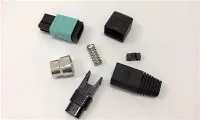
Radiation resistance is a critical characteristic when it comes to fiber optic components, especially for Fiber Optic ST Pigtails. As a leading supplier of these essential fiber optic products, understanding the nuances of radiation resistance in our ST Pigtails is crucial for both us and our customers.


What is Radiation Resistance in Fiber Optic ST Pigtails?
Radiation resistance in the context of Fiber Optic ST Pigtails refers to the ability of these pigtails to maintain their optical performance under the influence of radiation. Radiation, which can come from various sources such as nuclear power plants, space environments, and even some medical applications, can have a detrimental effect on the optical fibers within the pigtails.
When optical fibers are exposed to radiation, several physical processes occur. High - energy radiation can cause ionization within the fiber material. This ionization leads to the creation of color centers, which are defects in the fiber's atomic structure that absorb light at specific wavelengths. As a result, the attenuation of the optical signal in the fiber increases, meaning that less light is able to travel through the fiber over a given distance.
The radiation resistance of Fiber Optic ST Pigtails is measured in terms of how much the attenuation of the optical signal changes under a specific radiation dose. A lower change in attenuation indicates better radiation resistance. For example, if a pigtail has an initial attenuation of 0.3 dB/km and after being exposed to a radiation dose of 100 Gy (Gray, a unit of absorbed radiation dose), its attenuation increases to only 0.35 dB/km, it shows relatively good radiation resistance compared to a pigtail that experiences a much larger increase in attenuation under the same radiation dose.
Factors Affecting the Radiation Resistance of Fiber Optic ST Pigtails
Fiber Material
The type of fiber material used in the ST Pigtails plays a significant role in determining their radiation resistance. Silica - based fibers are the most commonly used in fiber optic applications. However, the purity and composition of the silica can vary. High - purity silica fibers generally have better radiation resistance because they have fewer impurities that can act as sites for color - center formation.
Some specialty fibers, such as those doped with certain elements, can also be engineered to have improved radiation resistance. For example, fibers doped with aluminum or phosphorus can have a reduced sensitivity to radiation - induced attenuation.
Coating Material
The coating on the fiber in the ST Pigtails also affects radiation resistance. The coating serves to protect the fiber from mechanical damage and environmental factors. However, some coating materials can be degraded by radiation, which can in turn affect the fiber's performance. For instance, some organic coatings may break down under radiation, leading to increased microbending losses in the fiber. Radiation - resistant coating materials, such as certain types of fluoropolymers, can be used to mitigate this issue.
Manufacturing Process
The manufacturing process of the Fiber Optic ST Pigtails can impact their radiation resistance. Precise manufacturing techniques that ensure uniform fiber geometry and low levels of internal stress can lead to better radiation - resistant pigtails. For example, proper drawing and cabling processes can minimize the presence of microscopic defects in the fiber, which are potential sites for radiation - induced damage.
Applications Requiring Radiation - Resistant Fiber Optic ST Pigtails
Nuclear Power Plants
In nuclear power plants, there is a high level of radiation present. Fiber Optic ST Pigtails are used for various purposes, such as monitoring the temperature, pressure, and other parameters within the plant. Radiation - resistant pigtails are essential in these environments to ensure reliable and accurate data transmission. Without proper radiation resistance, the optical signals used for monitoring could become severely degraded, leading to inaccurate readings and potentially dangerous situations.
Space Applications
Space is filled with various forms of radiation, including cosmic rays and solar flares. Fiber optic communication systems in satellites and space probes rely on radiation - resistant Fiber Optic ST Pigtails. These pigtails are used for data transmission between different components of the spacecraft, as well as for communication with Earth. Ensuring the radiation resistance of these pigtails is crucial for the long - term operation and success of space missions.
Medical Applications
In some medical applications, such as radiation therapy and imaging, fiber optic cables are used. For example, in radiation therapy, fiber optic sensors can be used to measure the radiation dose delivered to the patient. Radiation - resistant ST Pigtails are necessary in these applications to ensure the accuracy of the measurements and the reliability of the overall system.
Our Offerings as a Fiber Optic ST Pigtails Supplier
As a supplier of Fiber Optic ST Pigtails, we are committed to providing high - quality products with excellent radiation resistance. Our pigtails are made from high - purity silica fibers, which form the foundation for good radiation performance. We carefully select the coating materials to ensure that they not only protect the fiber but also contribute to the overall radiation resistance of the pigtail.
Our manufacturing process is highly controlled to minimize internal stress and defects in the fibers. We conduct rigorous quality control tests, including radiation - exposure tests, to ensure that our pigtails meet the required radiation - resistance standards.
In addition to our standard radiation - resistant Fiber Optic ST Pigtails, we also offer customization options. Depending on the specific radiation environment and requirements of our customers, we can engineer pigtails with enhanced radiation resistance. For example, if a customer needs pigtails for a particularly high - radiation area in a nuclear power plant, we can use specialty fibers and coatings to meet their needs.
Related Products
We also offer a range of related fiber optic products, such as Lc Simplex Fiber Patch Cord, Fiber Optic Lc Pigtails, and Fiber Optic Fc Pigtail. These products also undergo similar quality control processes to ensure their performance in various environments, including those with radiation exposure.
Conclusion
The radiation resistance of Fiber Optic ST Pigtails is a vital characteristic that determines their suitability for use in radiation - prone environments. As a supplier, we understand the importance of providing pigtails with excellent radiation resistance to meet the diverse needs of our customers. Whether it's for nuclear power plants, space applications, or medical uses, our high - quality ST Pigtails are designed to perform reliably under radiation.
If you are in need of Fiber Optic ST Pigtails or any of our related products, we encourage you to contact us for procurement and to discuss your specific requirements. Our team of experts is ready to assist you in finding the best solutions for your fiber optic needs.
References
- "Fiber Optics: Principles and Applications" by John M. Senior.
- "Radiation Effects in Optical Materials and Devices" edited by Alexander V. Kolobov.
- Technical reports from leading fiber optic research institutions on radiation - resistant fiber development.