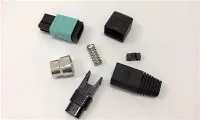
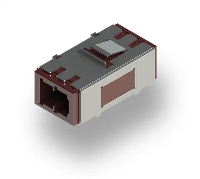
Hey there! As a supplier of Fiber Optic MU Patchcords, I've seen firsthand how different connector types can make a real difference in your fiber - optic network setup. In this blog, I'm gonna break down the differences between various connector types of Fiber Optic MU Patchcords, so you can make an informed decision when it comes to your networking needs.
Let's start with the basics. The MU connector, short for Miniature Unit, is a small - form - factor fiber optic connector. It was developed to provide high - density connections in a compact space. It's about half the size of a standard SC connector, which makes it a great choice for applications where space is at a premium, like data centers and telecommunications equipment.
MU - APC and MU - UPC Connectors
One of the most significant distinctions among MU Patchcord connector types is the polish type: APC (Angled Physical Contact) and UPC (Ultra - Physical Contact).


MU - UPC Connectors
MU - UPC connectors have a flat, polished end - face. This type of polish results in a low back reflection, typically around - 50 dB. Back reflection, also known as optical return loss (ORL), is the amount of light that gets reflected back towards the source. A lower back reflection means less interference and better signal quality.
These connectors are commonly used in passive optical networks (PONs), local area networks (LANs), and storage area networks (SANs). They're a cost - effective option for general - purpose applications where high - precision signal transmission isn't always necessary. For example, if you're setting up a basic office LAN, MU - UPC Patchcords will do the job just fine.
MU - APC Connectors
On the other hand, MU - APC connectors have an 8 - degree angled polish. This angled design significantly reduces back reflection, with typical ORL values of - 60 dB or lower. The angled polish also helps to direct any reflected light away from the light source, minimizing interference.
MU - APC connectors are ideal for applications that require high - performance and low - loss connections, such as long - haul telecommunications, cable television (CATV) networks, and some high - end data center applications. In a long - haul fiber - optic link, even a small amount of back reflection can cause signal degradation over long distances. So, using MU - APC Patchcords can ensure a more stable and reliable connection.
Comparison with Other Connector Types
It's also helpful to compare MU connectors with other popular fiber - optic connector types.
MU vs. SC Connectors
As I mentioned earlier, MU connectors are much smaller than SC connectors. SC connectors are larger and more commonly used in older fiber - optic installations. They're known for their push - pull coupling mechanism, which is easy to use and provides a secure connection.
However, the smaller size of MU connectors allows for higher - density installations. If you're looking to maximize the number of connections in a limited space, like a crowded patch panel in a data center, MU connectors are the way to go.
MU vs. LC Connectors
LC connectors are another small - form - factor option. They're similar in size to MU connectors but have a different coupling mechanism. LC connectors use a latch - based design, while MU connectors use a push - pull mechanism.
LC connectors are widely used in high - speed data transmission applications, such as 10G, 40G, and 100G Ethernet networks. While MU connectors can also support high - speed data, they're not as commonly used in these ultra - high - speed applications. But for applications where space is a concern and high - speed isn't the absolute top priority, MU connectors can be a great alternative.
Applications of Different Connector Types
The choice of connector type also depends on the specific application.
Data Centers
In data centers, space is a precious commodity. That's why high - density connectors like MU are becoming increasingly popular. For general - purpose data connections within the data center, MU - UPC Patchcords are often sufficient. They provide a good balance between cost and performance.
However, for high - performance links, such as connections between servers and high - speed switches, MU - APC Patchcords might be a better choice. They can ensure a more stable and reliable connection, especially for long - distance links within the data center.
Telecommunications Networks
Telecommunications networks require high - quality and low - loss connections. Whether it's a long - haul fiber link or a local access network, the choice of connector can have a big impact on signal quality.
For long - haul links, MU - APC connectors are the go - to option due to their low back reflection. In local access networks, such as PONs, MU - UPC connectors can be used for cost - effective deployment.
Compatibility and Interoperability
It's important to note that while different connector types have their own characteristics, they also need to be compatible with other components in the network. For example, if you're using a particular type of fiber optic transceiver, you need to make sure that the connector type of your Patchcords is compatible with it.
Most modern fiber - optic equipment is designed to be compatible with multiple connector types, but it's always a good idea to double - check. In some cases, you might need to use adapter cables or couplers to connect different connector types.
Related Products
If you're exploring different fiber - optic connection options, you might also be interested in some related products. Check out our Fiber Optic Mpo Patchcord, which is great for high - density, multi - fiber connections. Our Fiber Optic E2000 Jumper Leads offer excellent protection and high - performance connections. And for FTTH applications, our Sc/upc - sc/upc Ftth Drop Patch Cable is a reliable choice.
Conclusion
In conclusion, understanding the differences between different connector types of Fiber Optic MU Patchcords is crucial for choosing the right solution for your network. Whether you need a cost - effective option for a basic LAN or a high - performance connector for a long - haul telecommunications link, there's a MU Patchcord connector type that's right for you.
If you're in the market for Fiber Optic MU Patchcords or have any questions about which connector type is best for your application, don't hesitate to reach out. We're here to help you make the best decision for your networking needs.
References
- "Fiber Optic Connector Handbook" by Optics.org
- "Telecommunications Industry Association (TIA) Standards for Fiber Optic Connectors"