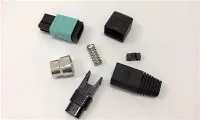
Hey there! As a supplier of Fiber Optic MPO Patchcords, I've been getting a lot of questions lately about macrobending loss. So, I thought I'd sit down and write this blog to explain what it is, why it matters, and how we can deal with it.
Let's start with the basics. What exactly is macrobending loss? Well, in simple terms, it's the loss of optical signal that occurs when a fiber optic cable is bent beyond a certain radius. You see, fiber optic cables are designed to carry light signals over long distances. When the cable is bent too sharply, the light inside the cable starts to leak out. This leakage of light is what we call macrobending loss.
Think of it like a water pipe. If you bend a water pipe too much, the water inside will start to leak out. The same principle applies to fiber optic cables. When the cable is bent, the light that's supposed to travel through the core of the cable starts to escape through the cladding, and that's when we lose the signal.
Now, you might be wondering why this is such a big deal. After all, a little bit of signal loss might not seem like a problem. But in the world of fiber optics, even a small amount of loss can have a big impact. For example, in high - speed data transmission, a small amount of macrobending loss can lead to errors in data transfer. This can cause slow internet speeds, dropped calls, or even complete system failures in some cases.
So, what causes macrobending loss in Fiber Optic MPO Patchcords? There are a few common reasons. One of the main causes is improper installation. If the patchcord is installed in a tight space or is bent sharply during the installation process, it can lead to macrobending loss. Another cause is environmental factors. For instance, if the patchcord is exposed to extreme temperatures or physical stress, it can cause the cable to bend and result in signal loss.
Let's talk about how we can measure macrobending loss. There are a few different methods, but one of the most common is using an optical time - domain reflectometer (OTDR). An OTDR sends a pulse of light into the fiber optic cable and measures the amount of light that is reflected back. By analyzing the reflected light, we can determine the location and magnitude of any macrobending loss in the cable.
Now, as a supplier of Fiber Optic MPO Patchcords, we take macrobending loss very seriously. We've developed a range of high - quality patchcords that are designed to minimize macrobending loss. Our patchcords are made with advanced materials and manufacturing techniques that ensure a high level of flexibility and durability.
For example, we offer Fiber Optic Lc Lc Patch Cable Single Mode Simplex. These patch cables are designed for single - mode applications and are built to withstand bending without significant signal loss. They are perfect for long - distance data transmission where even a small amount of loss can be a problem.
We also have Ip 68 Waterproof Patch Cord. These patch cords are not only waterproof but also resistant to bending. They are ideal for outdoor applications where the cables might be exposed to harsh environmental conditions.
Another great product in our lineup is the Om4 Multi - fiber 100gb Multimode 50/125 Fiber Optic Cable Mtp/mpo To Lc Breakout 12 Fiber. This cable is designed for high - speed data transmission in multimode networks. It has excellent bending performance, which means you can expect minimal macrobending loss even in complex network setups.
To prevent macrobending loss, there are a few best practices that you can follow. First of all, make sure that the patchcord is installed correctly. Follow the manufacturer's guidelines and avoid bending the cable too sharply. When routing the cable, use cable management tools like cable trays or conduits to keep the cable in place and prevent it from being bent accidentally.


Secondly, choose the right patchcord for your application. If you're working in a high - stress environment, opt for a patchcord that is designed to be more flexible and durable. Our products are carefully engineered to meet different requirements, so you can find the perfect patchcord for your needs.
In addition, regular maintenance is also important. Inspect the patchcords periodically to check for any signs of damage or bending. If you notice any issues, replace the patchcord immediately to avoid further signal loss.
So, if you're in the market for high - quality Fiber Optic MPO Patchcords that are resistant to macrobending loss, look no further. We've got a wide range of products to choose from, and we're confident that we can provide you with the perfect solution for your fiber optic needs. Whether you're a small business looking to upgrade your network or a large enterprise in need of a reliable fiber optic infrastructure, we've got you covered.
If you have any questions or want to discuss your specific requirements, don't hesitate to reach out. We're here to help you make the right choice and ensure that your fiber optic network runs smoothly. Contact us today to start the conversation and let's work together to find the best Fiber Optic MPO Patchcords for your business.
References
- "Fiber Optic Communication Systems" by Govind P. Agrawal
- "Optical Fiber Technology: Materials, Devices and Systems" by H. Gautam