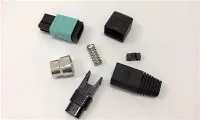
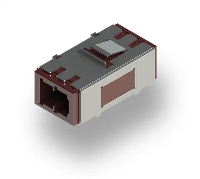
What is the insertion loss of a fiber optic connector? That's a question I get asked a lot, being a supplier of fiber optic connectors. Let's dive into this topic and break it down in a way that's easy to understand.
First off, let's talk about what fiber optic connectors are. They are essential components in optical communication systems. They're used to connect optical fibers together, allowing light signals to pass from one fiber to another. You might have heard of different types, like the Fiber Optic Fast Connector Sc, the Fiber Optic Fast Connector Sc Apc, and the Fiber Optic Mu Connector. Each type has its own unique features and applications, but they all serve the same basic purpose of joining fibers and transmitting light.
Now, onto insertion loss. Insertion loss is basically the amount of optical power that is lost when the light signal passes through the connector. In simpler terms, it's the difference between the power of the light going into the connector and the power of the light coming out. It's usually measured in decibels (dB). The lower the insertion loss, the better the performance of the connector.
Why is low insertion loss so important? Well, in optical communication systems, the strength of the light signal is crucial. If the insertion loss is too high, the signal might become too weak to be accurately detected at the receiving end. This can lead to data errors, reduced transmission speeds, and overall poor system performance. In a data center, for example, high insertion loss can cause network congestion and slow down data transfer between servers. In a telecommunications network, it can result in dropped calls or poor-quality video streaming.
There are several factors that can affect the insertion loss of a fiber optic connector. One of the main factors is the alignment of the fibers. When two fibers are connected, they need to be perfectly aligned for the light to pass smoothly from one to the other. Even a tiny misalignment can cause a significant amount of light to be lost. This is why precision manufacturing and careful installation are so important when it comes to fiber optic connectors.
Another factor is the end - face quality of the fibers. The ends of the fibers need to be polished to a very high standard. Any scratches, dents, or contaminants on the end - face can scatter the light and increase the insertion loss. That's why proper cleaning and inspection of the connectors are essential. Before installation, the connectors should be carefully cleaned to remove any dust, dirt, or oil that might be on the end - faces.
The type of connector also plays a role in insertion loss. Different connector designs have different inherent levels of insertion loss. For example, angle - polished connectors like the Fiber Optic Fast Connector Sc Apc are designed to reduce back - reflection. Back - reflection is when some of the light is reflected back towards the source, and it can also contribute to signal degradation. Angle - polished connectors generally have slightly higher insertion loss compared to flat - polished connectors, but the reduction in back - reflection can be worth it in some applications.


As a fiber optic connector supplier, I know how important it is to provide connectors with low insertion loss. Our manufacturing process is highly precise, and we use advanced technology to ensure that the fibers are properly aligned and the end - faces are of the highest quality. We also carry out strict quality control checks on every connector before it leaves our facility.
When choosing a fiber optic connector for your application, it's important to consider the acceptable level of insertion loss. Different applications have different requirements. For some short - range, low - speed applications, a slightly higher insertion loss might be acceptable. But for high - speed, long - range applications like long - haul telecommunications or high - performance data centers, a very low insertion loss is crucial.
Let me give you an example of how insertion loss can impact an application. Suppose you're setting up a fiber optic network in a large office building. You want to ensure that your employees can enjoy high - speed internet access and seamless video conferencing. If you use connectors with high insertion loss, the signal might degrade over the length of the network. This could result in slow internet speeds, dropped video calls, and a frustrating user experience. On the other hand, if you choose connectors with low insertion loss, the signal will remain strong, and your network will perform much better.
In addition to insertion loss, there's also another related concept called return loss. Return loss measures the amount of light that is reflected back towards the source. It's also an important parameter in fiber optic systems. High return loss is generally desirable, as it means less back - reflection. Some connectors are specifically designed to have high return loss, like the angle - polished connectors I mentioned earlier.
If you're looking for high - quality fiber optic connectors with low insertion loss, you've come to the right place. We offer a wide range of connectors, including the Fiber Optic Fast Connector Sc, Fiber Optic Fast Connector Sc Apc, and Fiber Optic Mu Connector. Our connectors are designed to meet the strictest industry standards and are thoroughly tested to ensure reliable performance.
We understand that every customer has different needs, and we're here to help you find the right connectors for your specific application. Whether you're a small business setting up a local network or a large telecommunications company building a long - haul network, we can provide you with the connectors you need.
If you're interested in our fiber optic connectors or would like to learn more about insertion loss and other technical aspects, don't hesitate to reach out for a purchase negotiation. We're always happy to answer your questions and provide you with the best possible solutions.
References
- "Optical Fiber Communication Technology" by some well - known authors in the field.
- Industry whitepapers on fiber optic connectors and their performance.