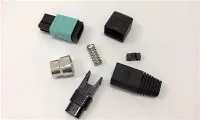
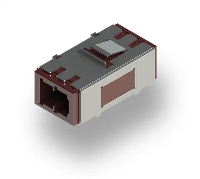
As a supplier of Fiber Optic FC Adaptors, I've witnessed firsthand the critical role these components play in ensuring seamless communication within fiber - optic networks. In this blog, I'll delve into the effects of improper installation on a Fiber Optic FC Adaptor.
Signal Loss
One of the most immediate and noticeable effects of improper installation is signal loss. Fiber Optic FC Adaptors are designed to provide a precise connection between fiber - optic cables. When they are not installed correctly, the alignment between the fiber cores can be off. Even a slight misalignment can cause a significant amount of light to escape from the fiber core, resulting in signal attenuation.
The principle behind this is based on the fact that fiber - optic communication relies on the transmission of light signals through the core of the fiber. If the cores of two connected fibers are not perfectly aligned, the light will not be efficiently transferred from one fiber to the other. This leads to a decrease in the signal strength at the receiving end. In a network environment, signal loss can cause data errors, slow data transfer rates, and even complete communication breakdowns. For example, in a high - speed data center network, a small amount of signal loss due to improper FC Adaptor installation can lead to packet loss, which in turn affects the overall performance of the servers and applications relying on that network.
Increased Reflection
Improper installation can also lead to increased reflection within the fiber - optic system. When a Fiber Optic FC Adaptor is installed incorrectly, air gaps or irregularities can form at the connection point. These air gaps act as reflective surfaces for the light signals traveling through the fiber.
Reflection occurs when light encounters a boundary between two media with different refractive indices. In a well - installed FC Adaptor, the connection is made in such a way that the refractive indices are matched as closely as possible to minimize reflection. However, when there are air gaps or misalignments, the light is reflected back towards the source. This reflected light can interfere with the original signal, causing noise and distortion. In a long - haul fiber - optic network, multiple reflections can accumulate and severely degrade the signal quality. For instance, in a telecommunications network, increased reflection can lead to errors in voice and data transmission, resulting in poor call quality and slow internet speeds for end - users.
Mechanical Stress
Another consequence of improper installation is the introduction of mechanical stress on the Fiber Optic FC Adaptor and the connected fibers. Incorrect installation techniques, such as over - tightening or using the wrong tools, can put excessive pressure on the adaptor. This mechanical stress can cause physical damage to the adaptor itself, such as cracking or deformation.
Moreover, the connected fibers can also be affected. Mechanical stress on the fibers can lead to micro - bends or macro - bends. Micro - bends are small, localized deformations in the fiber that can cause light to leak out of the core, resulting in signal loss. Macro - bends, on the other hand, are larger bends in the fiber that can also disrupt the light transmission. In a fiber - optic network deployed in a building, for example, if the FC Adaptor is installed in a way that puts stress on the fiber, over time, the performance of the network can deteriorate due to these bends.
Contamination
Improper installation often goes hand - in - hand with contamination. During the installation process, if proper cleaning and handling procedures are not followed, dust, dirt, and other contaminants can enter the Fiber Optic FC Adaptor. These contaminants can accumulate at the connection point and block the light path.
Contamination can also cause chemical reactions on the surface of the adaptor and the fiber end - face, which can further degrade the performance. For example, moisture in the air can react with certain contaminants and form a film on the fiber end - face, increasing the absorption of light and causing signal loss. In a harsh industrial environment, where there is a high level of dust and debris, improper installation can quickly lead to severe contamination issues in the FC Adaptors, resulting in frequent network outages.
Compatibility Issues
In some cases, improper installation can be related to compatibility issues. If the wrong type of Fiber Optic FC Adaptor is used or if it is not compatible with the connected fibers, it can lead to a range of problems. For example, using an adaptor with a different core diameter or mode field diameter than the fibers can cause significant signal loss and reflection.
Also, if the adaptor is not designed to work with the specific type of fiber - optic cable (such as single - mode or multi - mode fiber), the performance of the network will be severely affected. In a complex network infrastructure, where different types of fibers and adaptors are used, ensuring compatibility during installation is crucial. A mistake in choosing the right FC Adaptor can lead to long - term performance problems and costly network upgrades.
How to Avoid These Issues
As a supplier, I understand the importance of proper installation. We provide detailed installation guides with every Fiber Optic FC Adaptor we sell. These guides include step - by - step instructions on how to clean the fibers and the adaptor, how to align them correctly, and how to make a secure connection.


We also offer training programs for our customers to ensure that their technicians are well - versed in the proper installation techniques. By following these guidelines and receiving proper training, the risks associated with improper installation can be significantly reduced.
Conclusion
In conclusion, the effects of improper installation on a Fiber Optic FC Adaptor are far - reaching and can have a significant impact on the performance of fiber - optic networks. From signal loss and increased reflection to mechanical stress, contamination, and compatibility issues, every aspect of network performance can be affected.
As a trusted supplier of Fiber Optic FC Adaptors, we are committed to providing high - quality products and comprehensive support to our customers. If you are in need of Fiber Optic FC Adaptors or other related products such as China Lc Lc Duplex Fiber Optic Adapter, Fiber Optic Mu Adapter, or Fiber Optic Lc Adapters, please feel free to contact us for more information and to discuss your procurement needs. We look forward to working with you to build reliable and efficient fiber - optic networks.
References
- "Fiber Optic Communication Systems" by Govind P. Agrawal.
- Industry standards and guidelines related to fiber - optic installation and testing.