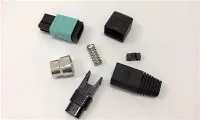
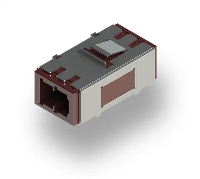
Hey there, fellow fiber optic enthusiasts! As a supplier of Fiber Optic FC Adaptors, I've seen firsthand how these little devices play a crucial role in our high - tech world. Today, I want to dive into a topic that's super important but often overlooked: the effect of aging on a Fiber Optic FC Adaptor.
Let's start with the basics. Fiber Optic FC Adaptors are used to connect two fiber optic cables together. They're like the bridge that allows data to flow smoothly between different parts of a network. You can find them in all sorts of places, from telecommunications networks to data centers.
Now, when we talk about aging, we're not just talking about the passage of time. Aging in the context of fiber optic adaptors is a complex process influenced by a bunch of factors. One of the main culprits is environmental conditions. Think about it: these adaptors are often installed in places where they're exposed to temperature changes, humidity, and even dust.
Temperature is a big deal. When the temperature fluctuates, the materials inside the adaptor expand and contract. This can cause micro - cracks in the ceramic ferrules, which are a key part of the adaptor. These ferrules are responsible for aligning the fiber optic cables precisely. If they get damaged, the alignment can be off, and that leads to signal loss. For example, in a hot environment, the ferrules might expand slightly, and when it cools down, they contract. Over time, this repeated expansion and contraction can weaken the ferrules.
Humidity is another factor. Moisture can seep into the adaptor and cause corrosion. Corrosion can damage the metal parts of the adaptor, like the outer housing and the connectors. It can also affect the optical performance by creating a film on the fiber ends, which scatters the light signals. And let's not forget about dust. Dust particles can settle inside the adaptor, blocking the light path and causing signal degradation.
Another aspect of aging is mechanical stress. Every time you plug and unplug a fiber optic cable from the adaptor, it puts stress on the components. Over thousands of insertions and removals, the adaptor's internal structure can start to wear out. The springs that hold the connectors in place might lose their elasticity, and the alignment of the ferrules can gradually shift.
So, what are the actual effects of all this aging on the performance of a Fiber Optic FC Adaptor? Well, the most obvious one is signal loss. As the ferrules get damaged and the alignment goes off, more and more of the light signal is lost as it passes through the adaptor. This means that the data transmission becomes less reliable. You might start to experience slower internet speeds, dropped connections, or errors in data transfer.
Increased insertion loss is also a common problem. Insertion loss is a measure of how much the signal strength decreases when it passes through the adaptor. As the adaptor ages, the insertion loss tends to go up. This can be a real headache for network operators because it means they have to use more powerful transmitters to compensate for the loss, which in turn increases energy consumption and costs.
Back reflection is another issue. When the light signal hits a damaged or misaligned surface inside the adaptor, some of it bounces back towards the source. This back - reflected light can interfere with the original signal, causing noise and further degrading the performance.


Now, you might be wondering what you can do to deal with the aging of Fiber Optic FC Adaptors. Well, regular maintenance is key. You should clean the adaptors periodically to remove dust and debris. There are special cleaning tools available that can gently wipe the fiber ends and the internal parts of the adaptor.
Inspection is also important. You can use a microscope to check the ferrules for any signs of damage, like cracks or scratches. If you notice any problems, it's usually a good idea to replace the adaptor before it causes more serious issues.
As a supplier, I understand that cost is always a concern. That's why we offer a wide range of high - quality Fiber Optic FC Adaptors at competitive prices. And if you're looking for other types of fiber optic adaptors, we've got you covered. Check out our Factory Price Ftth Networking Lc - lc Duplex Fiber Adapter, Fiber Optic E2000 Adapter, and Fiber Optic Mtrj Adapter. These are all great options for different networking needs.
If you're in the market for fiber optic adaptors, whether it's to replace aging ones or to build a new network, I encourage you to get in touch. We can provide you with detailed product information, technical support, and competitive pricing. Don't let aging adaptors slow down your network. Reach out to us, and let's start a conversation about how we can meet your fiber optic needs.
In conclusion, aging has a significant impact on the performance of Fiber Optic FC Adaptors. Environmental factors, mechanical stress, and normal wear and tear all contribute to the degradation of these important components. But with proper maintenance and timely replacement, you can keep your network running smoothly.
References
- "Fiber Optic Communication Systems" by Govind P. Agrawal
- "Optical Fiber Technology: Fundamentals" by R. Ramaswami, K. N. Sivarajan, and G. Sasaki