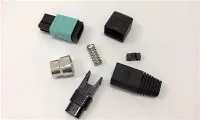
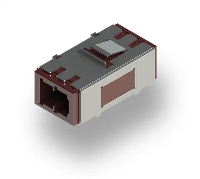
Hey there! As a supplier of fiber optic connectors, I often get asked about the differences between ST and FC fiber optic connectors. So, I thought I'd break it down for you in this blog post.
First off, let's talk about what fiber optic connectors are. They're like the bridges that connect fiber optic cables, allowing light signals to travel smoothly from one place to another. And just like different types of bridges are designed for different purposes, there are various types of fiber optic connectors, each with its own unique features.
Physical Design
One of the most obvious differences between ST and FC connectors lies in their physical design.
The ST connector, short for Straight Tip, has a bayonet-style coupling mechanism. It's easy to recognize because it has a round body with a protruding ferrule at the end. The bayonet coupling means you twist it into place, kind of like how you'd twist a light bulb into a socket. This design makes it relatively quick to install and remove. You can find more about Fiber Optic St Connecters on our website.
On the other hand, the FC connector, which stands for Ferrule Connector or Field Assembly Connector, uses a screw-on coupling mechanism. It has a threaded body, and you need to screw it onto the adapter to make a connection. This might take a bit more time compared to the ST connector, but it provides a very secure connection. Once it's tightened, there's less chance of it coming loose due to vibrations or accidental bumps.
Ferrule and Alignment
The ferrule is a crucial part of any fiber optic connector as it holds the fiber in place and ensures proper alignment.
In an ST connector, the ferrule is typically made of ceramic or plastic. Ceramic ferrules offer better precision and lower insertion loss, but they're also more expensive. Plastic ferrules are more cost - effective but may not provide the same level of performance. The alignment in an ST connector is based on the mechanical alignment of the ferrule within the connector body.
FC connectors usually come with a ceramic ferrule. The ceramic material provides excellent dimensional stability and low insertion loss. The screw - on coupling mechanism of the FC connector also helps in maintaining precise alignment. The fiber alignment in an FC connector is often very accurate, which is important for high - speed and long - distance transmissions.
Performance
When it comes to performance, both connectors have their strengths.
ST connectors are widely used in local area networks (LANs) and short - distance applications. They can handle data transmission speeds of up to 10 Gbps, which is sufficient for most office and home network setups. The insertion loss of an ST connector is typically around 0.3 to 0.5 dB, which is acceptable for many applications. However, they may not be the best choice for extremely high - speed or long - distance transmissions due to their relatively higher insertion loss compared to some other connectors.
FC connectors, on the other hand, are more commonly used in long - haul and high - performance applications. They can support data rates of up to 40 Gbps or even higher in some cases. The lower insertion loss of FC connectors, usually around 0.2 to 0.3 dB, makes them ideal for applications where signal quality is of utmost importance, such as in telecommunications networks and data centers.
Environmental Considerations
The environment in which the connectors are used also plays a role in choosing between ST and FC connectors.
ST connectors are relatively more tolerant of dust and dirt. The bayonet - style coupling mechanism doesn't require a perfect seal, and a small amount of debris may not significantly affect the connection. However, in very dirty or dusty environments, it's still a good idea to clean the connectors regularly.
FC connectors, with their screw - on design, provide a better seal against dust and moisture. This makes them more suitable for outdoor or industrial environments where there's a higher risk of contamination. But they also require more careful handling during installation to ensure that no dirt gets trapped inside the connector.
Cost
Cost is always a factor when choosing any product.
ST connectors are generally more affordable than FC connectors. This is due to their simpler design and the fact that they can use less expensive plastic ferrules in some cases. If you're working on a budget - conscious project, especially for short - distance applications, ST connectors can be a great choice.
FC connectors, with their more complex design and higher - quality ceramic ferrules, are more expensive. But if you need the high performance and reliability they offer for long - distance or high - speed transmissions, the extra cost may be worth it.
Applications
Let's take a look at some common applications for each type of connector.
ST connectors are commonly used in Ethernet LANs, fiber - to - the - desktop (FTTD) applications, and CCTV systems. Their ease of installation and relatively low cost make them a popular choice for these types of setups. You can also find them in some older fiber optic networks that were installed before more advanced connectors became widely available.
FC connectors are often used in telecommunications networks, data centers, and high - performance computing environments. Their ability to handle high - speed data transmissions and their resistance to environmental factors make them well - suited for these demanding applications.
Our Product Range
As a fiber optic connector supplier, we offer a wide range of products to meet different needs. In addition to ST and FC connectors, we also have Fiber Optic Pigtail Lc Upc Om3 12 Colors and Fiber Optic Fast Connector. Our products are designed to provide high - quality performance and reliability. Whether you're a small business setting up a local network or a large telecommunications company working on a long - haul project, we have the right connectors for you.
Conclusion
So, in summary, the main differences between ST and FC fiber optic connectors come down to their physical design, performance, environmental tolerance, cost, and applications. ST connectors are great for quick installations, short - distance applications, and budget - friendly projects. FC connectors, on the other hand, are better suited for high - speed, long - distance transmissions and harsh environments.
If you're still not sure which connector is right for your project, don't hesitate to reach out to us. We have a team of experts who can help you make the best choice based on your specific requirements. Whether you need a few connectors for a small project or a large quantity for a major installation, we're here to assist you. Just get in touch with us, and we can start the procurement and negotiation process.


References
- "Fiber Optic Communication Technology" by some well - known author in the field
- Industry reports on fiber optic connectors and their applications