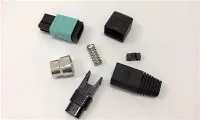
Hey there! As a supplier of Fiber Optic SC Connectors, I often get asked about the difference between low - loss and high - loss connectors. So, I thought I'd take a few minutes to break it down for you in a way that's easy to understand.
Let's start with the basics. Fiber optic connectors are essential components in any fiber optic network. They're used to join two fiber optic cables together or to connect a cable to a device like a router or a switch. The SC connector, in particular, is widely used because of its small size, push - pull design, and good performance.
What is Loss in Fiber Optic Connectors?
Before we dive into the differences between low - loss and high - loss connectors, we need to understand what "loss" means in the context of fiber optics. Loss, also known as attenuation, is the reduction in the power of a light signal as it travels through the fiber optic cable and the connector. It's measured in decibels (dB). A higher loss means that more of the light signal is being absorbed or scattered, which can lead to a weaker signal at the receiving end.
High - Loss Fiber Optic SC Connectors
High - loss connectors are, well, exactly what they sound like. They have a relatively high level of signal loss. There are a few reasons why a connector might have high loss.
One common cause is poor manufacturing quality. If the connector isn't made to precise specifications, the alignment between the two fiber ends might be off. Even a small misalignment can cause a significant amount of light to be lost. For example, if the fiber cores aren't perfectly centered when the connector is mated, the light can't transfer smoothly from one fiber to the other.
Another factor is the quality of the polishing. The end - face of the fiber in the connector needs to be polished to a very smooth finish. If the polishing is uneven or there are scratches on the end - face, the light can be scattered, increasing the loss. High - loss connectors are usually less expensive than their low - loss counterparts. They might be suitable for short - distance applications where a small amount of signal loss is acceptable, like in some home networks or small - scale local area networks (LANs).
Low - Loss Fiber Optic SC Connectors
Low - loss connectors, on the other hand, are designed to minimize signal loss. These connectors are manufactured with much higher precision. The alignment of the fiber cores is extremely accurate, often within a few microns. This ensures that most of the light signal can pass from one fiber to the other without being lost.
The polishing process for low - loss connectors is also more rigorous. The end - face is polished to a mirror - like finish, which reduces scattering and reflection of the light. Low - loss connectors are ideal for long - distance applications, such as telecommunications networks or data centers. In these environments, even a small amount of signal loss can have a big impact on the performance of the network. For example, in a long - haul fiber optic link, a high - loss connector could cause the signal to degrade to the point where it's no longer usable, requiring repeaters to boost the signal.
Performance Comparison
Let's take a closer look at how low - loss and high - loss connectors compare in terms of performance.
Insertion Loss: Insertion loss is the most important performance metric for fiber optic connectors. It measures the amount of signal loss that occurs when the connector is inserted into the network. Low - loss connectors typically have an insertion loss of around 0.2 dB or less, while high - loss connectors can have an insertion loss of 0.5 dB or more. This might not seem like a big difference, but in a long - distance network, every dB counts.
Return Loss: Return loss measures the amount of light that is reflected back towards the source. A high return loss is desirable because it means less light is being reflected. Low - loss connectors usually have a return loss of 50 dB or more, while high - loss connectors might have a return loss of 30 dB or less. High reflection can cause interference and affect the performance of the network.

Applications
The choice between low - loss and high - loss connectors depends largely on the application.
High - Loss Connectors: As mentioned earlier, high - loss connectors are suitable for short - distance, low - bandwidth applications. They're often used in home networks, where the distances are relatively short and the data rates aren't extremely high. For example, if you're setting up a basic Wi - Fi network in your home using fiber optic cables, a high - loss connector might be sufficient.
Low - Loss Connectors: Low - loss connectors are a must for high - performance applications. They're used in telecommunications networks, data centers, and long - haul fiber optic links. In these environments, the reliability and quality of the signal are crucial. For instance, in a data center where large amounts of data are being transferred at high speeds, a low - loss connector ensures that the data can be transmitted accurately and efficiently.
Cost Considerations
Cost is always an important factor when choosing fiber optic connectors. High - loss connectors are generally cheaper because they don't require the same level of precision manufacturing and quality control as low - loss connectors. However, it's important to consider the long - term costs. In a high - performance network, using high - loss connectors might lead to more frequent signal degradation and the need for additional equipment to boost the signal, which can end up costing more in the long run.
Our Product Range
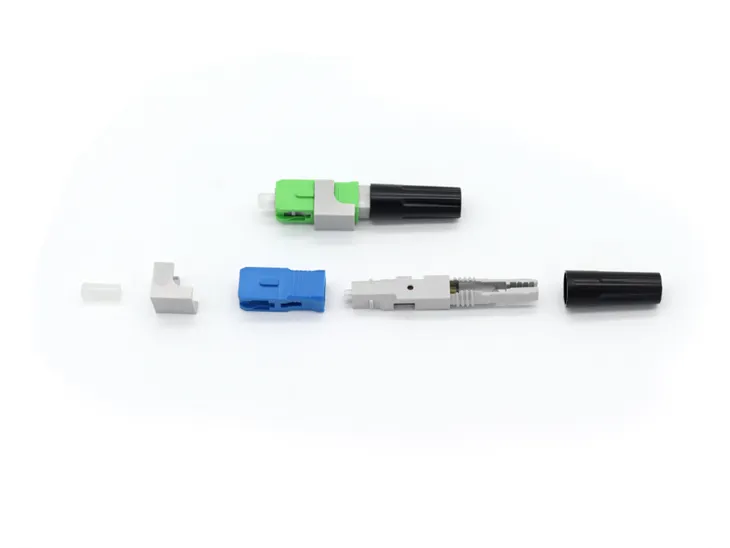
As a supplier, we offer a wide range of Fiber Optic SC Connectors, including both low - loss and high - loss options. If you're interested in our Fiber Optic Fast Connector Sc Apc, which is a type of low - loss connector with excellent performance, you can check out the link for more details. We also have Fiber Optic St Connecters and Fiber Optic Fast Connector in our product lineup.
Conclusion
In conclusion, the difference between low - loss and high - loss Fiber Optic SC Connectors comes down to performance, cost, and application. High - loss connectors are more affordable but have higher signal loss, making them suitable for short - distance, low - bandwidth applications. Low - loss connectors, on the other hand, offer better performance but are more expensive and are ideal for high - performance, long - distance networks.
If you're in the market for fiber optic connectors and need help choosing the right one for your project, don't hesitate to reach out. We're here to assist you in making the best decision for your specific needs. Whether you're setting up a small home network or a large - scale data center, we have the products and expertise to support you.
References
- "Fiber Optic Communication Systems" by Govind P. Agrawal
- "Optical Fiber Technology: Materials, Devices, and Systems" by R. Ramaswamy