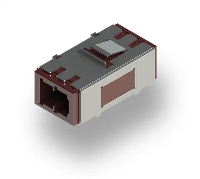
As a supplier of Fiber Optic MPO Adapters, I often get asked about the coupling efficiency of these nifty little devices. So, let's dive right in and chat about what coupling efficiency really means in the context of Fiber Optic MPO Adapters.


Understanding the Basics
First off, what's an MPO adapter? Well, MPO stands for Multi - Fiber Push - On. It's a type of fiber optic adapter that allows for the connection of multiple optical fibers at once. Instead of dealing with single - fiber connections one by one, MPO adapters can handle 12, 24, or even more fibers just in one go. This makes them super popular in high - density data center applications where space and time are of the essence.
Now, coupling efficiency is all about how well light can transfer from one fiber to another through the adapter. In an ideal world, 100% of the light that enters the adapter from one fiber would come out the other end and into the connected fiber. But in reality, it's never that simple. There are a bunch of factors that can affect this efficiency, and it's important for us to understand them so we can choose the right MPO adapter for the job and get the best performance out of our fiber optic systems.
Factors Affecting Coupling Efficiency
Fiber Alignment
One of the biggest factors that can mess with coupling efficiency is fiber alignment. When the fiber cores in the MPO connectors on either side of the adapter aren't perfectly lined up, some of the light gets lost. It's like trying to shoot a laser through two tubes; if the tubes aren't right on top of each other, some of the light will hit the sides and not make it through. In MPO adapters, mechanical tolerance and manufacturing quality play a huge role in ensuring proper fiber alignment. A well - made adapter will have tight tolerances, which means the fibers are more likely to line up correctly, resulting in higher coupling efficiency.
End - Face Quality
The end - face of the fiber is the point where the light enters and exits the adapter. If the end - face has scratches, dust, or other imperfections, it can scatter the light and reduce coupling efficiency. Think of it like a dirty window; light has a hard time passing through clearly. That's why it's crucial to keep the end - faces of MPO connectors clean and polished. Special cleaning tools and techniques are used in the industry to ensure that the end - faces are as smooth and free of debris as possible.
Mode Field Diameter Mismatch
Fibers can have different mode field diameters, which is basically the area where most of the light travels in the fiber. If the mode field diameters of the two fibers being connected by the MPO adapter don't match, there will be a loss of light at the connection point. It's kind of like trying to connect a wide pipe to a narrow one; some of the fluid (in this case, light) will spill out. When choosing MPO adapters, it's important to make sure that they are compatible with the fibers in terms of mode field diameter to minimize this loss.
Measuring Coupling Efficiency
So, how do we actually measure the coupling efficiency of an MPO adapter? Usually, we use a device called an optical power meter. First, we measure the power of the light entering the adapter from one fiber. Then, we measure the power of the light that comes out of the other fiber. The coupling efficiency is then calculated as the ratio of the output power to the input power, usually expressed as a percentage.
For example, if we have 100 units of light power going into the adapter and 90 units coming out, the coupling efficiency is 90%. In real - world applications, coupling efficiencies for high - quality MPO adapters can range from around 85% to over 95%, depending on the factors we talked about earlier.
Why Coupling Efficiency Matters
You might be wondering, why does coupling efficiency matter so much? Well, in fiber optic systems, every bit of light loss can add up. In a long - distance network or a high - speed data center, even a small reduction in coupling efficiency can lead to signal degradation, slower data transfer speeds, and increased error rates. This can result in downtime, lost productivity, and higher maintenance costs.
On the flip side, a high - coupling - efficiency MPO adapter can help ensure reliable and high - performance fiber optic connections. It allows for more efficient use of the light signal, which means we can transmit data over longer distances and at higher speeds without having to worry as much about signal loss.
Our Product Offerings
As a Fiber Optic MPO Adapter supplier, we're committed to providing our customers with adapters that have high coupling efficiency. Our MPO adapters are designed and manufactured using the latest technologies and strict quality control measures to ensure proper fiber alignment, excellent end - face quality, and compatibility with a wide range of fibers.
In addition to our top - notch MPO adapters, we also offer a variety of other fiber optic adapters, such as Fiber Optic Mtrj Adapter, Factory Price Ftth Networking Lc - lc Duplex Fiber Adapter, and Fiber Optic E2000 Adapter. Each of these adapters is engineered to provide reliable and efficient fiber optic connections, meeting the diverse needs of our customers in different applications.
Conclusion
In conclusion, coupling efficiency is a crucial factor when it comes to Fiber Optic MPO Adapters. It determines how well light can transfer between fibers, which in turn affects the performance and reliability of fiber optic systems. By understanding the factors that affect coupling efficiency, we can make more informed decisions when choosing MPO adapters and ensure that our fiber optic networks operate at their best.
If you're in the market for high - quality Fiber Optic MPO Adapters or any other fiber optic products, don't hesitate to get in touch. We're here to help you find the right solutions for your needs and offer you the best possible service. Let's start a conversation and see how we can work together to improve your fiber optic infrastructure.
References
- "Fiber Optic Communication Systems" by Govind P. Agrawal
- "Optical Fiber Telecommunications V" edited by Ivan P. Kaminow, Tingye Li, and Alan E. Willner