Hey there! As a supplier of Fiber Optic LC Pigtails, I often get asked about their compatibility with different wavelengths. It's a crucial topic, especially for those in the fiber - optic industry who need to ensure their systems work efficiently. So, let's dive right in and explore this subject.
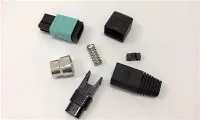
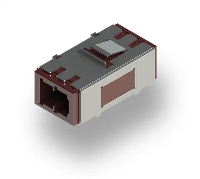
First off, let's understand what Fiber Optic LC Pigtails are. These are short, single - fiber cables with an LC connector pre - installed at one end. They're super handy for splicing into longer fiber optic cables or for terminating fiber optic panels. The LC connector, known for its small form - factor and high - performance, is widely used in data centers, telecommunications networks, and other high - speed communication systems.
Now, onto the wavelengths. In fiber optics, different wavelengths are used for different applications. The most common wavelengths are 850nm, 1310nm, and 1550nm. Each wavelength has its own characteristics and is suitable for specific types of transmission.
Let's start with the 850nm wavelength. This is often referred to as the “first window” in fiber optics. It's typically used in multimode fiber optic systems. Multimode fibers have a larger core diameter, which allows multiple modes (or paths) of light to travel through the fiber. The 850nm wavelength is great for short - distance transmissions, usually up to a few hundred meters. It's commonly used in local area networks (LANs), such as those in office buildings or schools.
Our Fiber Optic LC Pigtails are fully compatible with 850nm wavelengths in multimode applications. The pigtails are designed to minimize signal loss and ensure reliable data transmission at this wavelength. Whether you're setting up a new LAN or upgrading an existing one, our LC pigtails can handle the 850nm signal with ease.
Next up is the 1310nm wavelength. This is used in both single - mode and multimode fiber systems. In single - mode fibers, which have a much smaller core diameter, the 1310nm wavelength provides low dispersion, meaning the light pulses can travel longer distances without spreading out too much. For multimode fibers, it also offers good performance for medium - distance transmissions.
Our Fiber Optic LC Pigtails are also well - suited for 1310nm wavelengths. They're engineered to maintain high signal integrity, whether you're using them in a single - mode long - haul network or a multimode campus network. The connectors are precisely polished to reduce insertion loss and back reflection, which are crucial factors for maintaining a strong signal at this wavelength.
Finally, we have the 1550nm wavelength. This is the “third window” in fiber optics and is mainly used in single - mode fiber systems for long - distance and high - capacity transmissions. It has the lowest attenuation (signal loss) among the three common wavelengths, making it ideal for telecommunications networks that span hundreds or even thousands of kilometers.
Our LC pigtails are compatible with 1550nm wavelengths in single - mode applications. We use high - quality materials and advanced manufacturing techniques to ensure that the pigtails can handle the high - power signals associated with long - distance transmissions at this wavelength. Whether you're building a backbone network for a large telecommunications provider or a long - distance link for a utility company, our pigtails can meet your needs.
It's important to note that while our Fiber Optic LC Pigtails are compatible with these common wavelengths, proper installation and testing are still essential. Incorrect installation can lead to increased signal loss and other issues, even if the pigtails are technically compatible with the wavelength. That's why we offer comprehensive support and guidance to our customers to ensure that their installations are done correctly.
In addition to the common wavelengths, there are also other wavelengths used in specialized applications. For example, some dense wavelength - division multiplexing (DWDM) systems use a range of wavelengths in the 1525 - 1565nm band to transmit multiple signals simultaneously over a single fiber. Our LC pigtails can also be used in these systems, as long as they're specified for the appropriate wavelength range.
When it comes to choosing the right Fiber Optic LC Pigtails for your specific wavelength requirements, it's a good idea to consider a few factors. First, think about the type of fiber you're using (multimode or single - mode). Then, determine the distance of your transmission. Short - distance applications may be better suited for 850nm in multimode fibers, while long - distance applications will likely require 1310nm or 1550nm in single - mode fibers.
If you're not sure which wavelength and pigtail combination is right for you, don't hesitate to reach out to us. We have a team of experts who can help you make the best decision based on your specific needs.
Now, let's talk a bit about our other products. We also offer Fiber Optic Sc Pigtail and Fiber Optic St Pigtails. These pigtails have different connectors but are also compatible with a wide range of wavelengths. The SC connector is known for its push - pull design, which makes it easy to install and remove. The ST connector, on the other hand, uses a bayonet - style coupling mechanism and is often used in older fiber optic systems.


If you're interested in learning more about our Fiber Optic Lc Pigtails or any of our other products, or if you have questions about wavelength compatibility, we'd love to hear from you. We're here to help you find the best fiber optic solutions for your projects. Whether you're a small business setting up a new network or a large enterprise upgrading your existing infrastructure, we have the products and expertise to meet your needs.
In conclusion, our Fiber Optic LC Pigtails are highly compatible with different wavelengths, including the common 850nm, 1310nm, and 1550nm wavelengths, as well as those used in specialized applications. With proper installation and support, they can provide reliable and efficient data transmission for a wide range of fiber optic systems. So, if you're in the market for high - quality fiber optic pigtails, give us a shout. We're ready to assist you in your procurement process and ensure that you get the best products for your money.
References
- “Fiber Optic Communication Systems” by Govind P. Agrawal
- “Optical Fiber Technology: Principles and Applications” by S. C. Tripathi