Hey there! As a supplier of fiber optic adapters, I often get asked about various technical aspects of these nifty little devices. One question that pops up quite frequently is, "What is the bend radius tolerance of a fiber optic adapter?" Well, let's dive right in and break it down.
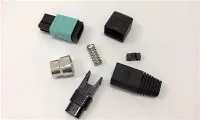
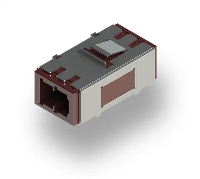
First off, let's understand what a fiber optic adapter is. It's a crucial component in fiber optic networks, used to connect two fiber optic cables together. There are different types of fiber optic adapters, like the Fiber Optic Mtrj Adapter, China Lc Lc Duplex Fiber Optic Adapter, and Fiber Optic St Coupler. Each type has its own unique features and applications, but they all share the common goal of ensuring a reliable connection between fiber optic cables.
Now, let's talk about bend radius tolerance. Bend radius refers to the minimum radius that a fiber optic cable can be bent without causing significant signal loss or damage to the fiber. The bend radius tolerance, on the other hand, is the acceptable range within which the cable can be bent without affecting its performance.
Why is bend radius tolerance important? Well, when a fiber optic cable is bent too tightly, the light signals traveling through the fiber can be disrupted. This can lead to increased signal loss, higher bit error rates, and ultimately, a degraded network performance. So, understanding and adhering to the bend radius tolerance is crucial for maintaining the integrity of a fiber optic network.
The bend radius tolerance of a fiber optic adapter depends on several factors, including the type of fiber, the cable construction, and the application. Generally speaking, single-mode fibers have a smaller bend radius tolerance compared to multimode fibers. This is because single-mode fibers have a smaller core diameter, which makes them more sensitive to bending.
For example, a typical single-mode fiber may have a minimum bend radius tolerance of around 10 times the cable diameter during installation and 20 times the cable diameter during operation. Multimode fibers, on the other hand, may have a minimum bend radius tolerance of around 5 times the cable diameter during installation and 10 times the cable diameter during operation.
It's important to note that these are just general guidelines, and the actual bend radius tolerance may vary depending on the specific fiber optic adapter and cable being used. That's why it's always a good idea to consult the manufacturer's specifications and guidelines before installing or using a fiber optic adapter.
In addition to the type of fiber, the cable construction also plays a role in determining the bend radius tolerance. Cables with a loose-tube construction, for example, tend to have a higher bend radius tolerance compared to cables with a tight-buffered construction. This is because the loose-tube design allows the fibers to move freely within the cable, reducing the stress on the fibers when the cable is bent.
Another factor to consider is the application. Different applications may have different requirements for bend radius tolerance. For example, in a data center environment, where space is often limited, a fiber optic cable may need to be bent more tightly to fit into the available space. In this case, a cable with a higher bend radius tolerance may be required.
So, how can you ensure that you're within the bend radius tolerance when installing a fiber optic adapter? Here are some tips:
- Read the manufacturer's specifications: As mentioned earlier, the manufacturer's specifications and guidelines are your best source of information when it comes to bend radius tolerance. Make sure you read and understand these specifications before installing the fiber optic adapter.
- Use the right tools: When bending a fiber optic cable, it's important to use the right tools to ensure a smooth and consistent bend. Avoid using sharp objects or excessive force, as this can damage the cable.
- Plan your installation carefully: Before installing the fiber optic adapter, take the time to plan your installation carefully. Consider the available space, the routing of the cable, and any potential obstacles that may require the cable to be bent.
- Inspect the cable regularly: After installation, it's a good idea to inspect the fiber optic cable regularly to ensure that it's not being bent beyond its bend radius tolerance. Look for signs of kinking, crushing, or other damage, and address any issues immediately.
In conclusion, the bend radius tolerance of a fiber optic adapter is an important factor to consider when installing and using a fiber optic network. By understanding the factors that affect bend radius tolerance and following the tips outlined above, you can ensure that your fiber optic network operates at its best.
If you're in the market for high-quality fiber optic adapters, look no further. As a leading supplier of fiber optic adapters, we offer a wide range of products to meet your needs. Whether you're looking for a Fiber Optic Mtrj Adapter, China Lc Lc Duplex Fiber Optic Adapter, or Fiber Optic St Coupler, we've got you covered. Contact us today to learn more about our products and how we can help you with your fiber optic needs.


References:
- Fiber Optic Association. (n.d.). Fiber Optic Cable Bend Radius. Retrieved from [Website URL]
- Corning Incorporated. (n.d.). Bend Radius Guidelines for Fiber Optic Cables. Retrieved from [Website URL]