In the constantly advancing field of telecommunications and data transmission, fiber optic cables and associated components play a pivotal role. Among these components, the Fiber Optic E2000 Pigtail stands out due to its unique features and wide - ranging applications. As a reliable supplier of Fiber Optic E2000 Pigtails, I understand the importance of having clear acceptance criteria for these essential parts. In this blog, I will delve into the key acceptance criteria for a Fiber Optic E2000 Pigtail.
Physical Appearance
The first aspect of acceptance criteria lies in the physical appearance of the Fiber Optic E2000 Pigtail. The outer jacket of the pigtail should be made of high - quality materials that are resistant to abrasion, chemicals, and environmental factors. It should have a smooth surface without any visible scratches, cracks, or deformities. Any damage to the outer jacket can expose the internal fiber and potentially affect the performance and longevity of the pigtail.
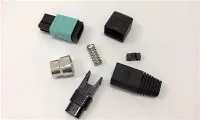
The connector end of the E2000 pigtail is another critical area to inspect. The connector body should be well - formed, with all the components firmly assembled. The alignment sleeves and the keying mechanism should be in perfect condition, as they are crucial for accurate fiber alignment during connection. The end - face of the connector, which is the interface for light transmission, must be clean and free from dust, oil, or other contaminants. A contaminated end - face can cause signal loss, reflection, and even damage to the connected equipment.
Optical Performance
Optical performance is the core of a Fiber Optic E2000 Pigtail. The most important parameters to consider are insertion loss, return loss, and bandwidth.
Insertion loss refers to the amount of optical power lost when the pigtail is inserted into a fiber optic link. It is typically measured in decibels (dB). For a high - quality E2000 pigtail, the insertion loss should be as low as possible. In general, an acceptable insertion loss value for a single - mode Fiber Optic E2000 Pigtail is less than 0.3 dB, while for multi - mode pigtails, it can be slightly higher, usually around 0.5 dB. Low insertion loss ensures that the majority of the optical signal is transmitted through the pigtail, maintaining a high - quality signal in the network.
Return loss, also measured in dB, represents the amount of optical power that is reflected back from the connector interface. High return loss values are desirable as they indicate less reflection and more efficient signal transmission. For E2000 pigtails, a return loss of at least 50 dB is commonly considered acceptable for single - mode applications, and around 30 dB for multi - mode applications. A good return loss helps to reduce signal interference and improve the overall performance of the optical network.
Bandwidth is another significant factor. It determines the range of frequencies that the pigtail can support without significant signal degradation. In today's high - speed data transmission requirements, a Fiber Optic E2000 Pigtail should have a high bandwidth to accommodate large - capacity data flows. For instance, in a data center environment, the pigtail may need to support bandwidths of several gigabits per second or even higher.
Mechanical Stability
Mechanical stability is crucial for ensuring the long - term reliability of a Fiber Optic E2000 Pigtail. The pigtail should be able to withstand normal handling and environmental stresses without performance degradation.
The tensile strength of the pigtail is an important consideration. It should be able to withstand a certain amount of pulling force during installation and maintenance. A typical acceptable tensile strength for a Fiber Optic E2000 Pigtail is around 90N for short - term and 18N for long - term use. This ensures that the internal fiber is not damaged when the pigtail is being pulled or routed.
The bending radius of the pigtail also needs to be within the specified range. Excessive bending can cause micro - bending and macro - bending losses in the fiber, affecting the optical performance. For single - mode fibers, the minimum bending radius should be at least 10 times the outer diameter of the cable for long - term installation and 20 times for short - term bending. For multi - mode fibers, slightly larger bending radii are usually acceptable.
Compatibility
Compatibility is an often - overlooked but crucial acceptance criterion for Fiber Optic E2000 Pigtails. These pigtails should be compatible with a wide range of fiber optic equipment and other components in the network.
They need to be compatible with different types of fiber cables, such as single - mode and multi - mode fibers. Whether it is connected to a cable with a specific core diameter or special coating, the E2000 pigtail should be able to provide seamless optical coupling.
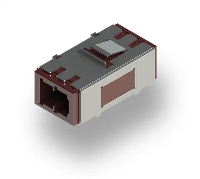
In addition, the pigtail should be compatible with various fiber optic connectors and adapters. For example, it should be able to mate properly with the corresponding E2000 adapters, as well as other common connectors like Fiber Optic Sc Pigtail, Fiber Optic Fc Pigtail, and Lc Simplex Fiber Patch Cord in hybrid fiber optic networks.
Environmental Resistance
Environmental factors can have a significant impact on the performance of Fiber Optic E2000 Pigtails. Therefore, they should be tested for their resistance to different environmental conditions.
Temperature resistance is a key aspect. The pigtail should be able to operate within a wide temperature range, typically from - 40°C to + 85°C. Extreme temperatures can cause the expansion or contraction of the materials in the pigtail, which may affect the optical performance and mechanical stability.
Humidity is another important factor. High humidity can lead to corrosion of the connector components and affect the optical transmission. The pigtail should be able to maintain its performance even in high - humidity environments, usually up to 95% relative humidity.
The pigtail should also be resistant to dust, chemicals, and UV radiation. This is especially important for outdoor or industrial applications where the pigtail may be exposed to harsh environmental conditions.


Documentation and Certification
Finally, proper documentation and certification are essential acceptance criteria. Each Fiber Optic E2000 Pigtail should come with detailed product documentation, including specifications, test reports, and installation instructions.
The test reports should provide accurate information about the optical performance, such as insertion loss, return loss, and bandwidth. They should also record any other relevant tests, such as mechanical testing and environmental testing.
Certification from recognized standards organizations, such as ISO, TIA, or IEC, is also a sign of quality. These certifications ensure that the pigtail meets the international standards for performance, safety, and reliability.
As a supplier of Fiber Optic E2000 Pigtails, we are committed to providing products that meet and exceed these acceptance criteria. Our pigtails are carefully manufactured, rigorously tested, and come with comprehensive documentation and certifications. If you are in the market for high - quality Fiber Optic E2000 Pigtails, we invite you to contact us for a detailed discussion on your specific requirements and to start a procurement negotiation. We are confident that our products will meet your expectations and help you build a reliable and efficient fiber optic network.
References
- ITU - T Recommendations on fiber optic components
- TIA/EIA Standards for fiber optic cabling
- ISO Standards related to optical fiber products