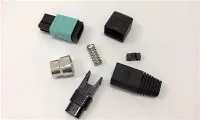
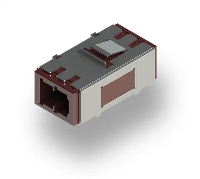
Hey there! As a supplier of fiber optic adapters, I've been in the business for quite some time, and I often get asked about the standards for these little but crucial components. So, I thought I'd write this blog to share some insights on what makes a good fiber optic adapter.
Physical Dimensions and Compatibility
First off, let's talk about the physical aspects. One of the most important standards for fiber optic adapters is their physical dimensions. You see, different types of fiber optic connectors have specific sizes and shapes, and the adapter needs to fit them perfectly. For example, the Fiber Optic Lc Adapters are designed to accommodate LC connectors. These connectors are small and widely used in data centers and telecommunications networks. The adapter has to have the right housing size and alignment features to ensure that the LC connectors can be inserted and removed easily without any damage.
Similarly, the Fiber Optic Sc Adapter is made for SC connectors. SC connectors are known for their push - pull mechanism, and the adapter must be able to handle this type of connection smoothly. It should also maintain the correct distance between the two connectors to prevent any signal loss due to misalignment.
Then there's the Fiber Optic E2000 Adapter. The E2000 connectors are a bit more high - end, often used in applications where high - performance and reliability are crucial. The adapter for E2000 connectors needs to be precisely manufactured to meet the strict alignment requirements of these connectors.
Insertion Loss
Another key standard is insertion loss. Insertion loss refers to the amount of light that is lost when the optical signal passes through the adapter. In simple terms, we want as little loss as possible. A good fiber optic adapter should have low insertion loss, typically less than 0.3 dB for single - mode adapters and less than 0.5 dB for multi - mode adapters.
Low insertion loss is important because it ensures that the optical signal can travel through the adapter without significant degradation. If the insertion loss is too high, the signal strength at the receiving end will be too weak, which can lead to data errors and poor network performance. To achieve low insertion loss, the adapter's internal components, such as the ferrules and the alignment sleeves, need to be of high quality and precisely manufactured.
Return Loss
Return loss is also a vital standard. Return loss measures the amount of light that is reflected back towards the source when the signal encounters the adapter. High return loss is desirable because it means less light is being reflected. Reflected light can cause interference and noise in the optical system, which can disrupt the signal transmission.
A good fiber optic adapter should have a return loss of at least 50 dB for single - mode applications and 35 dB for multi - mode applications. To achieve high return loss, the end - faces of the ferrules in the adapter need to be polished to a very high standard. Any imperfections on the end - faces can cause light to be reflected, so careful manufacturing and quality control are essential.
Durability and Environmental Resistance
Fiber optic adapters need to be durable. They are often installed in various environments, from data centers with controlled conditions to outdoor telecommunications cabinets exposed to the elements. The adapter's housing should be made of a strong and durable material that can withstand mechanical stress, such as impacts and vibrations.
In addition to mechanical durability, the adapter also needs to be resistant to environmental factors. It should be able to operate within a wide temperature range, typically from - 40°C to + 85°C. It should also be resistant to humidity, dust, and chemicals. For example, in a coastal area, the adapter needs to be able to resist corrosion from saltwater.
Polarity
Polarity is an important consideration, especially in complex fiber optic networks. There are different types of polarity standards, such as straight - through, reverse - polarity, and double - ended polarity. The adapter needs to be designed to match the polarity requirements of the network.
Correct polarity ensures that the optical signals are transmitted in the right direction between the connected devices. If the polarity is incorrect, the network may not function properly, even if all other standards are met. So, when choosing a fiber optic adapter, it's crucial to make sure it has the correct polarity for your specific application.
Quality Control and Testing
As a supplier, we take quality control and testing very seriously. Every fiber optic adapter we produce goes through a series of rigorous tests to ensure it meets all the standards. We test for insertion loss, return loss, physical dimensions, and environmental resistance.


We use advanced testing equipment to measure these parameters accurately. For example, we use an optical time - domain reflectometer (OTDR) to measure insertion loss and return loss. This equipment sends a pulse of light into the adapter and measures the amount of light that is transmitted and reflected. We also use precision measuring tools to check the physical dimensions of the adapter to ensure they are within the specified tolerances.
Why Choose Our Fiber Optic Adapters
If you're in the market for fiber optic adapters, you might be wondering why you should choose ours. Well, for starters, we've been in the business for a long time, and we have a wealth of experience in manufacturing high - quality adapters. Our products are designed to meet and exceed all the industry standards, so you can be confident that you're getting a reliable product.
We also offer a wide range of fiber optic adapters to meet different customer needs. Whether you need Fiber Optic Lc Adapters, Fiber Optic Sc Adapter, or Fiber Optic E2000 Adapter, we've got you covered.
In addition, we provide excellent customer service. Our team of experts is always ready to answer your questions and help you choose the right adapter for your specific application. We understand that every customer's needs are different, and we're committed to providing customized solutions.
Let's Talk Business
If you're interested in purchasing fiber optic adapters for your project, I'd love to hear from you. Whether you're building a new data center, upgrading your telecommunications network, or working on a small - scale project, we can provide you with the high - quality adapters you need. Just reach out, and we can start a conversation about your requirements.
References
- "Fiber Optic Test and Measurement Handbook", Second Edition, by Thomas Martin
- Industry standards documents from organizations such as the Telecommunications Industry Association (TIA) and the International Electrotechnical Commission (IEC)