Hey there! As a supplier of Fiber Optic FC Pigtails, I've been getting a lot of questions lately about their use in medical applications. So, I thought I'd put together this blog post to share some insights on what the requirements are for using these pigtails in the medical field.
1. High - Purity and Low - Loss Optical Performance
In medical applications, the accuracy of data transmission is crucial. Fiber Optic FC Pigtails need to have high - purity optical fibers. The purity of the fiber determines how well light can travel through it without significant attenuation. For instance, in medical imaging systems like endoscopes, clear and accurate data transfer is essential for doctors to make proper diagnoses. Low - loss fibers ensure that the light signals carrying image or data information don't weaken too much during transmission.
We know that even a small loss in signal strength can lead to a blurry or inaccurate image. That's why our Fiber Optic FC Pigtails are manufactured with high - quality materials to maintain a very low attenuation rate. This high - purity and low - loss performance is non - negotiable when it comes to medical applications.
2. Sterilization Compatibility
Medical equipment needs to be sterilized regularly to prevent the spread of infections. Fiber Optic FC Pigtails used in medical settings must be compatible with common sterilization methods. These methods can include autoclaving, chemical sterilization, and radiation sterilization.
Autoclaving involves high - pressure steam at high temperatures. Our pigtails are designed to withstand these extreme conditions without any damage to the optical fiber or the connector. Chemical sterilization uses various disinfectants, and our products are resistant to the corrosive effects of these chemicals. Radiation sterilization, such as gamma - ray sterilization, also doesn't affect the performance of our Fiber Optic FC Pigtails.
3. Biocompatibility
Since some medical applications may involve direct or indirect contact with the human body, the Fiber Optic FC Pigtails must be biocompatible. This means that they should not cause any adverse reactions when in contact with biological tissues.
We ensure that all the materials used in our pigtails are carefully selected to meet biocompatibility standards. For example, in some in - vivo medical devices, the pigtails need to be inserted into the body. In such cases, biocompatibility is of utmost importance to avoid any allergic reactions or tissue damage.

4. Reliability and Durability
Medical procedures can't afford any interruptions due to fiber optic failures. Our Fiber Optic FC Pigtails are built to be highly reliable and durable. They are designed to withstand mechanical stress, such as bending, pulling, and twisting.
In a busy hospital environment, the pigtails may be moved around or accidentally tugged. Our products are engineered to handle these situations without breaking or losing their optical performance. We also test our pigtails rigorously to ensure they can operate continuously for long periods without any issues.
5. Precision and Miniaturization
In many medical devices, space is limited. Fiber Optic FC Pigtails need to be designed with precision and often in a miniaturized form. For example, in some small - scale medical sensors or implantable devices, the pigtails need to be small enough to fit into the device without adding too much bulk.
Our manufacturing process allows us to produce highly precise and miniaturized Fiber Optic FC Pigtails. We can control the dimensions of the pigtails to meet the specific requirements of different medical devices.
6. EMI/RFI Immunity
Medical environments are full of electronic equipment that can generate electromagnetic interference (EMI) and radio - frequency interference (RFI). Fiber Optic FC Pigtails are inherently immune to EMI/RFI, which is a huge advantage in medical applications.
Unlike traditional copper cables, which can pick up electromagnetic signals and cause interference, our fiber optic pigtails transmit data using light. This means that they can operate in a noisy electronic environment without any signal degradation due to EMI/RFI.
Other Related Products
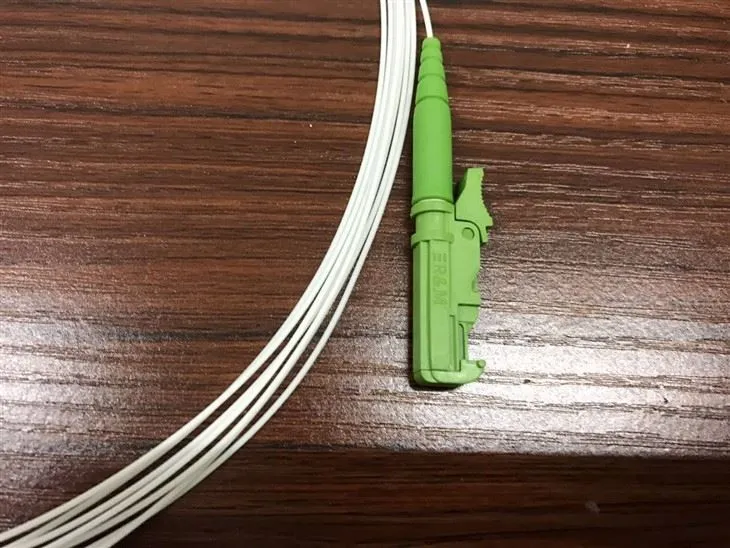
If you're also interested in other types of fiber optic pigtails, we have some great options. Check out our Fiber Optic St Pigtails and Fiber Optic E2000 Pigtail. We also offer Lc Simplex Fiber Patch Cord for different connectivity needs.
Conclusion
In conclusion, using Fiber Optic FC Pigtails in medical applications requires meeting several strict requirements. From high - purity optical performance to biocompatibility and EMI/RFI immunity, every aspect is crucial for the proper functioning of medical devices.
If you're in the medical industry and looking for high - quality Fiber Optic FC Pigtails that meet all these requirements, we're here to help. We can provide you with the best products and solutions for your specific needs. Don't hesitate to reach out to us for more information and to start a purchase negotiation.
References
- "Fiber Optics in Medical Applications" - A technical guide on the use of fiber optics in the medical field.
- "Biocompatibility Standards for Medical Devices" - A publication on the standards for materials used in medical devices.
- "Sterilization Methods for Medical Equipment" - A resource on different sterilization techniques and their impact on materials.