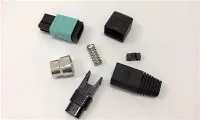
As a supplier of Fiber Optic SC Connectors, I've witnessed firsthand the critical role these connectors play in modern communication networks. Their performance, however, is significantly influenced by the environmental conditions in which they operate. Understanding the environmental requirements for using Fiber Optic SC Connectors is essential for ensuring optimal functionality and longevity.
Temperature
Temperature is one of the most significant environmental factors affecting Fiber Optic SC Connectors. Extreme temperatures can cause the materials in the connectors to expand or contract, leading to misalignment of the fiber cores and increased signal loss.
In high - temperature environments, the plastic components of the connector may soften and deform. This can result in a poor fit between the connector and the adapter, allowing dust and moisture to enter and further degrade the connection. For example, in industrial settings near furnaces or in outdoor installations in hot climates, the temperature can easily exceed 60°C. Most Fiber Optic SC Connectors are designed to operate within a temperature range of - 20°C to 60°C. When the temperature goes beyond this range, the connector's performance may be compromised.
Conversely, in low - temperature environments, the materials become more brittle. The epoxy used to hold the fiber in place may crack, and the connector housing may become more prone to breakage. In cold storage facilities or outdoor installations in winter, the temperature can drop well below freezing. To ensure reliable operation in such conditions, it is advisable to use connectors that are specifically designed for low - temperature applications.


Humidity
Humidity can also have a detrimental effect on Fiber Optic SC Connectors. High humidity levels can cause moisture to accumulate inside the connector, leading to corrosion of the metal parts and optical attenuation. Water can act as a medium for the growth of mold and fungi, which can further damage the connector.
In areas with high relative humidity, such as tropical regions or basements, it is crucial to protect the connectors from moisture. One way to do this is by using moisture - resistant enclosures. These enclosures can prevent water vapor from reaching the connectors and keep them dry. Additionally, regular inspection and cleaning of the connectors can help to remove any moisture or contaminants that may have accumulated.
On the other hand, extremely low humidity can also be a problem. In dry environments, static electricity can build up, which may attract dust particles to the connector surfaces. These dust particles can cause scratches on the fiber end - faces, leading to increased insertion loss. To mitigate this issue, anti - static measures can be implemented, such as using anti - static mats and clothing in the installation and maintenance process.
Dust and Contamination
Dust and other contaminants are major enemies of Fiber Optic SC Connectors. Even a small particle of dust on the fiber end - face can cause significant signal loss. When the connector is mated, the dust particle can create a physical barrier between the two fiber cores, preventing the light from passing through efficiently.
In industrial environments, construction sites, or areas with high levels of airborne particles, it is essential to take extra precautions to keep the connectors clean. This can include using dust caps on the connectors when they are not in use. Dust caps act as a physical barrier, preventing dust from settling on the fiber end - faces. Before mating the connectors, it is also important to clean the end - faces using a proper cleaning tool, such as a lint - free wipe and a cleaning solution specifically designed for fiber optics.
Chemical Exposure
Fiber Optic SC Connectors can be exposed to various chemicals in different environments. Chemicals such as solvents, acids, and alkalis can damage the connector materials. For example, some solvents can dissolve the plastic components of the connector, while acids and alkalis can corrode the metal parts.
In chemical processing plants or laboratories, where there is a high risk of chemical exposure, it is necessary to use connectors that are resistant to the specific chemicals present. Additionally, proper ventilation should be provided to minimize the concentration of chemical vapors in the air. If the connectors do come into contact with chemicals, they should be immediately cleaned with a suitable cleaning agent to prevent long - term damage.
Vibration and Shock
Vibration and shock can cause mechanical stress on Fiber Optic SC Connectors. In transportation or in environments with high - level machinery operation, the connectors may be subjected to continuous vibration. This can lead to loosening of the connector components, misalignment of the fiber cores, and eventually, signal loss.
To protect the connectors from vibration and shock, they should be properly secured. This can be achieved by using mounting brackets and cable ties to keep the connectors in place. In some cases, shock - absorbing materials can be used to reduce the impact of sudden shocks. For example, in a vehicle or an aircraft, where the connectors are likely to experience significant vibration and shock, special shock - resistant connectors can be used.
Installation and Maintenance
Proper installation and maintenance are also crucial for meeting the environmental requirements of Fiber Optic SC Connectors. During installation, the connectors should be handled with care to avoid damage. The fiber should be properly stripped, cleaved, and inserted into the connector. Any misalignment during installation can lead to poor performance, even if the environmental conditions are ideal.
Regular maintenance is also necessary to ensure the long - term reliability of the connectors. This includes inspecting the connectors for signs of damage, cleaning the end - faces, and tightening any loose components. By following a regular maintenance schedule, potential problems can be detected and resolved before they cause significant signal degradation.
Our Product Offerings
As a supplier, we offer a wide range of Fiber Optic SC Connectors that are designed to meet various environmental requirements. Our connectors are made from high - quality materials and undergo strict quality control to ensure reliable performance. In addition to the standard SC connectors, we also provide related products such as Fiber Optic Mpo Connector, Fiber Optic Fast Connector Ftth Pre - embedded Sc, and Fiber Optic Mtrj Connector. These products are suitable for different applications and environmental conditions.
If you are looking for high - quality Fiber Optic SC Connectors or related products, we invite you to contact us for procurement and further discussions. Our team of experts is ready to provide you with professional advice and solutions to meet your specific needs.
References
- "Fiber Optic Connector Handbook", Publisher: Optics Press, Year: 20XX
- "Environmental Considerations for Fiber Optic Systems", Journal of Optical Communication, Volume: XX, Issue: XX, Year: 20XX