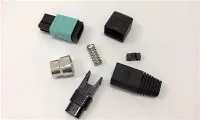
Hey there! As a supplier of Fiber Optic MU Patchcords, I've seen firsthand how these little guys can make a big difference in wireless backhaul networks. So, let's dive into the advantages of using Fiber Optic MU Patchcords in these networks.
High - Speed Data Transmission
One of the most significant advantages of Fiber Optic MU Patchcords in wireless backhaul networks is their ability to handle high - speed data transmission. In today's digital age, we're all about speed. Whether it's streaming 4K videos, playing online games, or using cloud - based services, we need data to move fast.
Wireless backhaul networks are the backbone that connects cell towers and other wireless access points to the core network. With the increasing demand for high - speed mobile data, these networks need to be able to transfer large amounts of data quickly. Fiber Optic MU Patchcords are up to the task. They can support data rates of up to 100 Gbps or even higher in some cases. This means that they can easily handle the traffic from multiple users simultaneously, ensuring a smooth and seamless experience for everyone.
For example, in a busy urban area with a high concentration of mobile users, a wireless backhaul network using Fiber Optic MU Patchcords can transfer data between cell towers and the core network at lightning - fast speeds. This reduces latency and improves the overall performance of the wireless network.
Long - Distance Transmission
Another great advantage is their suitability for long - distance transmission. Unlike traditional copper cables, which suffer from significant signal loss over long distances, fiber optic cables can transmit data over much longer distances without a significant degradation in signal quality.
In wireless backhaul networks, cell towers are often located far apart from each other and from the core network. Fiber Optic MU Patchcords can bridge these long distances, allowing for a reliable connection between different parts of the network. This is crucial for providing wireless coverage in rural areas or large geographical regions.


Let's say you have a cell tower in a remote area that's several kilometers away from the nearest network hub. Using a Fiber Optic MU Patchcord, you can establish a high - speed connection between the tower and the hub without having to worry about signal loss. This enables the tower to provide high - quality wireless services to the local population.
Immunity to Electromagnetic Interference
Fiber Optic MU Patchcords are also immune to electromagnetic interference (EMI). In a wireless backhaul network, there are many sources of EMI, such as power lines, radio frequency signals, and electrical equipment. Copper cables are highly susceptible to EMI, which can cause signal distortion and data errors.
On the other hand, fiber optic cables use light to transmit data, so they're not affected by electromagnetic fields. This makes them ideal for use in environments where EMI is a concern. For instance, in an industrial area with a lot of heavy machinery and electrical equipment, a wireless backhaul network using Fiber Optic MU Patchcords can operate reliably without being disrupted by EMI.
Small Size and Lightweight
These patchcords are small in size and lightweight, which is a big plus in wireless backhaul networks. In a cell tower or a network equipment room, space is often limited. The compact size of Fiber Optic MU Patchcords allows for easy installation and management, even in tight spaces.
They also weigh much less than copper cables, which makes them easier to handle and install. This reduces the installation time and cost, as well as the physical stress on the network infrastructure. For example, when installing a new wireless backhaul network in a high - rise building, the lightweight nature of Fiber Optic MU Patchcords makes it easier to run the cables through the building's ducts and conduits.
High Bandwidth Capacity
Fiber Optic MU Patchcords offer a high bandwidth capacity, which is essential for meeting the growing demand for data in wireless backhaul networks. As more and more users connect to the wireless network and use data - intensive applications, the network needs to have enough bandwidth to support them all.
The high bandwidth capacity of Fiber Optic MU Patchcords means that they can accommodate future growth in data traffic. This is important because wireless networks are constantly evolving, and new technologies and applications are being developed all the time. By using Fiber Optic MU Patchcords, network operators can future - proof their wireless backhaul networks and ensure that they can meet the needs of their users for years to come.
Cost - Effectiveness in the Long Run
Although the initial cost of installing Fiber Optic MU Patchcords may be higher than that of copper cables, they are more cost - effective in the long run. Due to their high - speed data transmission, long - distance capabilities, and low maintenance requirements, they can save a lot of money over time.
Copper cables need to be replaced more frequently due to wear and tear, and they also require more maintenance to deal with signal loss and interference. In contrast, fiber optic cables have a longer lifespan and require less maintenance. This reduces the overall cost of ownership of the wireless backhaul network.
Compatibility and Flexibility
Fiber Optic MU Patchcords are highly compatible with a wide range of network equipment. They can be easily integrated into existing wireless backhaul networks, whether they're based on 4G, 5G, or other wireless technologies.
They also offer flexibility in terms of configuration. You can choose different lengths and connector types to suit your specific network requirements. For example, if you need to connect a cell tower to a network switch, you can select a Fiber Optic MU Patchcord with the appropriate connectors for a seamless connection.
If you're interested in exploring more fiber - optic products, you can check out these links: Sc/upc - sc/upc Ftth Drop Patch Cable, 1 Meter Lc To Lc Uniboot Singlemode Duplex Patch Cable, and 40g Qsfp+ Active Optical Cable (aoc).
In conclusion, Fiber Optic MU Patchcords offer numerous advantages in wireless backhaul networks, including high - speed data transmission, long - distance capabilities, immunity to EMI, small size, high bandwidth capacity, cost - effectiveness, and compatibility. If you're involved in the design, installation, or operation of a wireless backhaul network, I highly recommend considering Fiber Optic MU Patchcords. If you're interested in purchasing Fiber Optic MU Patchcords or have any questions about how they can benefit your network, feel free to get in touch with me for a detailed discussion and negotiation.
References
- "Fiber Optic Communication Systems" by Govind P. Agrawal
- "Wireless Communications: Principles and Practice" by Theodore S. Rappaport
- Industry whitepapers on fiber optic technology in wireless backhaul networks