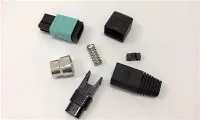
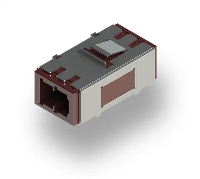
Hey there! As a supplier of Fiber Optic MU Connectors, I've seen firsthand the importance of ensuring compatibility between these connectors and optical transceivers. In this blog post, I'll share some tips and insights on how to make sure your Fiber Optic MU Connectors work seamlessly with your optical transceivers.
First off, let's talk about what Fiber Optic MU Connectors are. These connectors are small, high - density connectors that are commonly used in fiber optic networks. They offer a compact design, which makes them ideal for applications where space is limited, such as in data centers or telecommunications equipment.
On the other hand, optical transceivers are devices that convert electrical signals into optical signals and vice versa. They play a crucial role in transmitting data over fiber optic cables. For the whole fiber optic system to work properly, the MU Connectors and optical transceivers need to be compatible.
Understanding Key Compatibility Factors
1. Fiber Type
The type of fiber used in both the MU Connector and the optical transceiver is a major factor. There are two main types of fiber: single - mode (SM) and multi - mode (MM). Single - mode fiber is designed for long - distance transmission, while multi - mode fiber is better suited for short - distance applications.
If you're using a single - mode MU Connector, you need to pair it with a single - mode optical transceiver. Similarly, a multi - mode MU Connector should be used with a multi - mode optical transceiver. Using the wrong combination can lead to high signal loss and poor performance. For example, if you try to use a multi - mode transceiver with a single - mode connector, the light signals won't be properly transmitted, and you'll experience significant attenuation.
2. Connector End - Face Quality
The quality of the end - face of the MU Connector is also super important. A dirty or damaged end - face can cause problems like high insertion loss and increased reflectance. When the end - face is not clean, it can scatter the light signals, reducing the strength of the signal that reaches the optical transceiver.
To ensure good end - face quality, proper cleaning and inspection are necessary. You can use specialized cleaning tools, like lint - free wipes and cleaning solutions, to clean the end - face. After cleaning, use a fiber optic microscope to inspect the end - face for any scratches or debris. If you find any issues, the connector may need to be re - polished or replaced.
3. Transmission Speed and Wavelength
The transmission speed and wavelength of the optical transceiver must match the capabilities of the MU Connector. Different optical transceivers support different speeds, such as 1Gbps, 10Gbps, 40Gbps, or even higher. The MU Connector also needs to be able to handle the same speed.
Wavelength is another crucial aspect. Common wavelengths for fiber optic transmission are 850nm, 1310nm, and 1550nm. The MU Connector and the optical transceiver should support the same wavelength. For instance, if your optical transceiver operates at a wavelength of 1310nm, the MU Connector should also be optimized for this wavelength.
Testing for Compatibility
Once you've considered all the compatibility factors, it's a good idea to perform some tests. One of the most basic tests is the insertion loss test. This test measures the amount of signal loss that occurs when the MU Connector is inserted into the optical transceiver. You can use an optical loss test set (OLTS) to perform this test.
Another important test is the return loss test. Return loss measures the amount of light that is reflected back from the connector - transceiver interface. High return loss can cause interference and affect the performance of the system. A good return loss value indicates that the connection between the MU Connector and the optical transceiver is stable.
Our Product Range and Compatibility Assurance
At our company, we offer a wide range of Fiber Optic MU Connectors that are designed to be highly compatible with various optical transceivers. We also provide other fiber optic products like Fiber Optic Fast Connector Ftth Pre - embedded Sc, Fiber Optic Pigtail Lc Upc Om3 12 Colors, and Fiber Optic Lc Connectors.
All our products undergo strict quality control measures. We test each MU Connector for insertion loss, return loss, and end - face quality to ensure they meet industry standards. This way, you can be confident that our connectors will work well with your optical transceivers.
Steps to Ensure Compatibility in Your Network
1. Consult with Experts
If you're not sure about which MU Connector or optical transceiver to choose, don't hesitate to consult with experts. Our team of professionals can help you select the right products based on your specific network requirements. We can also provide advice on installation and maintenance.
2. Follow Installation Guidelines
Proper installation is key to ensuring compatibility. Make sure you follow the installation guidelines provided with both the MU Connector and the optical transceiver. Incorrect installation can lead to issues like misalignment and poor contact, which can affect the performance of the system.
3. Regular Maintenance
Regular maintenance is essential to keep your fiber optic network running smoothly. This includes cleaning the connectors, inspecting the end - faces, and performing periodic tests. By doing so, you can catch any potential compatibility issues early and prevent major problems.
Conclusion
Ensuring compatibility between Fiber Optic MU Connectors and optical transceivers is crucial for the proper functioning of your fiber optic network. By considering factors like fiber type, end - face quality, transmission speed, and wavelength, and by performing proper testing and maintenance, you can achieve a reliable and high - performing network.
If you're interested in purchasing high - quality Fiber Optic MU Connectors or have any questions about compatibility, feel free to reach out to us. We're here to assist you in making the best choices for your fiber optic needs.


References
- "Fiber Optic Communication Systems" by Govind P. Agrawal
- Industry standards documents from organizations like the Telecommunications Industry Association (TIA) and the International Electrotechnical Commission (IEC)