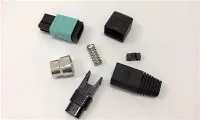
Hey there! As a supplier of Fiber Optic ST Couplers, I know how crucial it is to make sure our products meet international standards. In this blog, I'm gonna share some tips on how we ensure that our Fiber Optic ST Couplers live up to those high - level benchmarks.
Understanding International Standards
First things first, we need to know what these international standards are. Standards like ISO/IEC 11801, TIA/EIA - 568, and ITU - T G.65x are the big players in the fiber optic industry. ISO/IEC 11801 sets the guidelines for generic cabling systems for customer premises. TIA/EIA - 568 focuses on commercial building telecommunications cabling standards, and ITU - T G.65x is all about the characteristics of single - mode optical fibers and cables.
These standards cover various aspects of Fiber Optic ST Couplers, including optical performance, mechanical properties, and environmental resistance. For example, optical performance standards will specify things like insertion loss, which is how much light is lost when it passes through the coupler. A lower insertion loss means better performance. Mechanical properties might include the durability of the coupler's body and the tightness of the connection. And environmental resistance standards make sure the coupler can work well in different temperatures, humidity levels, and other harsh conditions.
Material Selection
The materials we use in making Fiber Optic ST Couplers play a huge role in meeting international standards. For the housing of the coupler, we usually choose high - quality plastics or metals. Plastics like polycarbonate are popular because they're lightweight, have good impact resistance, and can be easily molded into the right shape. Metals, on the other hand, offer better protection against electromagnetic interference and can be more durable in some industrial environments.
The ferrules, which are the small tubes that hold the fiber optic cables in place, are typically made of zirconia or ceramic. Zirconia ferrules are known for their high precision and low insertion loss. They can be polished to a very smooth surface, which is essential for minimizing light reflection and ensuring efficient light transmission. Ceramic ferrules are also widely used because they're hard, wear - resistant, and have good dimensional stability.
When we source these materials, we only work with suppliers who can provide materials that meet the relevant international standards. We ask for material certificates and test reports to make sure the quality is up to par.
Manufacturing Process Control
Our manufacturing process is like a well - choreographed dance. Every step is carefully planned and monitored to ensure that each Fiber Optic ST Coupler meets the standards.
First, we start with precision machining. The parts of the coupler need to be made with extremely high accuracy. For example, the holes in the ferrules where the fiber optic cables are inserted must have the right diameter and straightness. Any tiny deviation can lead to increased insertion loss or other performance issues. We use advanced CNC (Computer Numerical Control) machines to achieve this high level of precision.
Next comes the assembly process. This is where we put all the parts together. We need to make sure that the ferrules are properly aligned and the connections are tight. We use special alignment tools and fixtures to ensure accurate alignment. And we also have quality control checks at each stage of the assembly. For instance, we might use a microscope to check the alignment of the ferrules before we secure them in place.
After assembly, we perform a series of tests on the Fiber Optic ST Couplers. We test for insertion loss, return loss (which is the amount of light that's reflected back from the coupler), and other optical parameters. We use specialized test equipment like optical time - domain reflectometers (OTDRs) and light sources and power meters. If a coupler doesn't meet the standard requirements during these tests, it gets sent back for rework or is discarded.
Quality Management System
To make sure everything runs smoothly in terms of quality, we have a comprehensive quality management system in place. This system is based on international standards like ISO 9001.
We have a team of quality control experts who are responsible for inspecting the products at every stage of the production process. They follow strict inspection procedures and use calibrated measuring tools. For example, they'll check the dimensions of the coupler parts to make sure they're within the specified tolerance range.
We also keep detailed records of every production batch. This includes information about the materials used, the manufacturing process parameters, and the test results. These records are not only useful for quality control purposes but also for traceability. If there's ever an issue with a particular batch of Fiber Optic ST Couplers, we can quickly look back at the records to figure out what went wrong and take corrective actions.
Third - Party Testing
In addition to our in - house testing, we also send our Fiber Optic ST Couplers to third - party testing laboratories. These independent labs have state - of - the - art equipment and experienced technicians. They can perform more comprehensive and unbiased tests on our products.
Third - party testing is really important because it gives our customers more confidence in the quality of our couplers. When a coupler passes the tests in a well - recognized third - party lab, it means that it truly meets the international standards. And it also helps us identify any potential issues that we might have missed in our in - house testing.
Continuous Improvement
The fiber optic industry is constantly evolving, and so are the international standards. That's why we're always looking for ways to improve our products and processes.
We keep an eye on the latest industry trends and standard updates. We participate in industry conferences and workshops to learn from other experts. And we also encourage feedback from our customers. If a customer tells us about an issue or has a suggestion for improvement, we take it seriously.

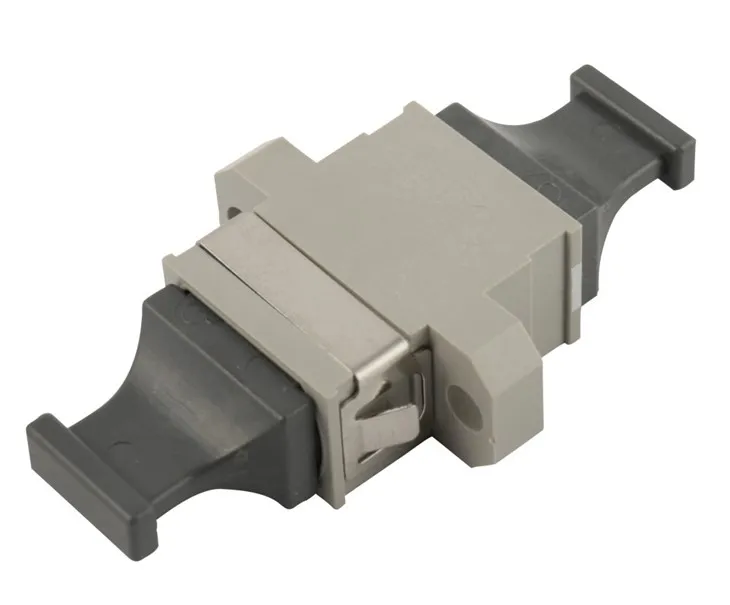
We use this feedback and new knowledge to make changes to our manufacturing processes, material selection, or testing methods. For example, if a new standard comes out that requires even lower insertion loss, we'll work on improving our polishing techniques for the ferrules to meet that requirement.
Other Fiber Optic Adaptors
If you're also interested in other types of fiber optic adaptors, we've got you covered. Check out our Fiber Optic Fc Adaptor, Fiber Optic Sc Adapter, and Fiber Optic Mpo Adapter. These adaptors also meet high - quality international standards and offer great performance.
Conclusion
Ensuring that our Fiber Optic ST Couplers meet international standards is a multi - step process that involves everything from material selection to continuous improvement. By following strict quality control measures, using high - quality materials, and constantly learning and adapting, we can provide our customers with couplers that offer reliable performance.
If you're in the market for Fiber Optic ST Couplers or any of our other fiber optic products, don't hesitate to reach out to us for a purchase negotiation. We're always ready to discuss your specific needs and provide you with the best solutions.
References
- ISO/IEC 11801: Information technology - Generic cabling for customer premises
- TIA/EIA - 568: Commercial Building Telecommunications Cabling Standard
- ITU - T G.65x: Characteristics of single - mode optical fibers and cables
- ISO 9001: Quality management systems - Requirements