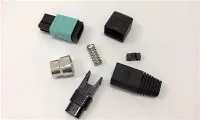
Hey there! If you're in the market for a Fiber Optic SC Pigtail, you've come to the right place. I'm a supplier of these nifty little cables, and I'm here to share some tips on how to choose the right one for your needs.
First off, let's talk about what a Fiber Optic SC Pigtail actually is. It's a short, single - fiber cable with an SC connector on one end and a bare fiber on the other. These pigtails are used in a variety of applications, like connecting fiber optic equipment, splicing into larger fiber optic networks, and more.
Length Matters
The first thing you gotta consider when choosing a Fiber Optic SC Pigtail is the length. You don't want to end up with a pigtail that's too short and won't reach where it needs to go, or one that's too long and creates a big mess of extra cable. Think about the distance between the equipment you're connecting and the splicing point. If it's a short connection within a rack, a 1 - 2 meter pigtail might be just right. But if you're running it across a room or between different parts of a building, you'll probably need a longer one, maybe 5 or 10 meters.
Fiber Type
Next up is the fiber type. There are two main types: single - mode and multi - mode. Single - mode fiber is designed for long - distance transmissions, like connecting buildings or even cities. It has a smaller core, which allows for less signal dispersion over long distances. If you're working on a project that requires high - speed data transfer over long ranges, single - mode is the way to go.
On the other hand, multi - mode fiber has a larger core and is better suited for shorter distances, like within a building or a campus network. It can handle multiple light modes simultaneously, but the signal degrades more quickly over long distances compared to single - mode. So, if your application is local and doesn't require super - long runs, multi - mode fiber might be more cost - effective.
Connector Quality
The quality of the SC connector is crucial. A poorly made connector can lead to high insertion loss, which means that a significant amount of the optical signal is lost as it passes through the connector. Look for connectors that are made from high - quality materials and have been precision - polished. Good connectors should have a smooth, clean finish on the ferrule, which is the part that holds the fiber. You can also check for things like low return loss, which indicates that less of the signal is being reflected back towards the source.
Jacket Material
The jacket material of the pigtail is also important. It protects the fiber from physical damage, moisture, and environmental factors. There are different types of jacket materials available. PVC (Polyvinyl Chloride) is a common choice. It's relatively inexpensive and provides good general - purpose protection. However, if you're using the pigtail in a harsh environment, like a factory floor where there might be chemicals or extreme temperatures, you might want to consider a more rugged jacket material, such as LSZH (Low - Smoke Zero - Halogen). LSZH jackets emit less smoke and no toxic halogens when burned, making them a safer option for indoor use, especially in areas where people are present.
Bend Radius
Don't forget about the bend radius. Every fiber optic cable has a minimum bend radius, which is the smallest radius that the cable can be bent without causing significant signal loss. If you bend the pigtail too tightly, it can damage the fiber and disrupt the signal. Make sure to choose a pigtail with a bend radius that suits your installation requirements. For example, if you need to route the cable around tight corners, look for a pigtail with a smaller minimum bend radius.
Compatibility
Another important factor is compatibility. You need to make sure that the Fiber Optic SC Pigtail is compatible with the other fiber optic components in your network. This includes things like the fiber optic patch panels, transceivers, and other cables. Check the specifications of all your equipment to ensure that the pigtail's fiber type, connector type, and other characteristics match up. For example, if your transceiver is designed for single - mode fiber, you'll need a single - mode SC pigtail.
Cost
Of course, cost is always a consideration. You don't want to overspend, but you also don't want to skimp on quality. Compare prices from different suppliers, but keep in mind that the cheapest option might not always be the best. Look for a balance between cost and quality. Sometimes, spending a little more upfront on a high - quality pigtail can save you money in the long run by reducing the need for replacements and minimizing signal problems.
Other Related Products
If you're also interested in other types of fiber optic cables, we also offer Fiber Optic Fc Pigtail and Lc Simplex Fiber Patch Cord. These products can be useful in different scenarios. The FC pigtail has a different connector type, which might be required for certain equipment, and the LC simplex patch cord is great for short - distance connections where a more compact connector is needed. We also have Fiber Optic Lc Pigtails, which are similar to the SC pigtails but with LC connectors.
In conclusion, choosing the right Fiber Optic SC Pigtail involves considering several factors, including length, fiber type, connector quality, jacket material, bend radius, compatibility, and cost. By taking the time to evaluate these aspects, you can ensure that you get a pigtail that meets your specific needs and provides reliable performance.
If you're interested in purchasing Fiber Optic SC Pigtails or any of our other fiber optic products, feel free to reach out. We're here to help you make the right choice for your project and can provide you with more detailed information and quotes.


References
- "Fiber Optic Cabling Installation Manual"
- "Optical Fiber Communication Technology Handbook"