Hey there! As a supplier of Fiber Optic FC Adaptors, I often get asked a bunch of questions about these little but super - important components in the fiber optic world. One of the most common queries is, "How many pins does a Fiber Optic FC Adaptor have?" Let's dig into this topic right away.
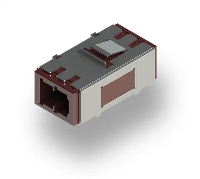
First off, let's understand what a Fiber Optic FC Adaptor is. It's a key part in fiber optic systems. It's used to connect two fiber optic cables together, making sure the light signal can travel smoothly from one cable to the other. FC stands for Ferrule Connector, and it's been around for quite some time. These adaptors are known for their high - precision and reliable performance, which is why they're still widely used in many fiber optic networks today.
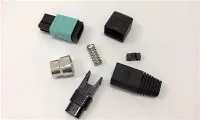
Now, to answer the big question: A standard Fiber Optic FC Adaptor doesn't actually have pins. That might sound a bit confusing at first, but here's why. Unlike some other types of connectors that use pins to transfer electrical signals, fiber optic connectors, including the FC adaptor, rely on light to transmit data. Instead of pins, an FC adaptor has a ceramic or plastic ferrule at its core. This ferrule holds the fiber optic strand in place with extreme precision. The ends of the two fibers need to be aligned perfectly so that the light can pass through without much loss.
The ferrule in an FC adaptor is cylindrical, and it's usually about 2.5mm in diameter. It has a tiny hole in the center where the fiber optic strand fits. When two FC - terminated cables are connected using an FC adaptor, the ferrules of the two connectors come into contact with each other, and the light signal can travel from one fiber to the other. This contact is crucial for maintaining a good connection and minimizing signal loss.
There are different types of FC adaptors, such as single - mode and multi - mode. Single - mode FC adaptors are designed for long - distance communication, where the light travels in a single path through the fiber. Multi - mode FC adaptors, on the other hand, are used for shorter distances and can handle multiple paths of light. But regardless of the type, they all share the same basic structure without pins.
You might be wondering how these adaptors compare to other types of fiber optic connectors. For example, the Fiber Optic Sc Adapter is another popular option. The SC adaptor uses a push - pull mechanism for connection, which is different from the screw - on design of the FC adaptor. And then there's the Fiber Optic St Coupler, which has a bayonet - style coupling mechanism. Each type has its own advantages and is suitable for different applications.
The China Lc Lc Duplex Fiber Optic Adapter is also worth mentioning. LC adaptors are smaller in size compared to FC adaptors, and they're often used in high - density applications. But the key difference still comes down to the way they connect the fibers and their physical design.
When it comes to installing an FC adaptor, it's important to follow the proper procedures. First, make sure the fiber optic cables are clean. Any dirt or debris on the fiber ends can cause significant signal loss. You can use special cleaning tools to wipe the ends of the fibers. Then, carefully insert the cables into the adaptor, making sure the ferrules are properly aligned. Tighten the screw - on mechanism gently but firmly to ensure a secure connection.
Another important aspect is testing. After installation, it's a good idea to test the connection to make sure the signal is strong and there are no issues. You can use a fiber optic tester to measure the optical loss and check the performance of the connection.
In the market, there are many factors to consider when choosing a Fiber Optic FC Adaptor. Quality is of utmost importance. A high - quality adaptor will have better alignment and lower signal loss. You also need to think about the compatibility with your existing fiber optic network. Make sure the adaptor is suitable for the type of fiber (single - mode or multi - mode) and the application requirements.
As a supplier, I've seen a wide range of customers, from small - scale network installers to large - scale data centers. Each has its own unique needs. For small - scale projects, cost - effectiveness might be a key factor. But for large - scale data centers, reliability and high performance are often the top priorities.
We offer a variety of Fiber Optic FC Adaptors to meet different customer needs. Our products are made with high - quality materials and go through strict quality control processes. Whether you need single - mode or multi - mode adaptors, we've got you covered.


If you're in the market for Fiber Optic FC Adaptors or have any questions about them, don't hesitate to reach out. We're here to help you find the right products for your fiber optic network. Whether you're building a new network or upgrading an existing one, our team of experts can provide you with valuable advice and support.
In conclusion, a Fiber Optic FC Adaptor doesn't have pins. Instead, it relies on a precision - engineered ferrule to connect fiber optic cables and transfer light signals. Understanding its structure and how it works is crucial for anyone working with fiber optic networks. And if you're looking for a reliable supplier of these adaptors, you know where to find us. Let's start a conversation and see how we can help you with your fiber optic needs.
References
- Fiber Optic Technology Handbook
- Industry standards for fiber optic connectors