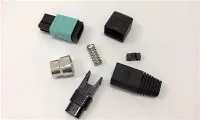
As a supplier of Fiber Optic SC Pigtails, I've witnessed firsthand the critical role that the chemical environment plays in the performance of these essential components in the fiber - optic communication field. In this blog post, I'll delve into how various chemical factors can impact the performance of Fiber Optic SC Pigtails and what steps can be taken to mitigate these effects.
Chemical Corrosion and Its Impact
One of the most significant challenges that Fiber Optic SC Pigtails face in certain chemical environments is corrosion. Corrosion can occur when the pigtail comes into contact with chemicals such as acids, alkalis, or salts. Acids in the environment, for example, can react with the metal components in the connector of the pigtail. The ferrule, which is typically made of ceramic or metal alloys, may be corroded by strong acids. This corrosion can cause surface roughness, which in turn affects the alignment of the fiber within the connector. Misalignment can lead to increased insertion loss, as the light signal is not efficiently transmitted through the connection.
Alkalis can also pose a threat. Some glass - based optical fibers in the pigtail may be susceptible to alkaline attack. When exposed to high - pH solutions, the silica glass in the fiber can react chemically, leading to the degradation of its mechanical and optical properties. The fiber may become more brittle, increasing the risk of breakage during handling or under mechanical stress. Salts, especially in humid environments, can form conductive layers on the connector surfaces. These salt deposits can cause electrical short - circuits in some cases, and they can also attract dust and other contaminants, exacerbating the performance issues.
Contamination from Chemical Vapors
Chemical vapors in the air can be another source of trouble for Fiber Optic SC Pigtails. Solvent vapors, for instance, are common in industrial settings. When these vapors condense on the connector end - faces, they can form thin films. These films can scatter the light signal, causing an increase in back - reflection. Back - reflection is an important parameter in fiber - optic systems, as it can cause signal interference and degrade the overall quality of the communication link.
Certain volatile organic compounds (VOCs) can also have a long - term impact on the polymer coatings of the fiber. The coatings are designed to protect the fiber from physical damage and to provide some flexibility. However, exposure to VOCs can cause the coatings to swell, crack, or become sticky. This not only compromises the mechanical protection of the fiber but also can affect the fiber's bending characteristics. Bending loss may increase, which means that a greater amount of light is lost as the signal travels through the pigtail.
Impact of Humidity and Chemical Reactions
Humidity often acts in conjunction with other chemical factors in the environment. Water vapor in the air can dissolve some acidic or alkaline gases, forming weak solutions. When these solutions come into contact with the Fiber Optic SC Pigtail, they can accelerate corrosion processes.


In addition, humidity can cause the expansion and contraction of the materials in the pigtail. For example, the plastic jackets around the fiber can absorb moisture, leading to dimensional changes. These changes can put stress on the fiber itself, potentially causing micro - bends. Micro - bends are small deformations in the fiber that can lead to significant light loss.
Moreover, in presence of moisture, certain chemical contaminants may form conductive paths. This is particularly concerning in areas where electrostatic discharge is a risk. Conductive paths formed by chemical - moisture interactions can increase the likelihood of electrostatic damage to the fiber - optic components, leading to sudden failures in the communication system.
Overcoming Chemical Environment Challenges
To mitigate the effects of the chemical environment on Fiber Optic SC Pigtails, several strategies can be employed. Firstly, proper environmental protection is essential. This can involve using sealed enclosures for the pigtails in harsh chemical environments. Sealed enclosures can prevent direct contact between the pigtail and the corrosive chemicals or contaminants.
Secondly, choosing the right materials is crucial. For example, connectors can be made from corrosion - resistant metals or alloys. Ceramic ferrules are generally more resistant to chemical attack compared to some metal ferrules. The fiber coatings can also be selected to be more resistant to chemical vapors and humidity. Manufacturers can develop special polymer coatings that have better chemical stability and moisture - resistance.
Regular cleaning and inspection are also key. Cleaning the connector end - faces can remove any chemical contaminants or dust that has accumulated. Inspection using tools such as optical microscopes can help detect early signs of corrosion or damage, allowing for timely replacement of the pigtails before major performance issues occur.
Related Products and Further Exploration
As a supplier, we also offer a wide range of related products. If you're interested in other types of fiber - optic pigtails, you can check out our Fiber Optic St Pigtails. These pigtails come with different configurations to meet various application needs. Another popular product is the Fiber Optic Pigtail LC UPC 12 Core, which provides high - capacity and reliable fiber - optic connections. And for patch cord solutions, our Lc Simplex Fiber Patch Cord offers excellent performance for short - distance connections.
Contact Us for Procurement
If you're in the market for high - quality Fiber Optic SC Pigtails or any of our related products, we invite you to reach out to us for procurement discussions. We have a team of experts who can provide you with detailed product information, technical support, and competitive pricing. Understanding the impact of the chemical environment on these pigtails is just the first step; we can help you ensure that your fiber - optic systems perform optimally in any conditions.
References
- Smith, J. (2018). Fiber Optic Technology: Principles and Applications. Publisher X.
- Johnson, A. (2019). Chemical Resistance of Fiber Optic Components. Journal of Optical Engineering, 56(3), 123 - 135.
- Brown, K. (2020). Environmental Challenges in Fiber Optic Networks. Proceedings of the International Conference on Optics and Photonics, pp. 45 - 52.