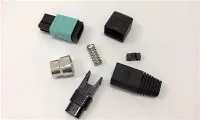
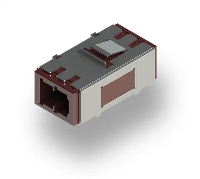
As a supplier of Fiber Optic MU Connectors, I've witnessed firsthand the critical role these connectors play in modern communication networks. One factor that significantly impacts their performance is temperature. In this blog, I'll delve into how temperature affects the performance of Fiber Optic MU Connectors and why it's crucial for network operators and end - users to understand these dynamics.
1. Basics of Fiber Optic MU Connectors
Fiber Optic MU Connectors are small - form - factor connectors widely used in high - density fiber optic applications. They offer a compact design, making them ideal for use in data centers, telecommunications networks, and other environments where space is at a premium. These connectors are known for their low insertion loss and high return loss, which are essential for maintaining signal integrity in fiber optic systems.
Our company offers a range of fiber optic connectors, including Ftth Sc Optical Fiber Connector, Fiber Optic Mpo Connector, and Fiber Optic Sc Connector. However, in this blog, we'll focus specifically on the MU connectors and their temperature - related performance.
2. Temperature and Material Properties
The materials used in Fiber Optic MU Connectors are sensitive to temperature changes. Most connectors are made of materials such as ceramic ferrules, plastic bodies, and metal components. Each of these materials has different coefficients of thermal expansion (CTE).
Ceramic ferrules, which are used to precisely align the fiber cores, have a relatively low CTE. This is important because it helps maintain the alignment of the fibers even when the temperature changes. However, the plastic bodies of the connectors typically have a higher CTE. When the temperature rises, the plastic expands more than the ceramic ferrule. This differential expansion can cause stress on the ferrule, potentially leading to misalignment of the fiber cores.
On the other hand, when the temperature drops, the plastic contracts. If the contraction is too severe, it can also cause mechanical stress on the ferrule and the fiber, which may result in micro - bending of the fiber. Micro - bending can increase the attenuation of the optical signal, reducing the overall performance of the connector.
3. Impact on Insertion Loss
Insertion loss is a key parameter in evaluating the performance of fiber optic connectors. It measures the amount of optical power lost when the signal passes through the connector. Temperature can have a significant impact on insertion loss.
At high temperatures, the expansion of the connector components can cause the fiber cores to move out of alignment. Even a small misalignment can lead to a substantial increase in insertion loss. As the temperature rises, the insertion loss of the Fiber Optic MU Connector may gradually increase. This can be a serious issue in long - distance fiber optic networks, where even a small increase in insertion loss can degrade the signal quality and reduce the transmission distance.
Conversely, at low temperatures, the contraction of the materials can also affect the insertion loss. The mechanical stress caused by the contraction can lead to micro - bending of the fiber, as mentioned earlier. Micro - bending introduces additional scattering and absorption of the optical signal, resulting in an increase in insertion loss.
4. Influence on Return Loss
Return loss, also known as reflection loss, measures the amount of optical power reflected back from the connector interface. A high return loss is desirable because it indicates that most of the optical power is transmitted through the connector and not reflected back.
Temperature can affect return loss in several ways. At high temperatures, the expansion of the connector materials can change the shape of the connector interface. This can lead to an increase in the reflection of the optical signal, reducing the return loss. A lower return loss means more signal is reflected back, which can cause interference and degrade the performance of the fiber optic system.


At low temperatures, the contraction of the materials can also cause changes in the connector interface. The mechanical stress may cause the interface to become uneven, resulting in an increase in reflection and a decrease in return loss.
5. Thermal Cycling Effects
In real - world applications, Fiber Optic MU Connectors are often exposed to thermal cycling, which is the repeated change in temperature. Thermal cycling can have a cumulative effect on the performance of the connectors.
During each cycle of temperature change, the materials in the connector expand and contract. Over time, this repeated mechanical stress can cause fatigue in the materials. For example, the plastic body of the connector may develop cracks, and the ceramic ferrule may experience micro - fractures. These structural damages can lead to permanent degradation of the connector's performance, including increased insertion loss and decreased return loss.
Moreover, thermal cycling can also cause the connector to loosen over time. The expansion and contraction of the components can gradually reduce the tightness of the connection, increasing the risk of misalignment and signal loss.
6. Mitigating Temperature - Related Issues
To ensure the reliable performance of Fiber Optic MU Connectors in different temperature environments, several measures can be taken.
First, high - quality materials with low CTEs should be used in the manufacturing of the connectors. For example, using ceramics with excellent thermal stability for the ferrules and plastics with appropriate CTEs for the bodies can help reduce the impact of temperature changes.
Second, proper installation and maintenance are crucial. During installation, the connectors should be installed in a temperature - controlled environment to ensure proper alignment. Regular inspections should be carried out to detect any signs of damage or degradation caused by temperature changes.
Third, environmental protection can also be considered. In outdoor or harsh - environment applications, using protective enclosures or cabinets can help shield the connectors from extreme temperatures. These enclosures can provide insulation and maintain a more stable temperature around the connectors.
7. Conclusion and Call to Action
In conclusion, temperature has a profound impact on the performance of Fiber Optic MU Connectors. It can affect insertion loss, return loss, and the long - term reliability of the connectors. As a supplier of Fiber Optic MU Connectors, we understand the importance of providing high - quality products that can withstand a wide range of temperature conditions.
If you're in the market for reliable fiber optic connectors, including Fiber Optic MU Connectors, we invite you to contact us for more information. Our team of experts can provide you with detailed product specifications and help you choose the right connectors for your specific applications. Whether you're building a data center, a telecommunications network, or any other fiber optic system, we're here to support you.
References
- "Fiber Optic Connector Handbook" by John Senior
- "Optical Fiber Communication Systems" by Gerd Keiser
- Technical reports from leading fiber optic component manufacturers.