In the realm of modern communication, the choice between fiber optic adapters and copper cable connectors is a crucial decision that can significantly impact the efficiency, performance, and cost - effectiveness of a network. As a supplier of fiber optic adapters, I am well - versed in the capabilities of both technologies and eager to share a detailed comparison.
1. Transmission Speed and Bandwidth
One of the most prominent differences between fiber optic adapters and copper cable connectors lies in their transmission speed and bandwidth. Fiber optic cables, when paired with appropriate adapters, can achieve incredibly high data transfer rates. With advancements in technology, fiber optic networks can now support speeds of up to 400 Gbps and even higher in some experimental setups. This is because light signals, which are used for data transmission in fiber optics, can travel at extremely high frequencies without significant interference.
On the other hand, copper cable connectors, while reliable, have limitations in terms of speed and bandwidth. Traditional Ethernet copper cables, such as Cat5e or Cat6, typically offer speeds ranging from 1 Gbps to 10 Gbps. The electrical signals used in copper cables are more susceptible to attenuation and interference, which restricts the achievable data rates over longer distances.
For example, in a large - scale data center where high - speed data transfer is essential for real - time analytics, cloud computing, and high - definition video streaming, fiber optic adapters are the clear choice. They can handle the massive amounts of data traffic without experiencing bottlenecks, ensuring smooth and efficient operation. To explore a range of fiber optic adapters suitable for high - speed applications, you can check out our Fiber Optic Fc Adaptor.
2. Distance Limitations
Fiber optic adapters excel when it comes to long - distance data transmission. Light signals in fiber optic cables can travel much farther than electrical signals in copper cables without significant loss of signal strength. Single - mode fiber optic cables, commonly used in long - haul telecommunications and large - scale network deployments, can transmit data over distances of up to 100 kilometers or more. This makes them ideal for connecting remote offices, data centers, and even international communication links.
Copper cables, however, have much shorter distance limitations. For instance, a standard Cat6 Ethernet cable has a maximum recommended length of about 100 meters for 10 Gbps transmission. Beyond this distance, the signal strength degrades significantly, leading to errors and reduced performance. In cases where longer distances need to be covered in a network, using copper cables would require the installation of repeaters or signal boosters, which adds to the complexity and cost of the network.
If you are looking for a fiber optic adapter that can support long - distance communication, our Fiber Optic E2000 Adapter is a great option. It provides reliable connectivity over extended distances while maintaining high - quality signal transmission.
3. Immunity to Electromagnetic Interference (EMI)
Fiber optic adapters are highly immune to electromagnetic interference. Since they use light signals for data transmission, they are not affected by external electromagnetic fields, such as those generated by power lines, motors, or radio frequency sources. This makes fiber optic networks extremely reliable in environments with high levels of EMI, such as industrial settings, power plants, and near large electrical equipment.
In contrast, copper cable connectors are highly susceptible to EMI. Electrical signals in copper cables can be easily disrupted by electromagnetic fields, leading to data errors, signal loss, and reduced network performance. In an industrial factory floor, for example, the presence of large motors and electrical machinery can cause significant interference in copper - based networks, making fiber optics a more reliable alternative.


4. Security
Security is a major concern in today's digital age, especially for businesses and organizations that handle sensitive information. Fiber optic adapters offer a higher level of security compared to copper cable connectors. It is extremely difficult to tap into a fiber optic cable without physically cutting it, which would immediately disrupt the signal and alert network administrators. Additionally, fiber optic cables do not emit electromagnetic radiation, making them less vulnerable to eavesdropping.
Copper cables, on the other hand, emit electromagnetic signals that can be intercepted using specialized equipment. Hackers can potentially access sensitive data transmitted over copper cables, posing a significant security risk. For industries such as finance, healthcare, and government, where data security is of utmost importance, fiber optic networks are the preferred choice.
5. Cost
The cost factor is an important consideration when choosing between fiber optic adapters and copper cable connectors. Initially, the installation cost of a fiber optic network is generally higher than that of a copper - based network. Fiber optic cables and adapters are more expensive to purchase, and the installation process requires specialized skills and equipment. However, in the long run, fiber optic networks can be more cost - effective.
Since fiber optic cables have a longer lifespan and require less maintenance compared to copper cables, the total cost of ownership over time can be lower. Additionally, as technology advances, the cost of fiber optic components is gradually decreasing, making them more accessible for a wider range of applications.
Copper cable connectors are relatively inexpensive to purchase and install, which makes them a popular choice for small - scale networks and budget - constrained projects. However, the need for frequent cable replacements due to wear and tear, as well as the cost of dealing with signal interference and performance degradation, can add up over time.
6. Flexibility and Scalability
Fiber optic adapters offer greater flexibility and scalability in network design. They can be easily integrated into existing networks and can support a wide range of applications, from high - speed data transfer to video conferencing and Internet of Things (IoT) devices. As network requirements grow, fiber optic networks can be easily upgraded by adding more adapters or replacing existing components with higher - performance ones.
Copper cable connectors, while suitable for basic network setups, may face limitations when it comes to scalability. Upgrading a copper - based network to support higher data rates often requires replacing the entire cable infrastructure, which can be a costly and time - consuming process.
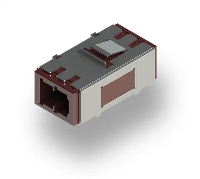
For complex and scalable network solutions, our Mtp®/mpo - 8/12/24 Black Fiber Optic Adapter/coupler with Flange, Key Up To Down provides the flexibility and performance needed to meet the evolving demands of modern networks.
Conclusion
In conclusion, fiber optic adapters and copper cable connectors each have their own strengths and weaknesses. While copper cable connectors are still a viable option for small - scale, short - distance, and budget - conscious applications, fiber optic adapters offer superior performance in terms of transmission speed, distance, immunity to EMI, security, flexibility, and scalability.
As a supplier of fiber optic adapters, we are committed to providing high - quality products that meet the diverse needs of our customers. Whether you are building a new network or upgrading an existing one, we can offer the right fiber optic solutions for your specific requirements. If you are interested in learning more about our fiber optic adapter products or need assistance in choosing the best solution for your network, please feel free to contact us for a detailed discussion and procurement negotiation.
References
- "Fiber Optic Communication Systems" by Govind P. Agrawal.
- "Data Communications and Networking" by Andrew S. Tanenbaum.
- Industry reports from leading telecommunications research firms.