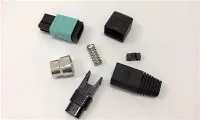
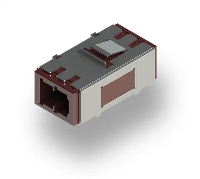
Hey there! As a supplier of Fiber Optic E2000 Adapters, I often get asked a bunch of questions about these little but crucial components. One question that pops up quite frequently is, "Does a Fiber Optic E2000 Adapter generate heat during operation?" Let's dig into this topic and find out.
First off, let's understand what a Fiber Optic E2000 Adapter is. It's a key part in fiber - optic networks. These adapters are used to connect two fiber - optic connectors together, allowing the smooth transmission of light signals. They're designed to be reliable and efficient, ensuring that the data can flow without any major hitches.
Now, onto the big question: heat generation. To figure this out, we need to look at how these adapters work. Fiber - optic systems transfer data using light instead of electricity. When light travels through the fiber - optic cables and passes through the adapter, there are a few things that can potentially cause heat.
One factor is insertion loss. Insertion loss occurs when some of the light signal is lost as it passes through the adapter. This lost energy has to go somewhere, and in some cases, it can be converted into heat. However, modern Fiber Optic E2000 Adapters are engineered to have very low insertion loss. High - quality ones can keep the insertion loss to less than 0.2dB. This means that the amount of energy being lost and potentially converted into heat is extremely small.
Another thing to consider is the quality of the connection. If the connection between the fiber - optic connectors and the adapter is not proper, it can lead to additional signal loss and potentially more heat generation. For example, if there's dust or debris on the connector ends, it can disrupt the smooth passage of light, causing more energy to be dissipated as heat. But if you keep your connectors clean and make sure they're properly inserted, this risk can be minimized.
The environment also plays a role. If the adapter is operating in a hot and poorly ventilated area, it might seem like it's generating more heat. In reality, the high ambient temperature can make it harder for the adapter to dissipate any small amount of heat that it does produce. So, even if the heat generated by the adapter itself is minimal, it can still feel warmer in a hot environment.
In most cases, though, the heat generated by a Fiber Optic E2000 Adapter during normal operation is so negligible that you won't even notice it. These adapters are built to be energy - efficient and designed to handle the light signals without creating a significant amount of heat.
Let's compare the Fiber Optic E2000 Adapter with some other types of fiber - optic adapters. For instance, the China Lc Lc Duplex Fiber Optic Adapter and the Fiber Optic Mpo Adapter and Fiber Optic Fc Adaptor. Each of these adapters has its own characteristics when it comes to heat generation.
The LC - LC duplex adapter is widely used because of its small size and low cost. Similar to the E2000 adapter, it's designed to have low insertion loss, so the heat generation is also quite low. The MPO adapter, on the other hand, is used for high - density applications. Since it can handle multiple fiber connections at once, there's a slightly higher chance of heat generation due to the increased number of light signals passing through. But again, with proper design and installation, this can be managed. The FC adaptor has a threaded coupling mechanism, which provides a secure connection. It also has relatively low heat generation under normal circumstances.
As a supplier, I've seen firsthand how these adapters perform in different scenarios. We always make sure that our Fiber Optic E2000 Adapters are of the highest quality. We test them rigorously to ensure that they meet industry standards for insertion loss, return loss, and other important parameters. This way, we can guarantee that our customers get an adapter that won't cause any heat - related issues during operation.
If you're in the market for fiber - optic adapters, whether it's the E2000 adapter or any of the others I mentioned, we've got you covered. Our products are not only reliable but also cost - effective. We understand the importance of having a stable and efficient fiber - optic network, and our adapters are designed to contribute to that.
If you have any questions about our Fiber Optic E2000 Adapters or want to discuss your specific requirements, don't hesitate to reach out. We're here to help you make the best choice for your fiber - optic needs. Whether you're setting up a small home network or a large - scale commercial one, we can provide the right solutions.


So, to sum it up, while a Fiber Optic E2000 Adapter can potentially generate a tiny bit of heat during operation, in most real - world situations, it's so minimal that it's not a concern. With proper installation, maintenance, and the use of high - quality products, you can enjoy a smooth - running fiber - optic network without having to worry about heat issues.
References
- Fiber Optic Association Handbook
- Industry reports on fiber - optic adapter performance