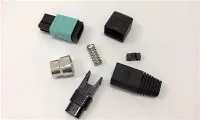
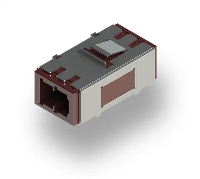
Hey there! As a supplier of Fiber Optic LC Adapters, I often get asked about whether these little devices have any EMI/RFI shielding. Let's dive right into it and break it down.
First off, let's talk about what EMI and RFI are. EMI stands for Electromagnetic Interference, and RFI is Radio Frequency Interference. These are basically unwanted electromagnetic signals that can mess with the performance of electronic and optical devices. In the world of fiber optics, where we're dealing with the transmission of light signals through thin strands of glass or plastic, you might wonder why EMI/RFI would even be a concern.
Well, even though fiber optic cables themselves are immune to EMI/RFI because they transmit data using light rather than electrical signals, the components that connect these cables, like our LC adapters, can potentially be affected. You see, the environment around these adapters can be full of all sorts of electromagnetic and radio frequency noise. Things like power lines, wireless routers, and even some industrial equipment can generate these unwanted signals.
Now, when it comes to Fiber Optic LC Adapters, the standard ones usually don't come with built - in EMI/RFI shielding. LC adapters are designed mainly to provide a secure and low - loss connection between two fiber optic cables. They're focused on making sure that the light signal can pass through smoothly from one cable to another. However, in some cases, especially in environments with high levels of EMI/RFI, having shielding can be a game - changer.
So, if you're in an area where there's a lot of electromagnetic or radio frequency interference, you might want to consider shielded LC adapters. These specialized adapters are built with materials that can block out the unwanted signals. They usually have a metallic or conductive outer layer that acts as a shield, preventing the EMI/RFI from getting in and affecting the performance of the adapter.

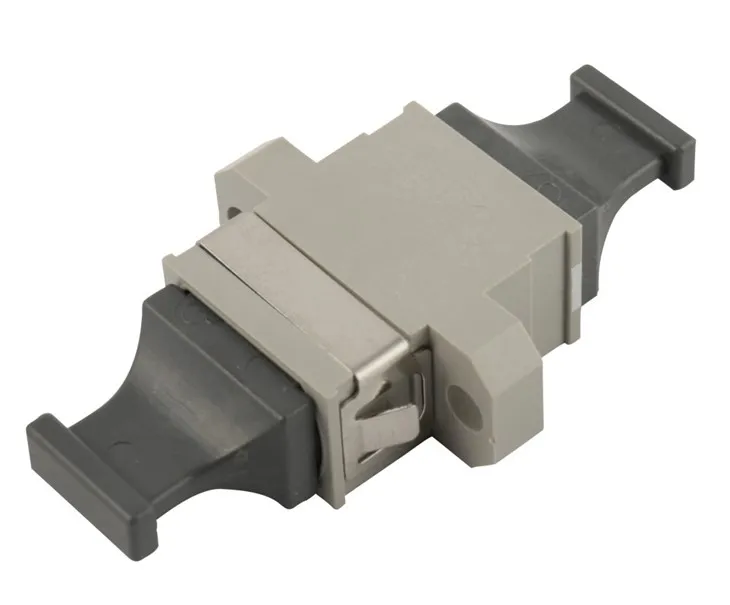
One of the key benefits of using shielded LC adapters in high - interference environments is improved signal quality. When there's less interference, the light signal can travel more reliably through the adapter, resulting in fewer data errors and a more stable connection. This is crucial for applications where data integrity is of the utmost importance, like in data centers, telecommunications networks, and some industrial control systems.
Another advantage is that shielded LC adapters can help reduce the risk of crosstalk. Crosstalk is when the signal from one fiber optic cable leaks into another, causing interference. By blocking out external EMI/RFI, shielded adapters can minimize the chances of this happening, ensuring that each cable's signal stays separate and clear.
Now, I know what you might be thinking. "Are shielded LC adapters more expensive?" Well, the answer is usually yes. The materials and manufacturing processes required to add the shielding layer make them costlier than the standard ones. But when you consider the benefits they offer in terms of signal quality and reliability, it can be a worthy investment, especially for mission - critical applications.
As a supplier, I've seen a growing demand for shielded LC adapters in recent years. More and more customers are becoming aware of the potential problems caused by EMI/RFI and are looking for solutions to ensure the best performance of their fiber optic networks.
If you're in the market for fiber optic adapters, it's not just about LC adapters. There are also other types like the Fiber Optic MU Adapter, Fiber Optic MTRJ Adapter, and Fiber Optic MPO Adapter. Each of these has its own unique features and applications. The MU adapter, for example, is known for its small size, making it a great choice for high - density applications. The MTRJ adapter is a duplex connector that combines two fibers in a single housing, which can be handy in some setups. And the MPO adapter is designed for multi - fiber applications, allowing for the connection of multiple fibers at once.
When choosing between different types of adapters, you need to consider your specific requirements. Think about the environment where the adapters will be used, the type of fiber optic cables you're using, and the level of performance you need. If you're in a high - interference area, a shielded LC adapter might be the way to go. But if you're looking for a compact solution for a small - scale network, an MU adapter could be more suitable.
In conclusion, while standard Fiber Optic LC Adapters don't typically have EMI/RFI shielding, shielded versions are available for those who need them. They offer significant benefits in terms of signal quality and reliability, especially in challenging environments. And don't forget to explore other types of fiber optic adapters like the Fiber Optic MU Adapter, Fiber Optic MTRJ Adapter, and Fiber Optic MPO Adapter to find the best fit for your needs.
If you're interested in learning more about our Fiber Optic LC Adapters or any of our other products, or if you want to discuss your specific requirements for your fiber optic network, feel free to reach out. We're here to help you make the right choice and ensure that your network runs smoothly.
References:
- "Fiber Optic Communication Technology" textbooks.
- Industry whitepapers on fiber optic components and interference management.