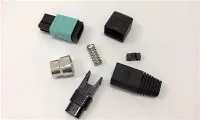
Hey there! As a supplier of Fiber Optic MU Patchcords, I often get asked whether these little guys can be reused. So, I thought I'd sit down and write a blog post to share my thoughts and experiences on this topic.
Let's start by understanding what Fiber Optic MU Patchcords are. These patchcords are a type of fiber optic cable that uses the MU (Miniature Unit) connector. They're known for their small size and high - density capabilities, making them a popular choice in data centers, telecommunications networks, and other high - tech environments where space is at a premium.
Now, the big question: Can they be reused? Well, the short answer is yes, they can be reused in many cases, but there are a few things you need to keep in mind.
Factors Affecting Reusability
1. Connector Condition
The condition of the MU connectors is crucial. Over time, connectors can get dirty, scratched, or damaged. Dust and debris can accumulate on the end - faces of the connectors, which can cause signal loss and attenuation. If the end - face is scratched, it can also disrupt the transmission of light through the fiber.
When you're thinking about reusing a Fiber Optic MU Patchcord, you should always inspect the connectors carefully. You can use a fiber optic microscope to check the end - faces for any signs of damage or contamination. If the connectors are just dirty, you can clean them using a proper fiber optic cleaning kit. But if there are deep scratches or other significant damage, it might be best to replace the patchcord.


2. Cable Integrity
The cable itself also needs to be in good condition. Bending the fiber optic cable too tightly can cause micro - bends, which can lead to signal loss. Also, if the cable has been pulled or tugged on too hard, it might have internal damage that isn't visible from the outside.
You can perform a visual inspection of the cable to look for any signs of cuts, abrasions, or kinks. If the cable looks okay on the outside, you can also use an optical time - domain reflectometer (OTDR) to test the integrity of the fiber inside the cable. This device can detect any breaks or issues in the fiber and give you an idea of whether the cable is still suitable for reuse.
3. Network Requirements
The requirements of your network also play a role in determining whether you can reuse a Fiber Optic MU Patchcord. Some networks have very high - performance requirements, such as those used in financial trading systems or high - definition video streaming. In these cases, even a small amount of signal loss or interference can be a big problem.
If your network has strict performance requirements, you might want to be more cautious about reusing patchcords. It's always better to err on the side of caution and use new patchcords if you're not 100% sure that the reused ones will meet the network's standards.
Benefits of Reusing Fiber Optic MU Patchcords
1. Cost Savings
One of the biggest advantages of reusing patchcords is cost savings. Fiber optic patchcords can be quite expensive, especially if you need a large number of them. By reusing patchcords that are still in good condition, you can significantly reduce your procurement costs.
2. Environmental Impact
Reusing patchcords is also better for the environment. Instead of throwing away old patchcords and adding to the electronic waste, you can give them a second life. This helps to conserve resources and reduce the overall environmental footprint of your network infrastructure.
When to Avoid Reusing
There are some situations where you should definitely avoid reusing Fiber Optic MU Patchcords. If the patchcord has been involved in a major incident, such as a fire or a flood, it's likely that the cable and connectors have been severely damaged. In this case, it's not worth the risk of trying to reuse it.
Also, if you're upgrading your network to a higher - speed or more advanced technology, it's usually a good idea to use new patchcords. Newer networks often have different requirements, and using old patchcords might not be compatible or might not provide the necessary performance.
Other Fiber Optic Patchcords in Our Range
As a supplier, we also offer other types of fiber optic patchcords. For example, we have the Fiber Optic MTRJ Patchcord. The MTRJ connector is another small - form - factor connector that's commonly used in LAN applications. It's easy to install and provides good performance.
We also have the Fiber Optic LC LC Patch Cable Single Mode Simplex. The LC connector is very popular in data centers because of its high - density capabilities and low insertion loss. This single - mode simplex cable is great for long - distance transmission.
And then there's the Fiber Optic FC Patch Cable. The FC connector is a screw - type connector that's known for its reliability and stability. It's often used in high - precision applications.
Conclusion
So, in conclusion, Fiber Optic MU Patchcords can definitely be reused in many cases, but you need to be careful. Inspect the connectors and cable for damage, consider the network requirements, and make a decision based on the specific situation.
If you're interested in purchasing Fiber Optic MU Patchcords or any of our other fiber optic products, I'd love to talk to you. We have a wide range of high - quality patchcords at competitive prices. Whether you need a single patchcord for a small project or a large quantity for a big network upgrade, we can help. Just reach out to us, and we'll be happy to discuss your requirements and provide you with a quote.
References
- "Fiber Optic Network Design and Implementation" by some author
- "Handbook of Fiber Optic Test and Measurement" by another author