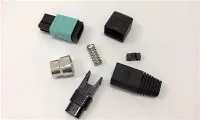
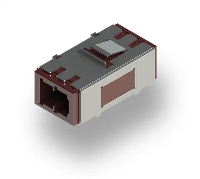
In the era of rapid technological advancement, 5G networks have emerged as a revolutionary force, promising ultra - high - speed data transfer, low latency, and massive device connectivity. As a leading supplier of Fiber Optic MPO Patchcords, I am often asked whether our products can be used in 5G networks. In this blog, I will delve into this question, exploring the technical aspects, advantages, and applications of Fiber Optic MPO Patchcords in the context of 5G.
Understanding 5G Networks
5G networks represent the fifth generation of mobile network technology. They are designed to provide significantly faster data speeds compared to their predecessors, with peak rates reaching up to 20 Gbps. Low latency is another critical feature of 5G, with round - trip times reduced to as little as 1 millisecond. This low latency is essential for applications such as autonomous vehicles, remote surgery, and real - time gaming.
Moreover, 5G networks support a much higher density of connected devices. The Internet of Things (IoT) is expected to flourish under 5G, with billions of sensors, smart appliances, and industrial devices communicating seamlessly. To achieve these capabilities, 5G networks rely on a complex infrastructure that includes base stations, core networks, and fiber - optic backhaul.
What is a Fiber Optic MPO Patchcord?
A Fiber Optic MPO (Multi - Fiber Push - On) Patchcord is a high - density fiber optic cable that uses an MPO connector. The MPO connector can house multiple optical fibers in a single connector, typically ranging from 4 to 72 fibers. This high - density design allows for efficient and compact cabling solutions, especially in data centers and telecommunications networks.
The MPO Patchcords are available in different configurations, including single - mode and multi - mode fibers. Single - mode fibers are suitable for long - distance transmissions, while multi - mode fibers are commonly used for shorter distances within data centers. The cables are also available in various lengths and can be customized according to specific requirements.
Compatibility of Fiber Optic MPO Patchcords with 5G Networks
High - Speed Data Transmission
One of the primary requirements of 5G networks is high - speed data transmission. Fiber Optic MPO Patchcords are well - suited for this task. With their ability to support multiple fibers in a single connector, they can transmit large amounts of data simultaneously. For example, in a 5G base station, MPO Patchcords can be used to connect the radio unit to the baseband unit, enabling high - speed data transfer between these components.
The high - bandwidth capabilities of fiber optics ensure that the data transfer rates required by 5G applications can be met. Whether it is streaming high - definition video, transferring large files, or supporting real - time communication, Fiber Optic MPO Patchcords can handle the load.
Low Latency
Low latency is crucial for 5G applications, and fiber optic technology inherently offers low signal propagation delay. Fiber Optic MPO Patchcords have a very short latency compared to traditional copper cables. This is because light travels through the fiber optic cable at a very high speed, and the signal degradation is minimal.
In 5G networks, where real - time responses are essential, the low latency provided by Fiber Optic MPO Patchcords can make a significant difference. For example, in autonomous vehicles, low - latency communication between the vehicle and the network is necessary for safe and efficient operation.
Scalability
5G networks are expected to grow and evolve over time. Fiber Optic MPO Patchcords offer excellent scalability. As the demand for data increases, more fibers can be added to the network by simply replacing or adding MPO Patchcords. This flexibility makes it easier for network operators to upgrade their 5G infrastructure without significant disruptions.
Compact Design
The high - density design of Fiber Optic MPO Patchcords is beneficial in 5G base stations and data centers, where space is often limited. The compact nature of these patchcords allows for more efficient use of rack space, reducing the overall footprint of the network infrastructure.
Applications of Fiber Optic MPO Patchcords in 5G Networks
Backhaul and Fronthaul
In 5G networks, backhaul and fronthaul connections are crucial for transmitting data between the base stations and the core network. Fiber Optic MPO Patchcords can be used in both backhaul and fronthaul links. In the fronthaul, they connect the remote radio heads (RRHs) to the baseband units (BBUs), while in the backhaul, they connect the base stations to the core network.
Data Centers
5G networks rely on data centers to store, process, and manage the vast amount of data generated by users and connected devices. Fiber Optic MPO Patchcords are widely used in data centers for interconnecting servers, switches, and storage systems. Their high - density design and high - speed data transmission capabilities make them ideal for data center applications.
Small Cells
Small cells are an essential part of 5G networks, providing additional coverage and capacity in areas with high user density. Fiber Optic MPO Patchcords can be used to connect small cells to the main network, ensuring high - speed and reliable communication.
Comparison with Other Fiber Optic Cables
While Fiber Optic MPO Patchcords have many advantages, it is also important to compare them with other types of fiber optic cables. For example, Fiber Optic MTRJ Patchcord uses a different type of connector. The MTRJ connector is smaller than the MPO connector but can only accommodate a limited number of fibers. This makes MTRJ Patchcords more suitable for applications where only a few fibers are required, such as in some local area networks.
On the other hand, Fiber Optic LC Fiber Jumper uses an LC connector, which is a popular choice for single - fiber connections. LC connectors are known for their high performance and reliability, but they are not as suitable for high - density applications as MPO Patchcords.
If you are looking for a specific type of patchcord for a 5G - related application, our MPO - LC 12 Muti - color Tight Buffer Fiber Patch Cords 0.3m can be a great option. It combines the high - density features of MPO connectors with the flexibility of LC connectors, making it suitable for a wide range of 5G network configurations.
Conclusion
In conclusion, Fiber Optic MPO Patchcords are highly suitable for use in 5G networks. Their high - speed data transmission, low latency, scalability, and compact design make them an ideal choice for the complex infrastructure of 5G. Whether it is for backhaul, fronthaul, data centers, or small cells, Fiber Optic MPO Patchcords can play a crucial role in enabling the full potential of 5G technology.
If you are involved in the deployment or upgrade of 5G networks and are looking for high - quality Fiber Optic MPO Patchcords, we are here to help. Our team of experts can provide you with customized solutions based on your specific requirements. Contact us today to start a procurement discussion and take your 5G network to the next level.


References
- "5G Technology: A Comprehensive Overview" by IEEE Communications Society
- "Fiber Optic Cabling for Telecommunications Networks" by Corning Incorporated
- "MPO/MTP Connector Systems" by Rosenberger Hochfrequenztechnik GmbH