Can a Fiber Optic FC Pigtail be used in underwater applications?
Hey there! I'm a supplier of Fiber Optic FC Pigtails, and I often get asked if these little wonders can be used underwater. Well, let's dive right in and explore this topic.
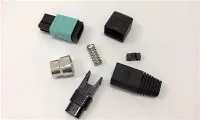
First off, what's a Fiber Optic FC Pigtail? For those who aren't in the know, it's a short, single - fiber cable with an FC connector on one end. The FC connector, with its threaded coupling mechanism, provides a secure connection. These pigtails are commonly used in data centers, telecommunications networks, and other places where reliable fiber - optic connections are needed. You can check out more about them on our Fiber Optic Fc Pigtail page.
Now, when it comes to underwater applications, things get a bit more complicated. Underwater environments are harsh. They have high pressure, varying temperatures, and the presence of water and other corrosive substances. So, can a standard Fiber Optic FC Pigtail cut it?
Let's talk about the main challenges. The first one is water ingress. Water is the enemy of fiber - optic cables. If water gets inside the cable, it can cause signal loss, corrosion of the connectors, and even break the fiber itself. Standard FC pigtails aren't designed to keep water out. Their outer jackets and connector seals are made for normal, dry environments.
Another challenge is pressure. As you go deeper underwater, the pressure increases significantly. This high pressure can crush the cable and damage the fiber. Most off - the - shelf FC pigtails won't be able to withstand these extreme pressures.
Temperature is also a factor. Underwater temperatures can vary widely, from near - freezing in deep - sea areas to relatively warm in shallow tropical waters. These temperature changes can cause the materials in the pigtail to expand and contract, which might lead to cracks and signal degradation.
However, that doesn't mean it's impossible to use fiber - optic connections underwater. There are some specialized versions of FC pigtails that are designed for underwater use. These are built with special waterproof jackets. For example, some use polyurethane or other rubber - like materials that form a tight seal around the cable and connectors, preventing water from getting in.
The connectors of these underwater - ready FC pigtails are also modified. They have better sealing mechanisms to keep water out. And the internal components are made from materials that can resist corrosion from saltwater and other substances found underwater.
In addition to the hardware improvements, the installation process for underwater FC pigtails is crucial. Special techniques are used to ensure a proper seal and connection. Divers or remotely operated vehicles (ROVs) are often used to install these pigtails at the desired underwater locations.
So, if you're considering using an FC pigtail underwater, you need to think about a few things. First, assess the depth and conditions of the underwater location. If it's a shallow, relatively calm area, the requirements might not be as strict as for a deep - sea installation.


Second, you need to work with a supplier who has experience in providing underwater - compatible fiber - optic products. At our company, we have a range of solutions for different underwater applications. We can customize the FC pigtails according to your specific needs, whether it's for a short - term deployment or a long - term, permanent installation.
Now, let's compare FC pigtails with other types of fiber - optic pigtails for underwater use. There are Fiber Optic St Pigtails and Fiber Optic Sc Pigtails. The ST pigtails use a bayonet - style connector, which is easy to install but might not provide as secure a connection as the threaded FC connector in high - pressure underwater environments. The SC pigtails have a push - pull connector, which is quick to connect and disconnect. However, like the ST pigtails, they need to be properly modified for underwater use.
In some cases, the choice between these different types of pigtails depends on the specific application. For example, if you need a lot of quick connections and disconnections, the SC pigtail might be a better choice. But if you need a more secure, long - term connection, the FC pigtail could be the way to go.
In conclusion, while a standard Fiber Optic FC Pigtail can't be used directly underwater, there are specialized versions that can handle the harsh underwater conditions. These specialized pigtails are built with waterproof materials, can withstand high pressures, and are resistant to temperature changes.
If you're in the market for fiber - optic pigtails for underwater applications, don't hesitate to reach out. We're here to help you find the right solution for your project. Whether it's an FC, ST, or SC pigtail, we can provide you with high - quality products and expert advice. Contact us today to start the conversation about your fiber - optic needs.
References
- "Fiber Optic Communication Systems" by Govind P. Agrawal
- Industry reports on underwater fiber - optic technology