In the ever - evolving landscape of telecommunications, Fiber - to - the - Home (FTTH) networks have emerged as a game - changer, offering high - speed, reliable internet access to residential users. As a supplier of Fiber Optic E2000 Pigtails, I often get asked whether these pigtails can be used in FTTH networks. In this blog post, I'll delve into the technical aspects, advantages, and potential challenges of using Fiber Optic E2000 Pigtails in FTTH setups.
Understanding FTTH Networks
FTTH networks are designed to bring fiber optic cables directly to individual homes, eliminating the need for traditional copper - based connections. This direct connection provides significantly higher bandwidth, lower latency, and greater reliability compared to other broadband technologies. The basic components of an FTTH network include an Optical Line Terminal (OLT) at the service provider's central office, Optical Network Units (ONUs) at the customer's premises, and a passive optical network (PON) that connects the two.
What is a Fiber Optic E2000 Pigtail?
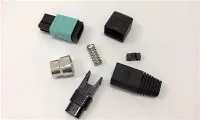
A Fiber Optic E2000 Pigtail is a short length of fiber optic cable with an E2000 connector at one end and a bare fiber at the other. The E2000 connector is a high - performance optical connector known for its excellent dust protection and low insertion loss. It features a shutter mechanism that automatically closes when the connector is not mated, preventing dust and debris from entering the ferrule and affecting the optical performance.
Compatibility with FTTH Networks
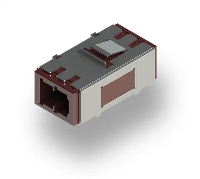
One of the primary considerations when using a Fiber Optic E2000 Pigtail in an FTTH network is compatibility. In most cases, FTTH networks use standard connectors such as SC, LC, or ST. However, this does not mean that E2000 pigtails cannot be used. With the help of appropriate adapters, an E2000 pigtail can be integrated into an existing FTTH network.
For example, if the ONU at the customer's premises has an LC connector, an E2000 - to - LC adapter can be used to connect the E2000 pigtail. This allows for the flexibility of using different types of connectors in the network without sacrificing performance. Similarly, if the OLT at the central office uses an SC connector, an E2000 - to - SC adapter can be employed.
Advantages of Using Fiber Optic E2000 Pigtails in FTTH Networks
Dust Protection
As mentioned earlier, the E2000 connector has a built - in shutter mechanism that provides excellent dust protection. In an FTTH environment, where the network is often exposed to various environmental conditions, dust and debris can accumulate on the connectors and cause signal degradation. The dust - proof design of the E2000 connector helps to maintain the optical performance of the network over time, reducing the need for frequent cleaning and maintenance.


Low Insertion Loss
Insertion loss is a critical factor in fiber optic networks as it directly affects the signal strength. The E2000 connector is designed to have very low insertion loss, typically less than 0.2 dB. This means that the signal passing through the E2000 pigtail experiences minimal attenuation, ensuring a high - quality connection in the FTTH network.
High - Performance
The E2000 connector is known for its high - performance characteristics, including excellent return loss and mechanical stability. In an FTTH network, where high - speed data transmission is required, these features are essential for maintaining a reliable and stable connection. The high - performance nature of the E2000 pigtail makes it suitable for use in demanding FTTH applications.
Potential Challenges
Cost
One of the potential challenges of using Fiber Optic E2000 Pigtails in FTTH networks is the cost. E2000 connectors are generally more expensive than standard connectors such as SC, LC, or ST. This can increase the overall cost of the FTTH network, especially when large quantities of pigtails are required. However, it's important to consider the long - term benefits of using E2000 pigtails, such as reduced maintenance costs and improved performance.
Availability of Adapters
Another challenge is the availability of adapters. While E2000 - to - SC, E2000 - to - LC, and other adapters are available in the market, they may not be as readily available as standard connectors. This can cause delays in the installation and deployment of the FTTH network. However, as a supplier, I can ensure the timely availability of these adapters to meet the needs of my customers.
Comparison with Other Pigtails
To better understand the suitability of Fiber Optic E2000 Pigtails in FTTH networks, let's compare them with other common types of pigtails.
LC Simplex Fiber Patch Cord
The Lc Simplex Fiber Patch Cord is a popular choice in FTTH networks due to its small size and high - density capabilities. It is widely used in ONUs and other network equipment. While the LC connector is smaller and more compact than the E2000 connector, it does not have the same level of dust protection. The E2000 pigtail, on the other hand, offers superior dust protection, which can be an advantage in harsh environments.
Fiber Optic Sc Pigtail
The Fiber Optic Sc Pigtail is another commonly used pigtail in FTTH networks. The SC connector is known for its ease of use and widespread availability. However, like the LC connector, it does not have a built - in dust protection mechanism. The E2000 pigtail provides a solution to this problem, ensuring that the optical connection remains clean and reliable.
Fiber Optic St Pigtails
The Fiber Optic St Pigtails are also used in some FTTH networks, especially in older installations. The ST connector is a bayonet - style connector that is relatively easy to install. However, it has a higher insertion loss compared to the E2000 connector. The E2000 pigtail offers lower insertion loss, which can result in better signal quality in the FTTH network.
Conclusion
In conclusion, a Fiber Optic E2000 Pigtail can be used in a Fiber - to - the - Home (FTTH) network with the help of appropriate adapters. It offers several advantages, including excellent dust protection, low insertion loss, and high - performance characteristics. While there are some potential challenges such as cost and adapter availability, these can be mitigated with proper planning and support from a reliable supplier.
If you are considering using Fiber Optic E2000 Pigtails in your FTTH network, I encourage you to reach out to me for more information and to discuss your specific requirements. I can provide you with high - quality E2000 pigtails, adapters, and technical support to ensure a successful deployment of your FTTH network.
References
- "Fiber Optic Communication Systems" by Govind P. Agrawal
- "Passive Optical Networks for Fiber - to - the - Home" by Hiroshi Takara